
How to Make Real Chimichurri
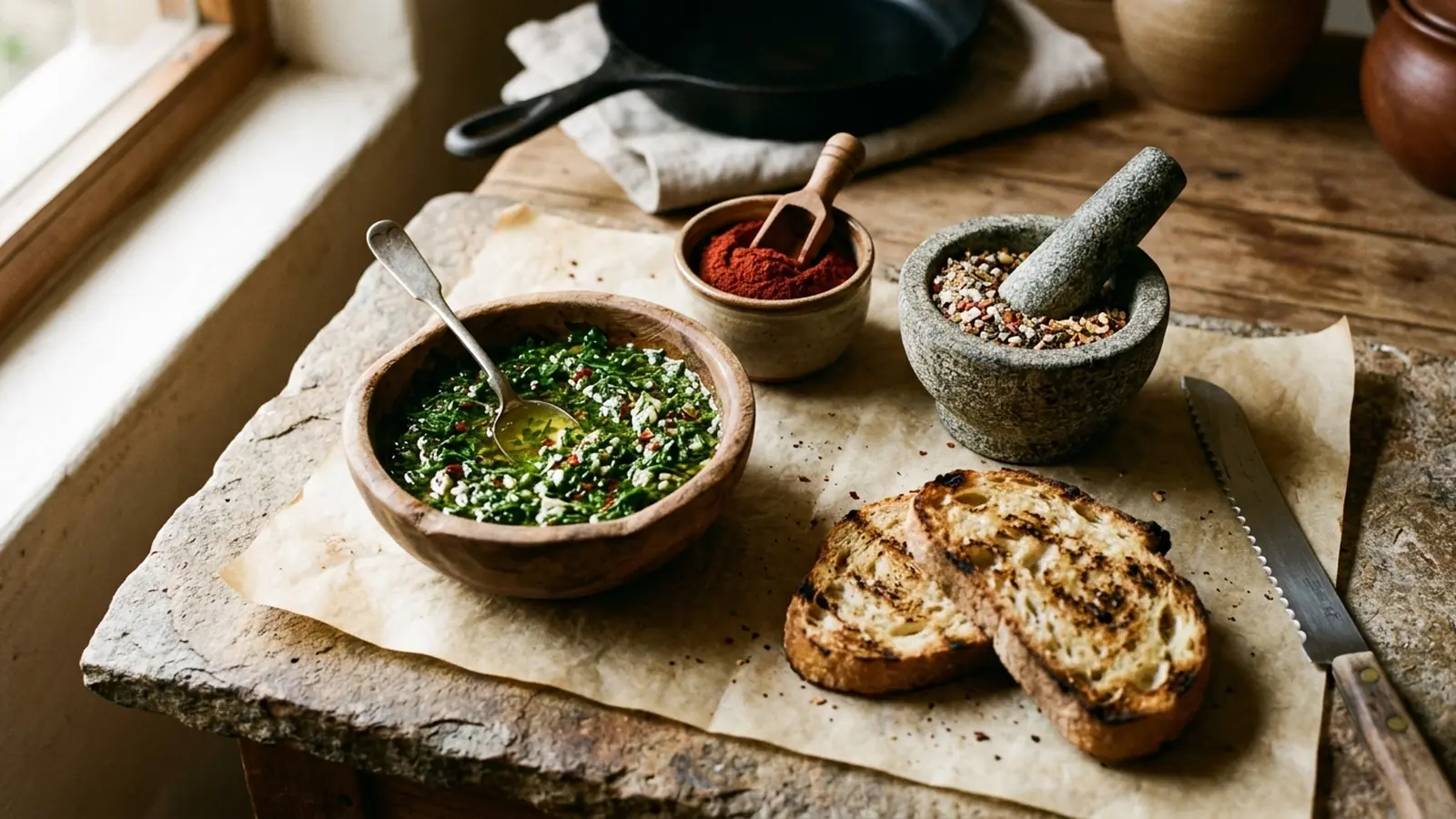
Two things Americans get wrong about chimichurri, and the second one is worse.
The first is that it is a marinade. It is not. Chimichurri goes on after the meat comes off the fire, and in Argentina it spends most of its life on bread rather than beef. Put it on raw steak and the vinegar starts cooking the surface before the fire gets a chance to.
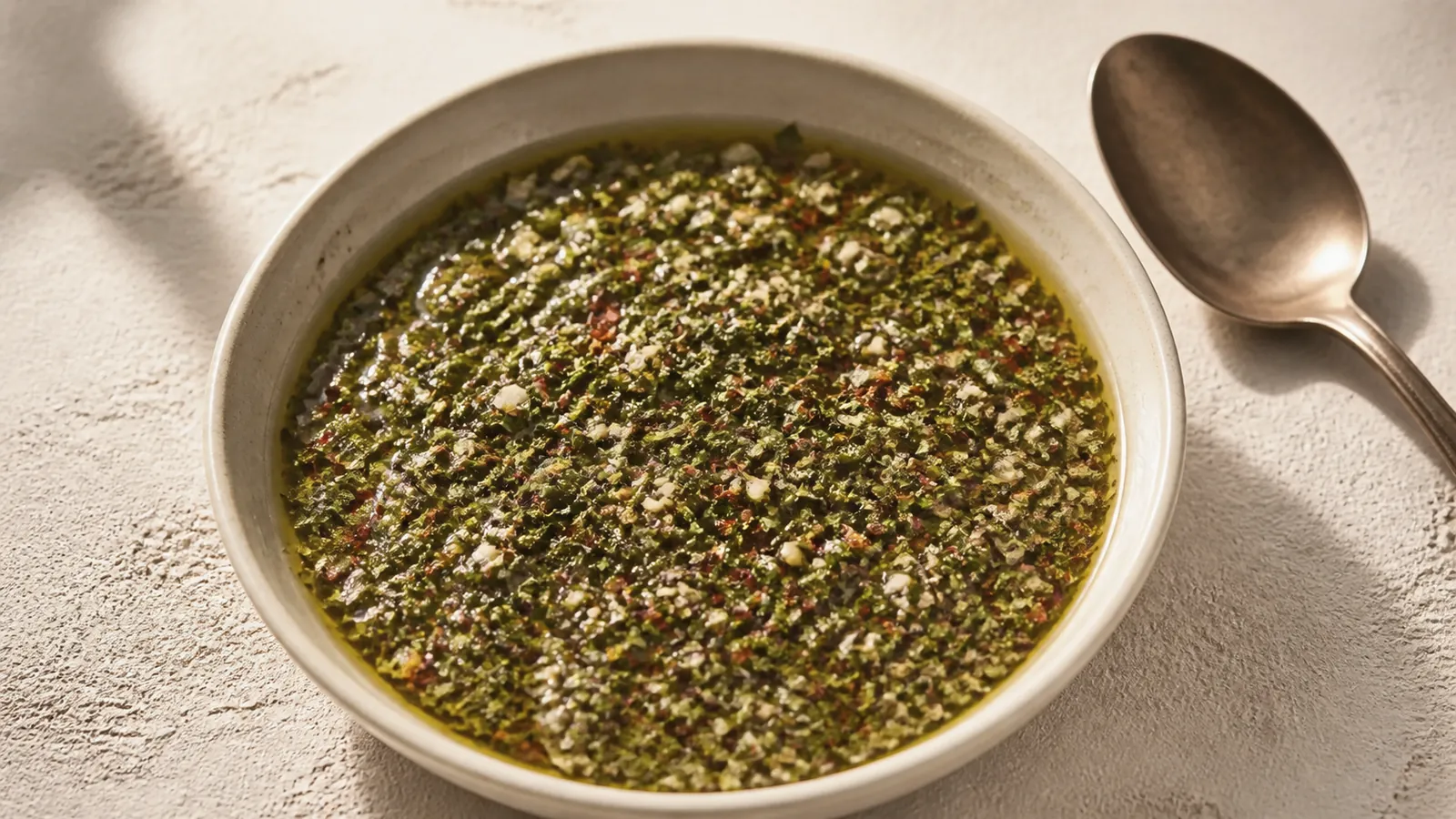
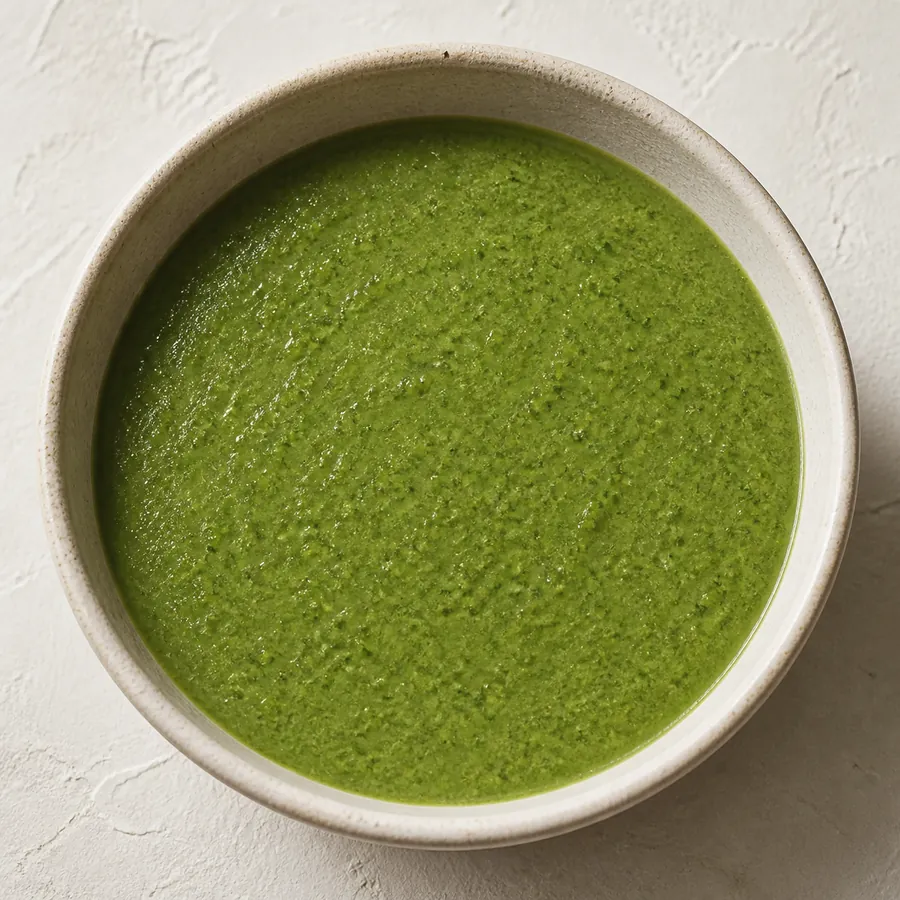
The second is that it is a smooth green sauce that comes out of a blender. This is the one that ruins it. Real chimichurri is loose, coarse, and mostly herbs — you should be able to see every individual thing in it. What a blender produces is a herb purée, which is a fine sauce and a completely different one.
What is actually in it
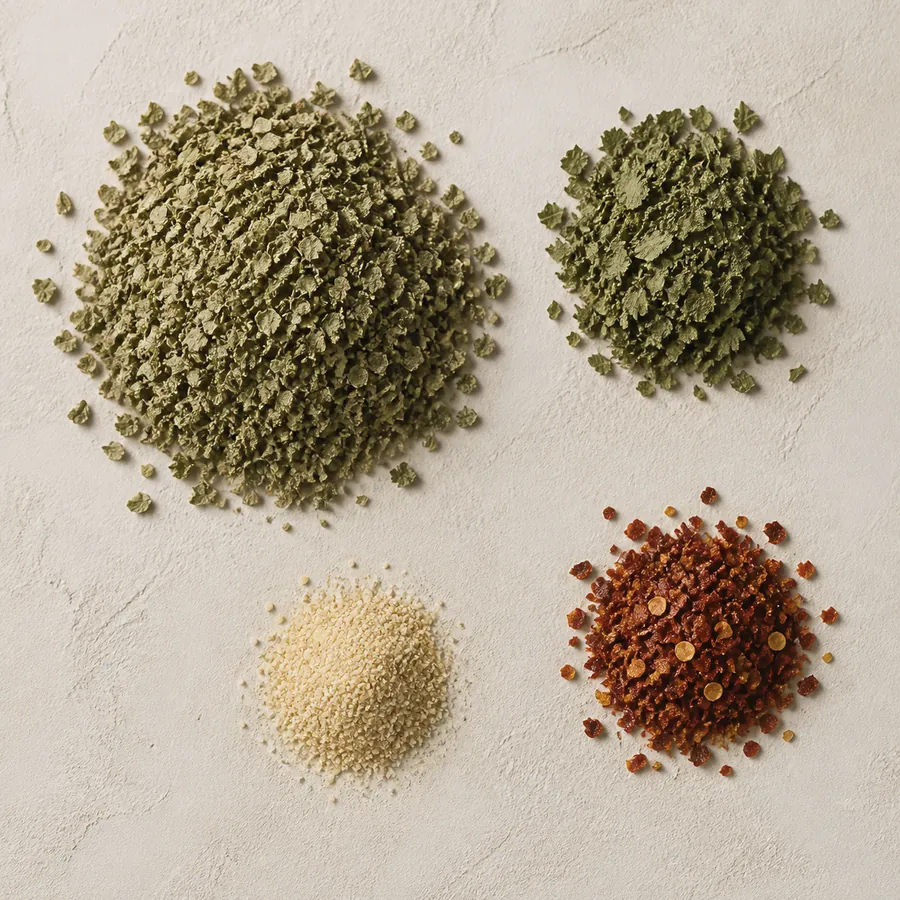
Oregano leads. This surprises people who assume parsley is the base — parsley follows, and everything else is support. Garlic, salt, crushed chili, a little pepper, a bay leaf ground fine. That is the whole thing.
No cilantro. No lemon. No cumin. Those turn up in versions sold outside Argentina and they push the sauce somewhere else entirely.
The step nobody publishes
Dried herbs need water before they need oil. Oil coats and seals; if it goes in first, the oregano never fully opens and the sauce tastes flat no matter how long it sits.
Warm water first. Five minutes. Then the oil.
This is the difference between chimichurri that tastes like a jar of dried herbs in oil and chimichurri that tastes like chimichurri.
Method
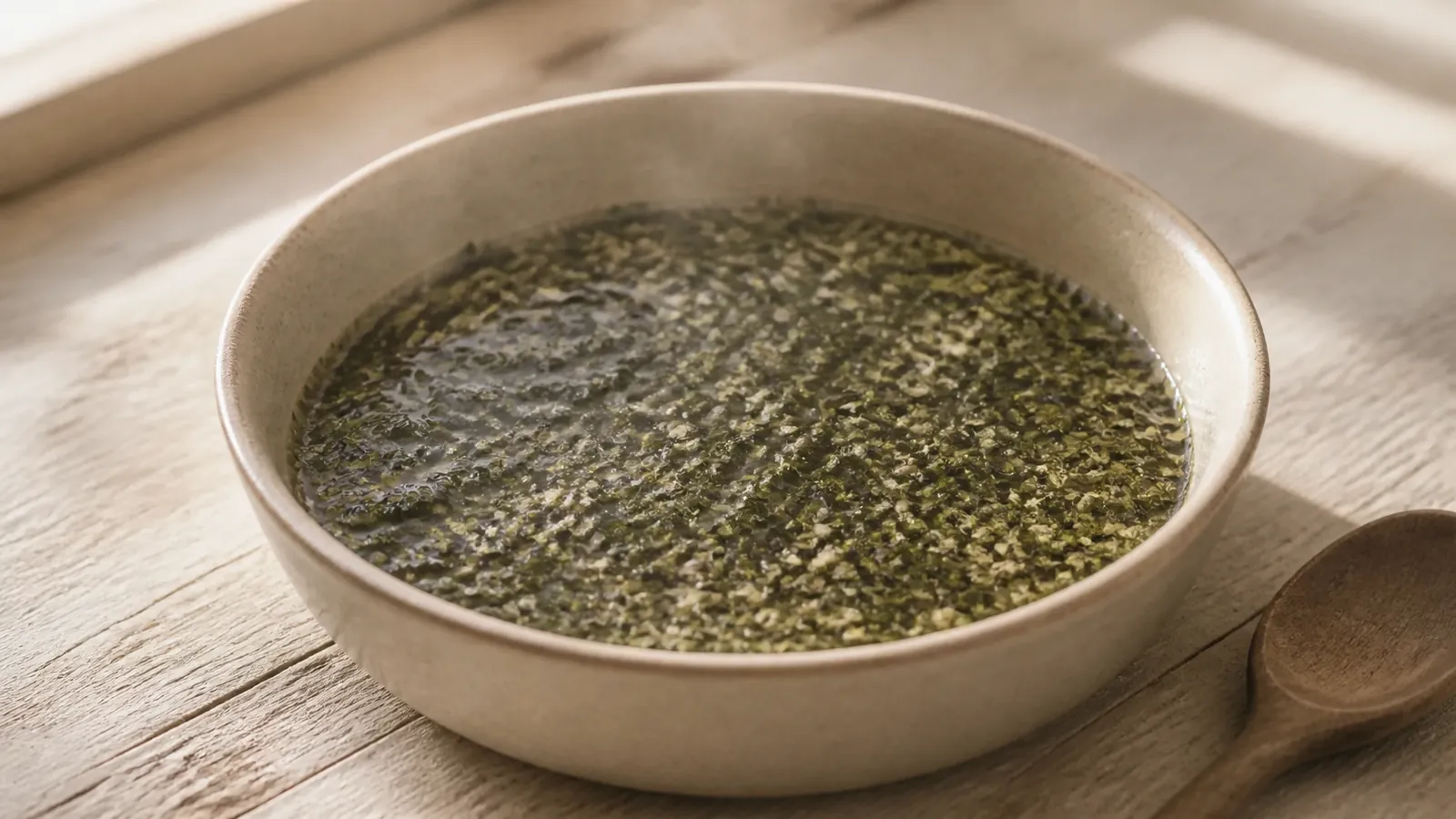
- Put 3 tablespoons of dry mix in a bowl. Add 2 tablespoons of warm water and stir. Leave it five minutes — the herbs will swell and go dark green.
- Add ½ cup of olive oil and 3 tablespoons of red wine vinegar. Stir; do not whisk. You are combining, not emulsifying.
- Rest at least twenty minutes at room temperature. Overnight in the fridge is better, and the third day is better still.
- Stir again before serving. It will have separated. That is correct — do not fix it.
On the vinegar
Red wine vinegar, not white, not balsamic. The ratio above is roughly three parts oil to one part vinegar, which is sharper than a vinaigrette on purpose — it is going onto rich beef and it needs to cut.
What to do with it
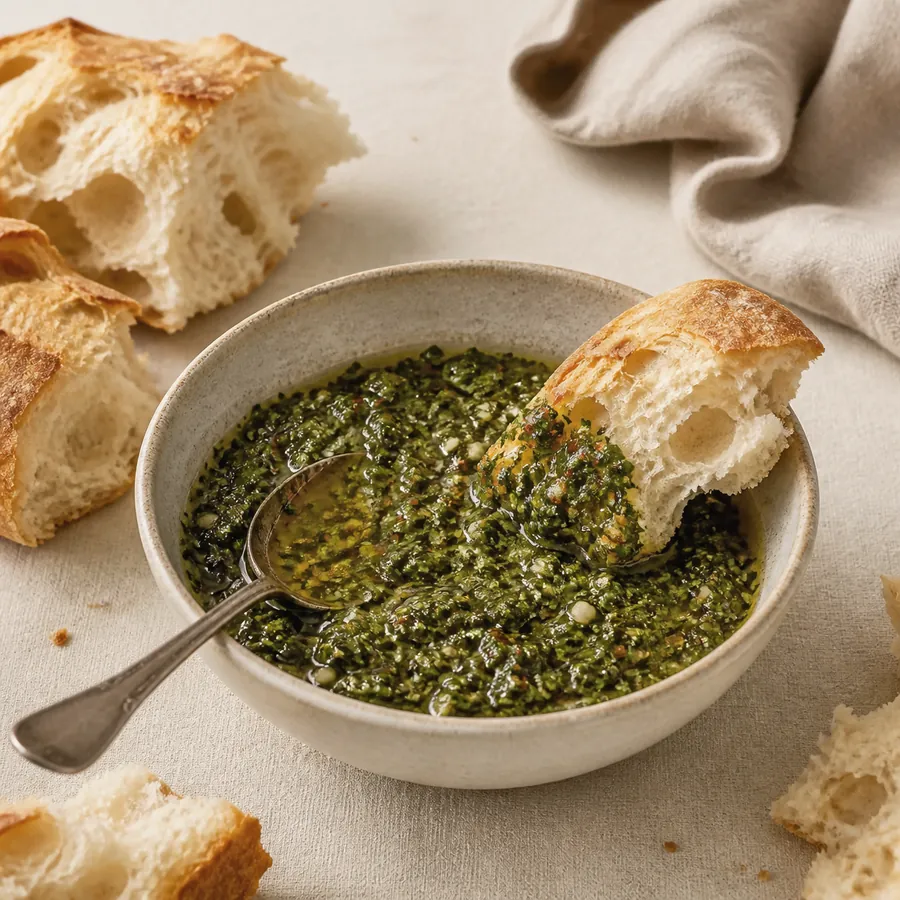
On bread first. In Argentina the bowl arrives with the bread before the meat does, and half of it is gone before anything comes off the grill. That is not a waste of chimichurri; that is chimichurri.
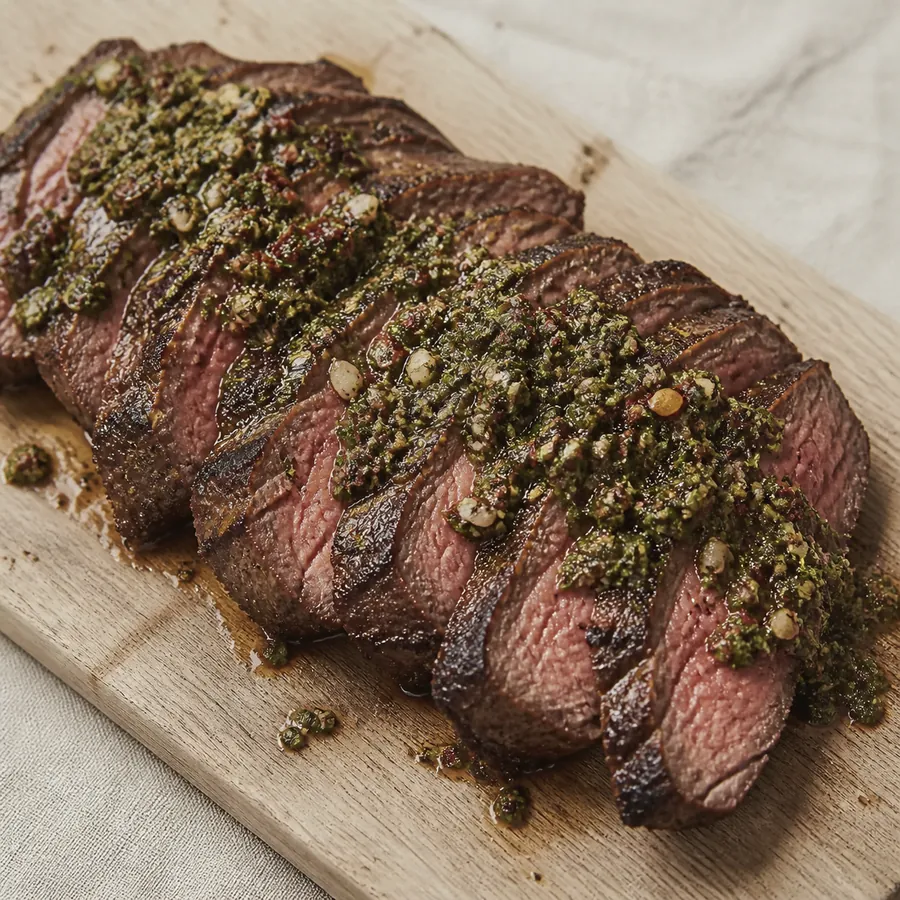
Then: spooned over rested steak, never brushed on raw. Over grilled vegetables, roast potatoes, and fried eggs. Stirred into breadcrumbs before a cutlet is fried. Worked into softened butter and put on corn.
Keeping it
A week in the fridge, covered, and it improves for the first three days. The oil will solidify when cold — let it come back to room temperature before you judge it. Do not freeze it; the herbs go slack.
If you want to skip the measuring, our Chimichurri Seco is this exact mix, dry, in the proportions above — add oil and vinegar and wait. There is also a smoked version built for the things that never make it onto a live fire.
The blends in this recipe
- Chimichurri Seco Clásico — the dry mix, in these proportions
- Chimichurri Seco Ahumado — the smoked version
Get the next guide
An email when we publish a new salt guide or recipe, and first word when the Patagonian salts are ready to order.
We write when there is something to say, not on a schedule.