We write when there is news, not on a schedule.
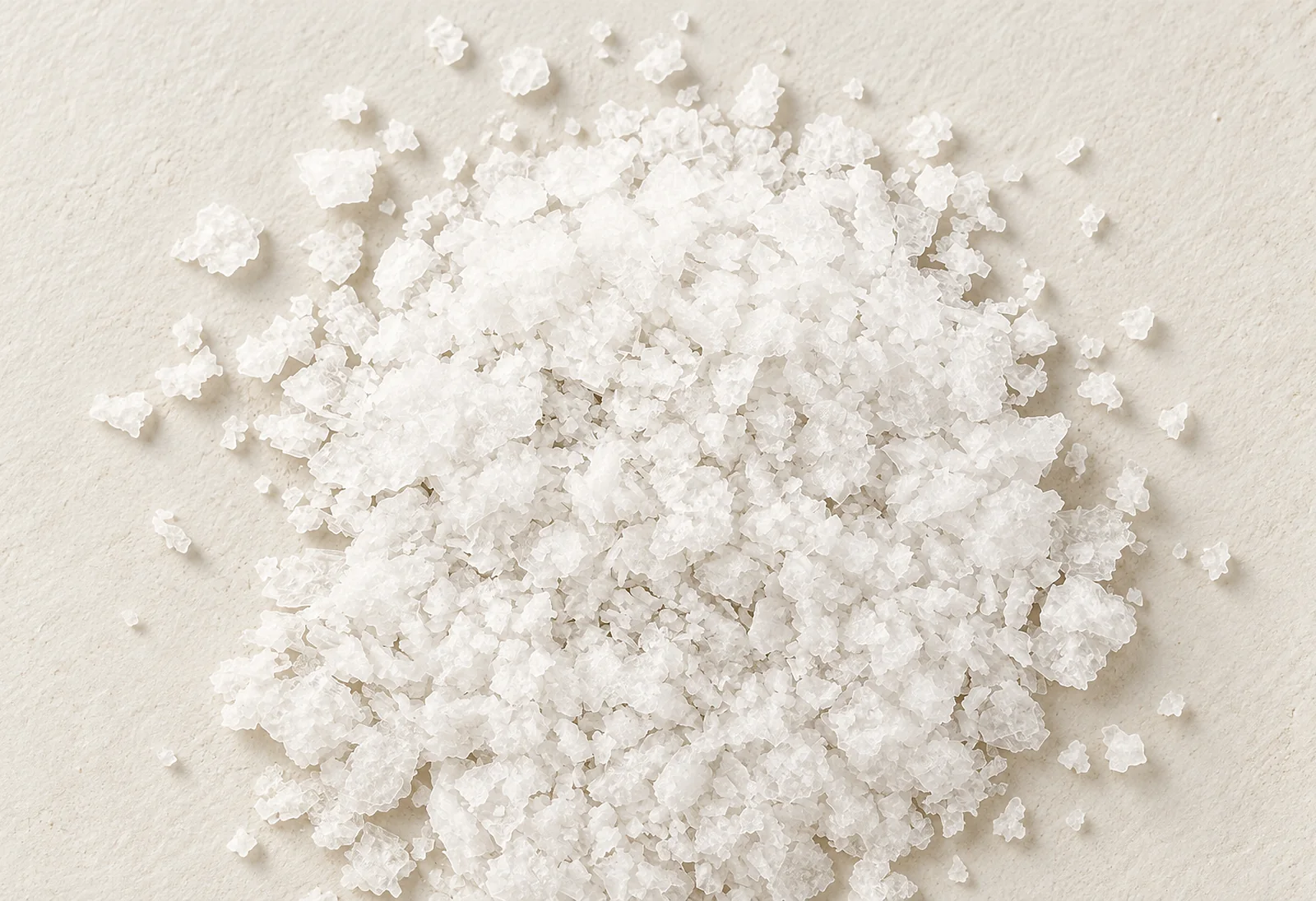
The last pinch makes a difference. Scatter Patagonian sea salt flakes over sliced steak, ripe tomatoes or warm bread with olive oil, where the crystals bring seasoning and texture to the surface. Keep them within reach at the table.
Finish with it: steak off the grill, sliced tomatoes, roasted vegetables, a fried egg, dark chocolate. Add it after cooking rather than during — heat and liquid dissolve the flake and waste what you paid for.
Patagonian Atlantic sea salt.
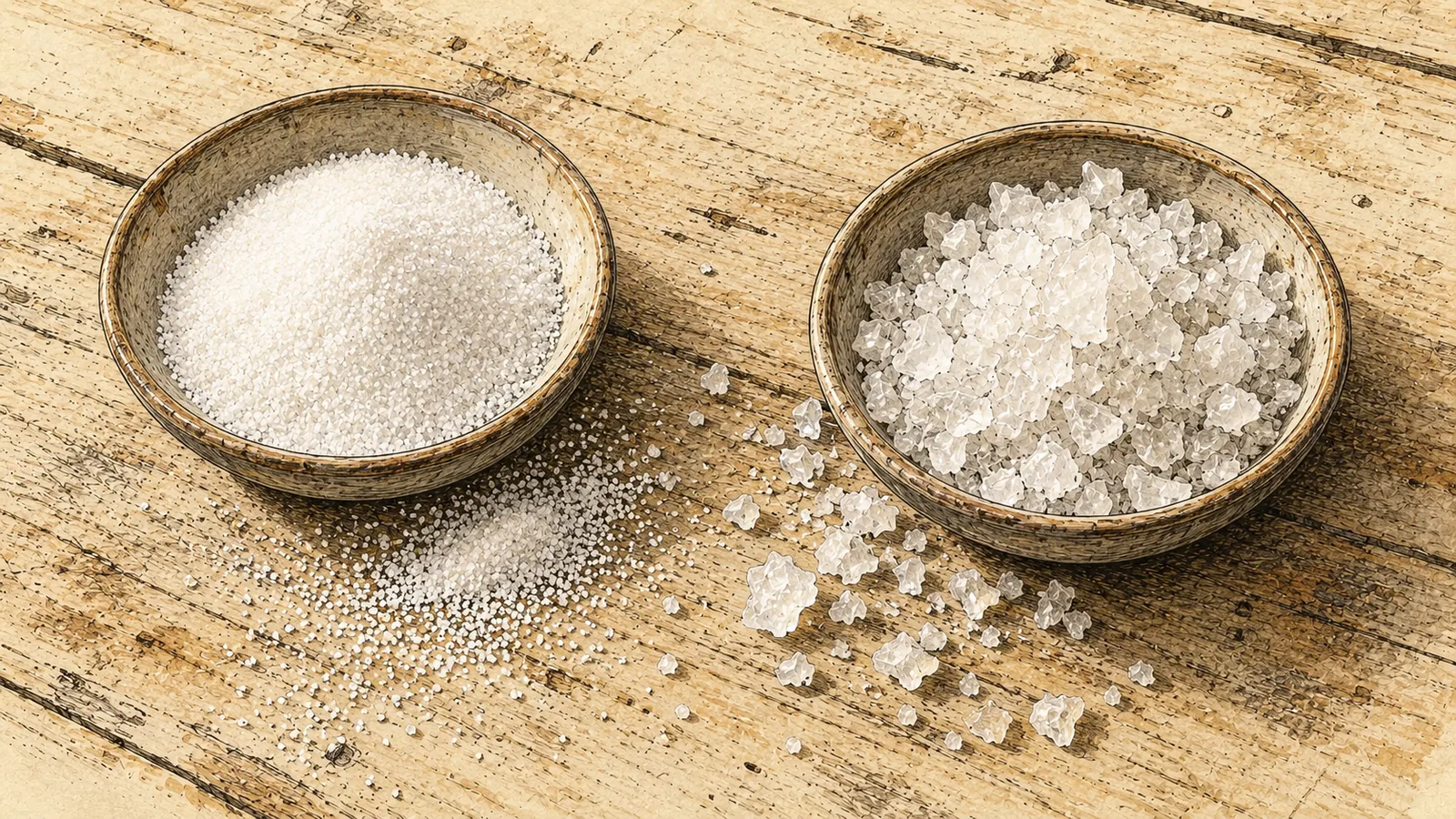
The source changes, and the crystal can change dramatically. By weight, both are still principally sodium chloride. The useful differences are grain size, iodine, additives and how much fits in a spoon.
Read the guide →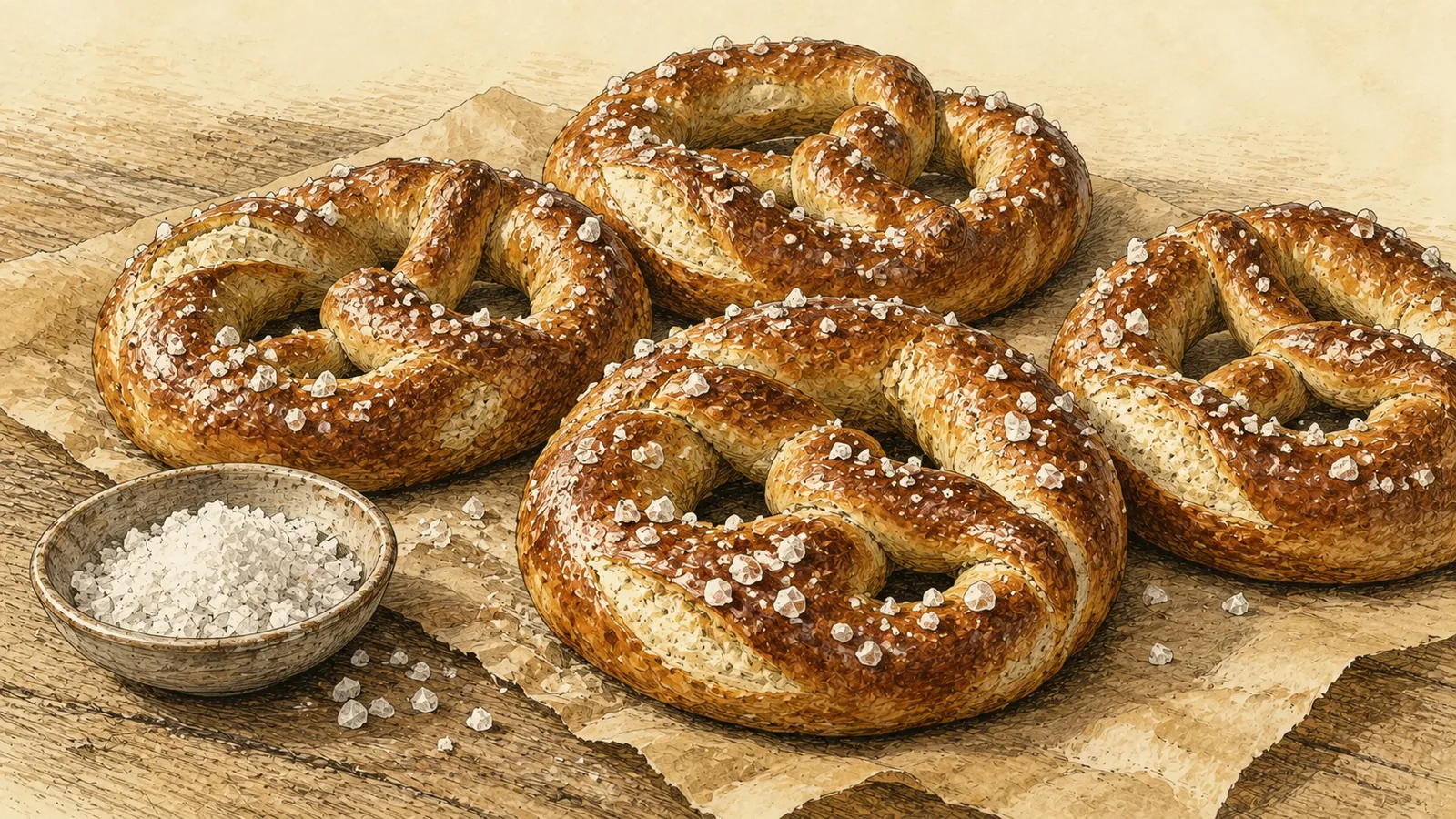
Pretzel salt is a coarse topping grade made to remain distinct on baked dough. Kosher salt can substitute at home, but its thinner flakes may dissolve or break more readily.
Read the guide →Want this one? Notify me when it is ready ↑
