
Alfajores de Maicena
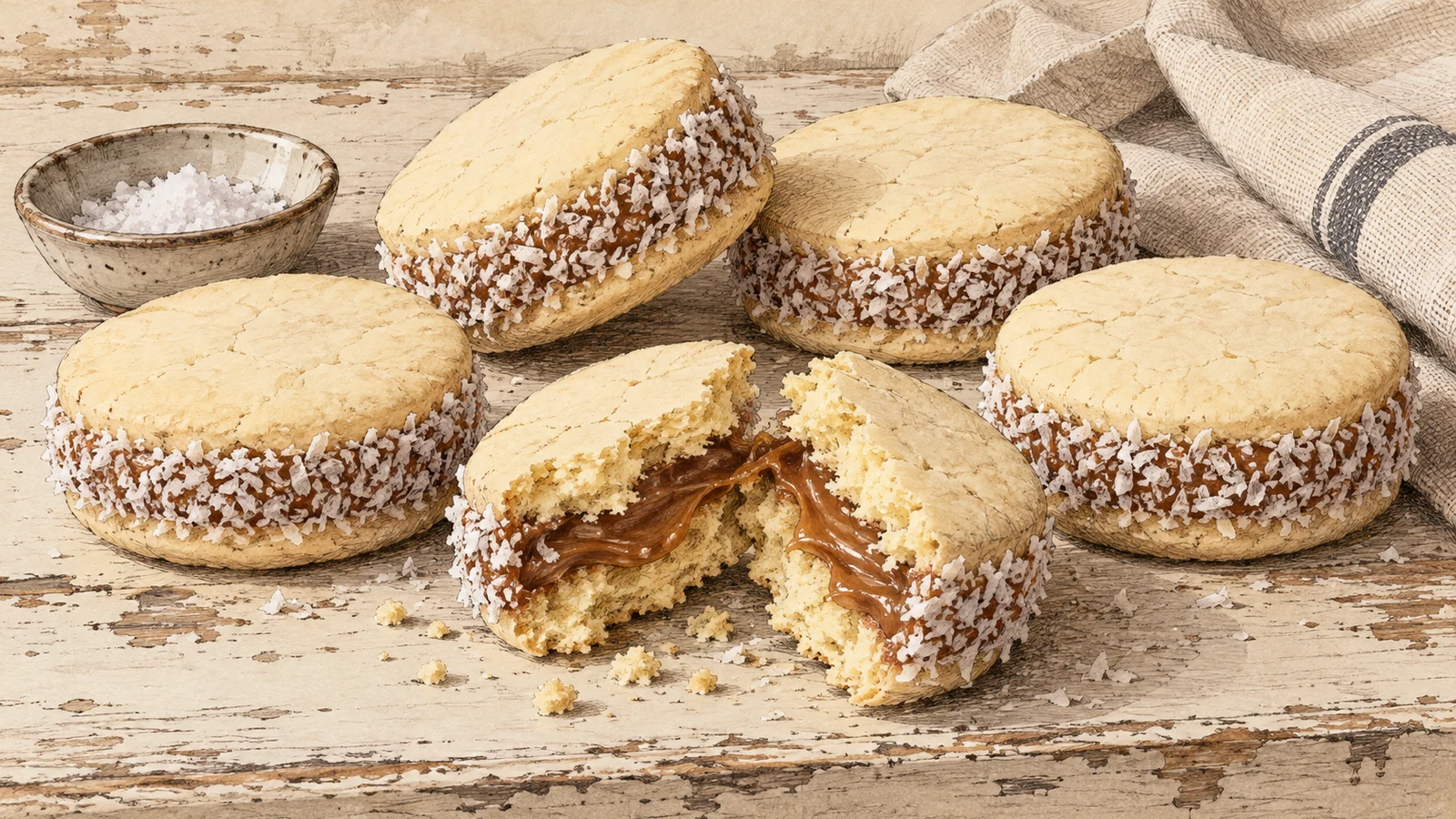
Alfajores de maicena are pale, tender sandwich cookies made with a cornstarch-rich dough, filled with dulce de leche and rolled in coconut. They should crumble softly rather than snap, and they should leave the oven before the tops take on much color.
What makes this an alfajor de maicena?
Argentina does not have one alfajor. Regional versions use different doughs, fillings and coatings. The maicena version is identified by its fragile cornstarch cookie, thick dulce de leche center and coconut at the exposed edge.
Argentina's national tourism site describes the alfajor as a classic with regional forms across the country. An Argentine Health Ministry recipe for alfajorcitos de maicena uses cornstarch, butter, yolks, sugar, leavening and a pinch of salt, and warns that the baked cookies are delicate. That delicacy is the point of the style.
Ingredients
- 200 g cornstarch
- 100 g all-purpose flour
- 1 teaspoon baking powder
- 1/4 teaspoon fine salt
- 150 g unsalted butter, softened
- 100 g sugar
- 3 large egg yolks
- 1 teaspoon vanilla extract
- Finely grated zest of 1 lemon
- 300 to 350 g thick dulce de leche
- 40 g unsweetened shredded coconut
Method
- Whisk the cornstarch, flour, baking powder and salt together. Break up every visible lump of cornstarch.
- Beat the butter and sugar until smooth and a little lighter, but do not whip in so much air that the cookies spread. Mix in the yolks one at a time, then the vanilla and lemon zest.
- Add the dry ingredients and fold just until a soft dough forms. If it feels warm or sticky, flatten it into a disc, cover and chill for 20 to 30 minutes.
- Heat the oven to 350 degrees F. Roll the dough about 1/4 inch thick between sheets of parchment. Cut 2-inch rounds and place them on a parchment-lined tray.
- Bake for 8 to 11 minutes. The cookies should look dry and set on top while remaining pale; a faint color underneath is enough. Cool completely before moving or filling them.
- Pipe or spoon a generous layer of dulce de leche onto half the cookies. Top gently with the remaining rounds, then roll the exposed filling in coconut.
Why the pinch of salt matters
The dough contains butter, sugar, yolk and a sweet milk filling. A small measured amount of fine salt keeps the cookie from tasting flat without announcing itself as salty. Fine grain is useful here because it disperses through a dough that receives very little mixing.
If you use salted butter, the exact salt content varies by brand. Reduce or omit the added salt rather than assuming every salted butter contributes the same amount.
Three ways this recipe goes wrong
| Problem | Likely cause | Correction |
|---|---|---|
| Cookies spread | Butter too warm or dough overworked | Chill the cut rounds before baking. |
| Cookies turn crisp | Rolled too thin or baked too dark | Keep them near 1/4 inch and pull them pale. |
| Sandwiches slide | Dulce de leche too loose | Use a thick confectionery-style filling. |
Serving and keeping
The cookies soften slightly after filling, so alfajores assembled a few hours ahead often eat better than ones filled at the last second. Keep them covered at cool room temperature for a day or refrigerate for longer storage, then let them lose the refrigerator chill before serving.
Put them beside coffee or mate. They are rich, fragile and untidy in exactly the right way.
Keep reading
- What Is Yerba Mate? — the drink to put beside them
- Salted vs. Unsalted Butter — how to adjust the salt in a bake
- What Goes Into an Argentine Empanada? — another food with regional Argentine forms
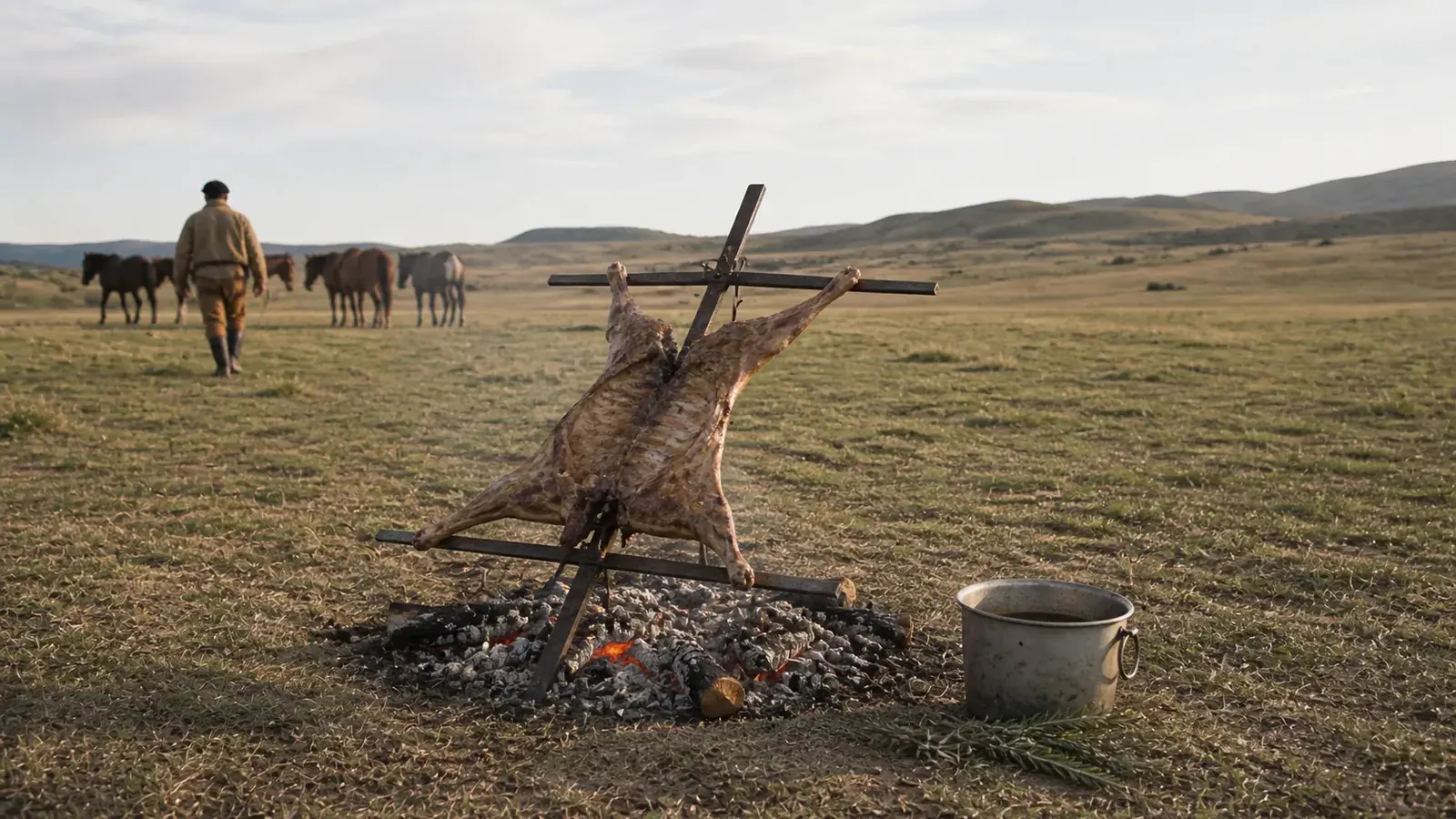
Salmuera, and Why Six Hours of Lamb Needs It
The bucket of brine that sits beside every long asado.
Read the article →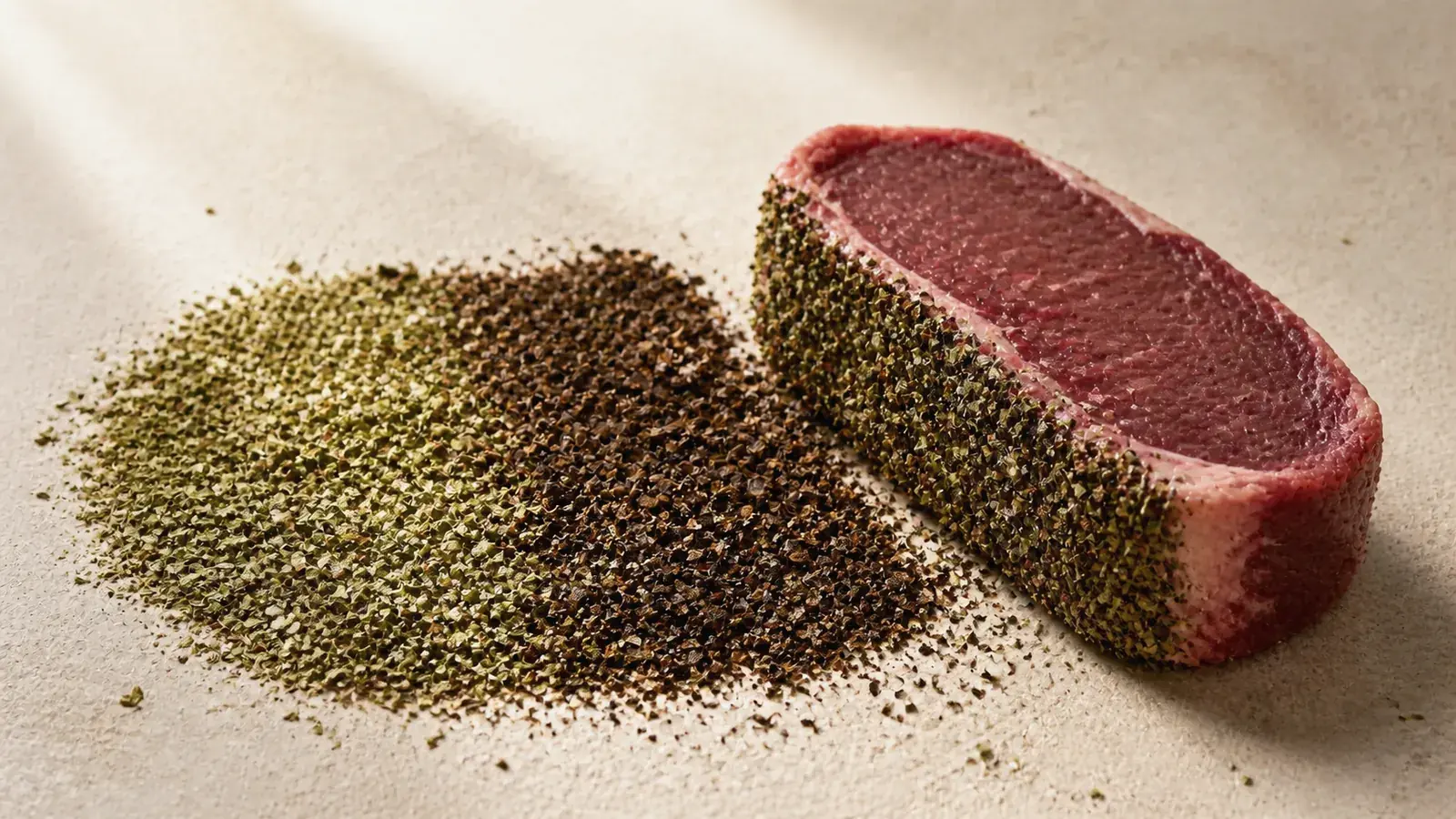
A Yerba Mate Crust for Steak
Argentina's national drink, pressed onto beef and put over fire.
Read the article →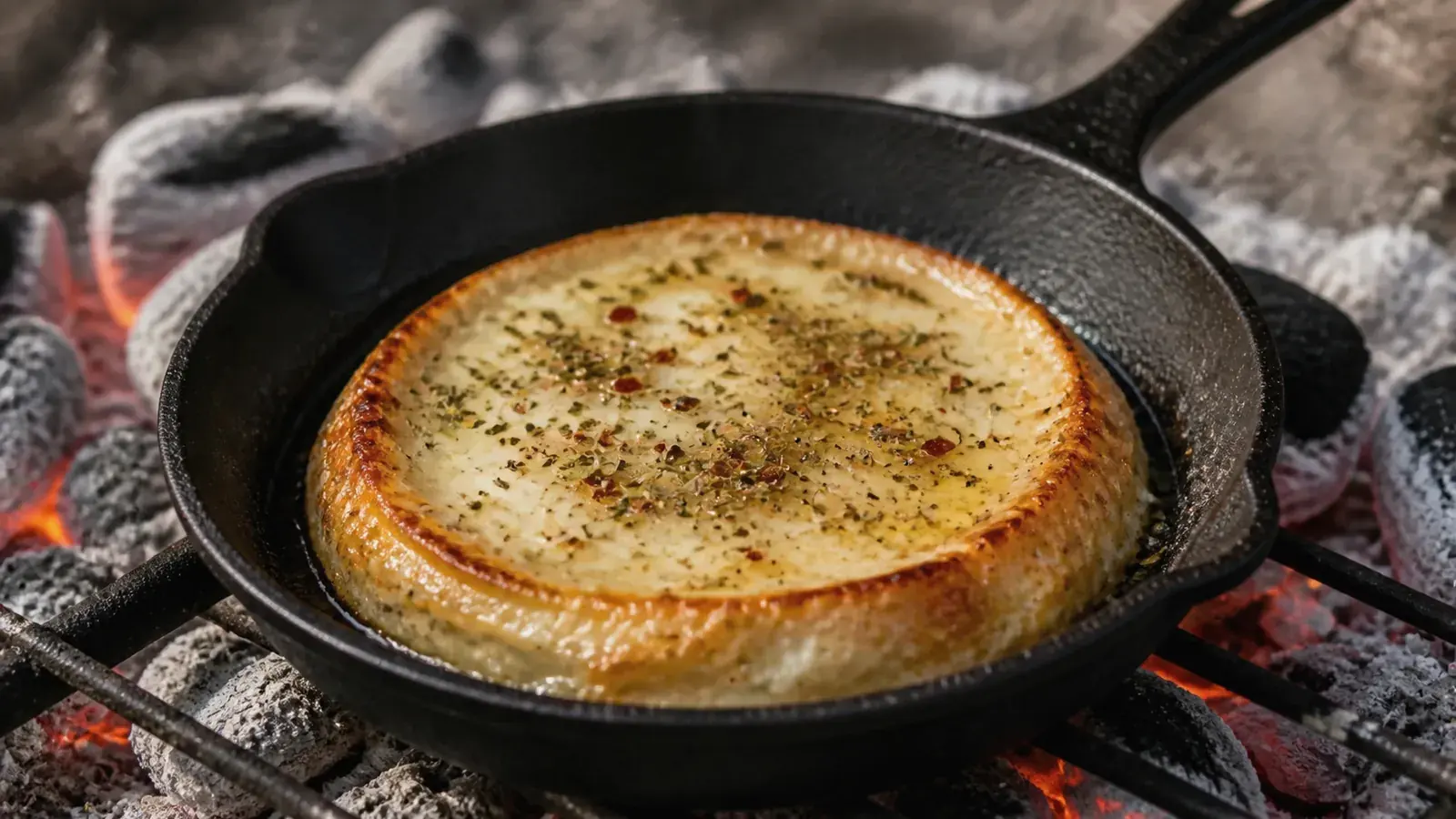
Provoleta
A disc of provolone, a hot pan, and ninety seconds of nerve.
Read the article →Get the next guide
An email when we publish a new salt guide or recipe, and first word when the Patagonian salts are ready to order.
We write when there is something to say, not on a schedule.