
Argentine Beef Cuts, Explained: Vacío, Entraña, Asado de Tira and More
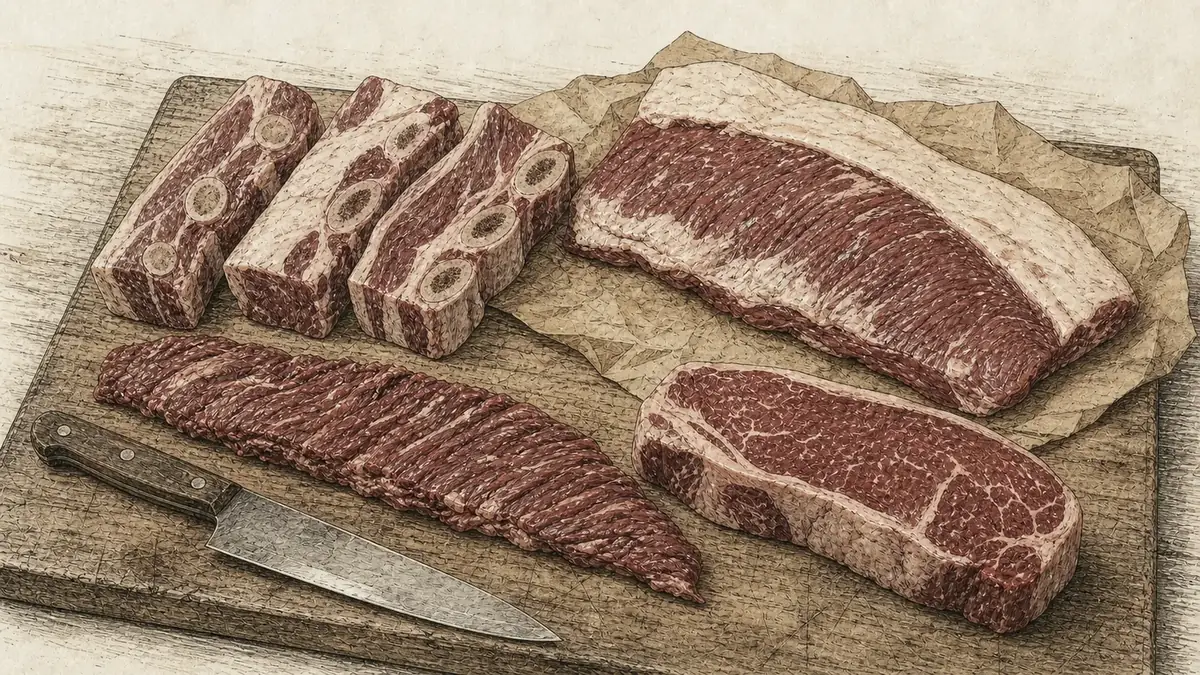
Argentine beef cuts do not map cleanly onto US supermarket cuts, because the two traditions butcher the carcass along different lines. A few match well, such as entraña for skirt steak, but most Argentine cuts are close approximations rather than exact translations. Below is a practical guide to the cuts you will see on an asado and the nearest thing at a US counter.
The grill cuts
Asado de tira is beef short rib cut across the bones into thin strips, so each piece shows several round bone cross-sections. This crosswise cut is the defining shape of the Argentine asado and is different from US short ribs, which are usually cut between the bones.
Vacío is the flank, taken from the belly. It has a loose, open grain and a fat layer that renders as it cooks. Flank steak and the French-style bavette are the closest US cuts, though vacío is typically thicker and cooked longer.
Entraña is skirt steak, the diaphragm muscle. Thin, heavily grained and quick to cook, it is the rare Argentine cut with a clean US equivalent.
Matambre is a thin sheet of meat from between the hide and the ribs. There is no standard US cut for it; it is often rolled and stuffed (matambre relleno) or grilled thin as matambre a la pizza.
The steak cuts
Bife de chorizo is a boneless sirloin strip steak, close to a US New York strip. The name has nothing to do with chorizo sausage. Bife de lomo is the tenderloin, the same muscle as filet mignon. Ojo de bife is the ribeye. Colita de cuadril is the tri-tip, taken from the bottom sirloin, and tapa de asado is a cut from the rib area that sits over the ribs.
The achuras
Offal is a real part of the asado, not an afterthought. Mollejas are sweetbreads (thymus and pancreas), prized when grilled crisp. Chinchulines are small intestine, and riñones are kidneys. Alongside them come chorizo and the blood sausage morcilla, which open most asados.
Why the names do not line up
The gap is structural. Argentine butchery follows its own seam lines and naming, refined around the asado, while US butchery follows a different standard. The Instituto de Promoción de la Carne Vacuna Argentina publishes an official cut nomenclator precisely because the boundaries are specific. When you shop for these cuts in the US, ask the butcher by muscle or location rather than by name, and expect to compromise on shape. Whatever you cook, the Argentine habit is to season the surface with coarse salt and little else.
Common questions
The flank, a boneless cut from the belly with a loose grain and a fat cap. There is no exact US supermarket equivalent; flank and bavette are the closest, though vacío is thicker.
Skirt steak, the diaphragm muscle. It is thin, strongly grained and cooks fast. This is one of the few Argentine cuts with a clean US match.
Beef short ribs cut across the bones into thin strips, so each piece has several bone cross-sections. US short ribs cut lengthwise are not the same shape.
A boneless strip steak from the sirloin. Despite the name it contains no chorizo sausage. It is close to a US New York strip.
Rarely. Argentine and US butchers cut the carcass along different lines, so most matches are approximate. Skirt steak for entraña is the cleanest one.
Sources
The Salt Guide
We are recording the salts on the American shelf one jar at a time — label, panel, price paid, crystal on white. Browse the guide →
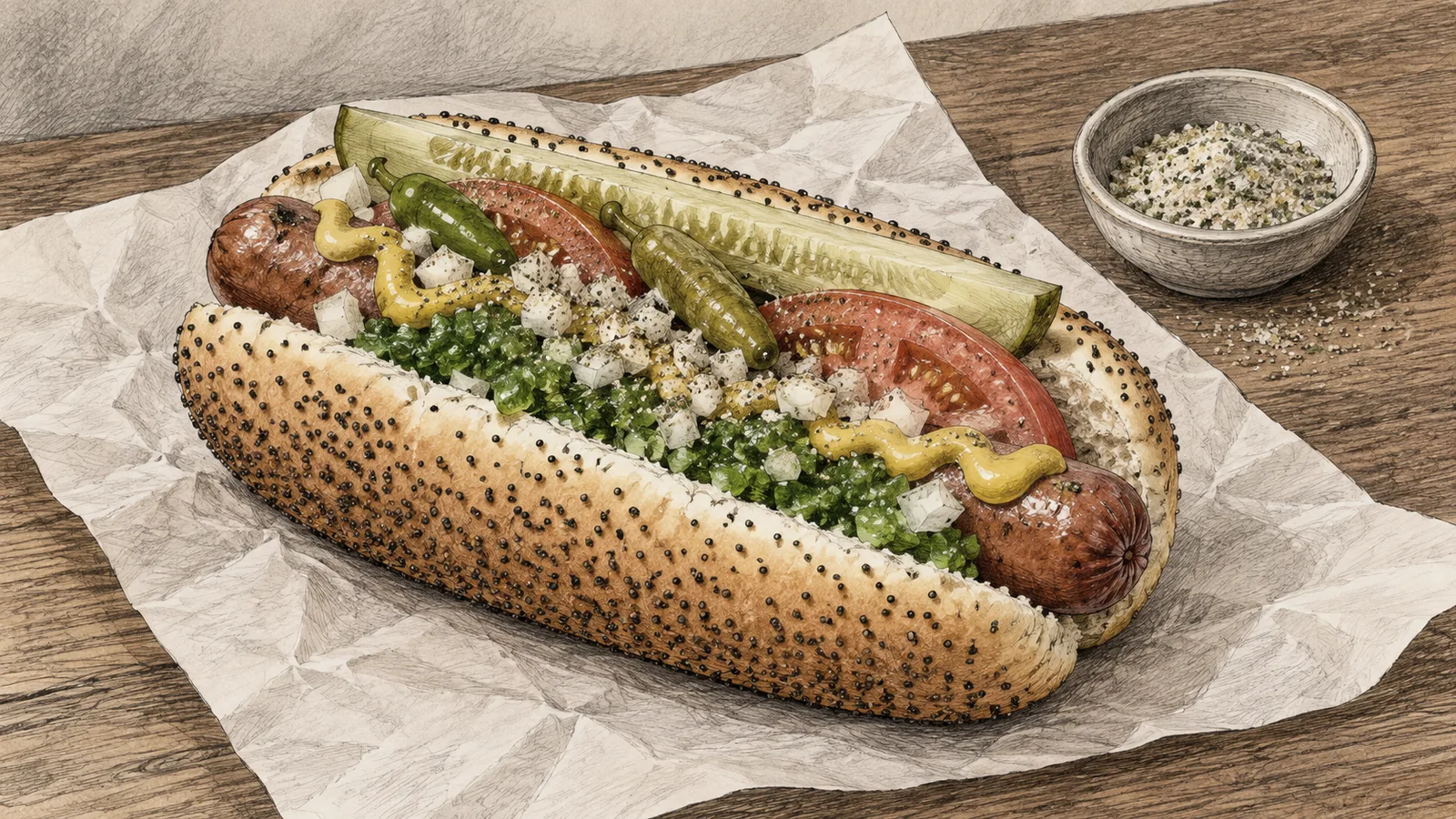
Celery Salt and the Chicago Hot Dog
Celery salt is salt and ground celery seed, not dried celery, and no maker publishes the ratio. It is the seventh and last topping on a Chicago dog, and the first ingredient in Old Bay.
Read the article →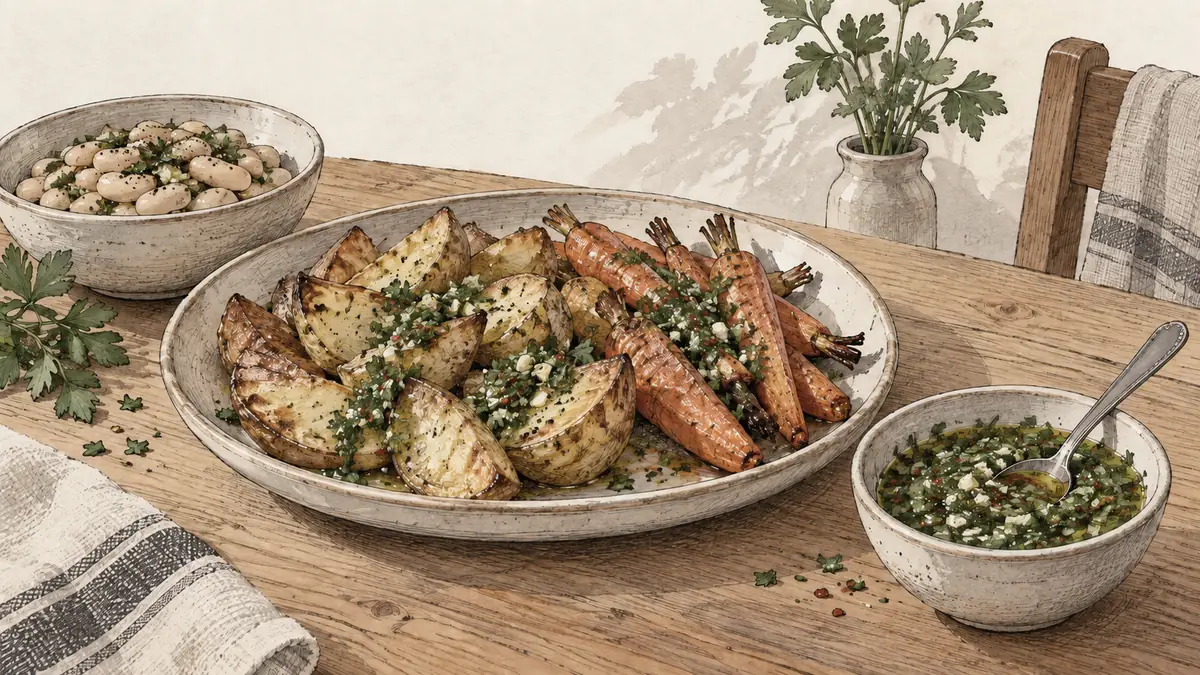
Chimichurri for Vegetables: When to Add It
Roasted potatoes, carrots and warm white beans. Three ways to bring chimichurri to the everyday table, with the sauce added after the heat.
Read the article →
Is Argentine Beef Actually Grass-Fed?
Mostly grass-raised, increasingly grain-finished. What the pasture image gets right, what it misses, and what the feedlot numbers actually say.
Read the article →Get the next guide
An email when we publish a new salt guide or recipe, and first word when the Patagonian salts are ready to order.
We write when there is something to say, not on a schedule.