
Chimichurri for Vegetables: When to Add It
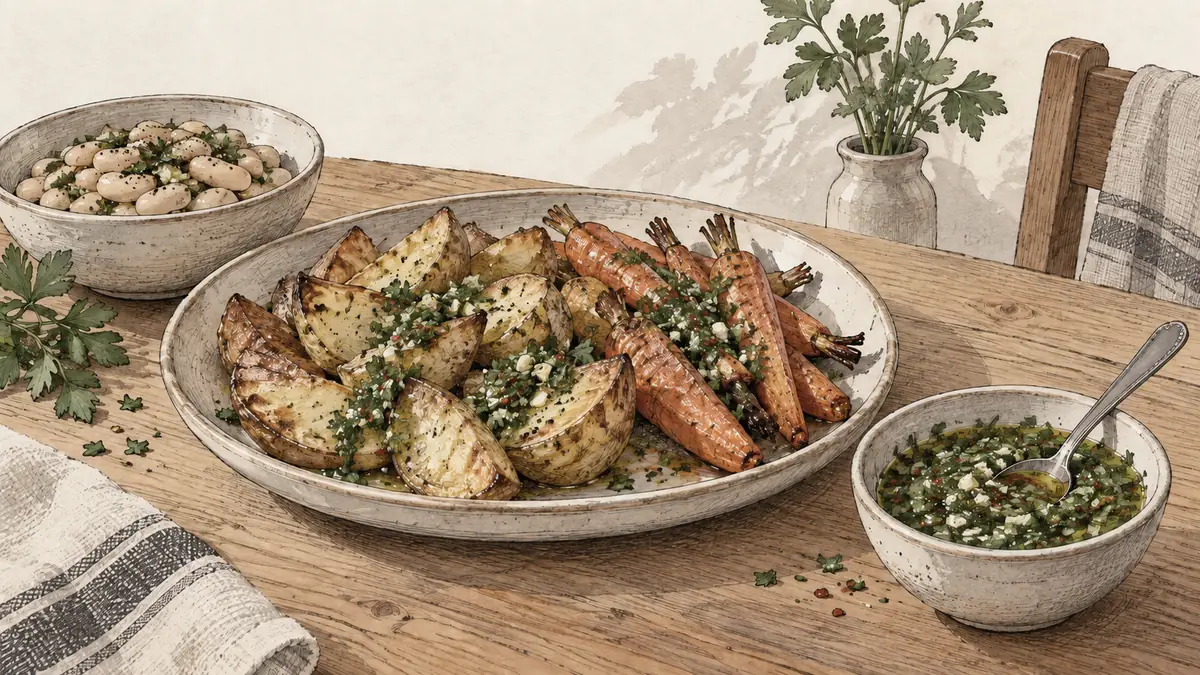
Add chimichurri to vegetables after cooking, while they are still warm. Let the oven or pan brown the vegetables first. Then spoon on the herbs, garlic, vinegar and oil. The roasted surface stays distinct, and the sauce reaches the table fresh.
Chimichurri has plenty to do beyond steak. Potatoes give it crisp edges and soft centers. Carrots bring sweetness. White beans catch the chopped herbs between them. Each makes a different meal from the same bowl of sauce.
Make the sauce while the vegetables cook
For a fresh version, start with our chimichurri recipe. Chop the flat-leaf parsley so you can still recognize pieces of leaf. Keep the sauce loose enough to spoon, with the oil and vinegar carrying the garlic, herbs and chile through it.
If you are using a dry chimichurri blend, follow its mixing directions and let the herbs hydrate before dressing the vegetables. Stir, then taste. A dry herb blend and a chimichurri-seasoned salt need different treatment: check the ingredients before adding another pinch of salt. Our guide to chimichurri salt and dry chimichurri explains the distinction.
Potatoes: sauce the plate, then the edges
Roast wedges or halved small potatoes with oil and salt until their edges brown and the centers are tender. Give them space on the tray. Turn them as needed so more than one surface meets the heat.
Put a little chimichurri on the serving plate, pile the potatoes over it, and spoon a little more across the top. Leave some browned edges uncovered. You get sauce on the fork and still have a crisp surface to bite through.
For a starting point, use one tablespoon of prepared chimichurri for every 250 grams of cooked potatoes. Taste a piece and add more if it needs it. The strength of the garlic, vinegar and chile will matter more than an exact spoon count.
Carrots: roast first, dress at the table
Cut larger carrots lengthways so the pieces cook at a similar rate. Roast with oil and a little salt until tender, with browned patches on the cut faces.
Arrange them on a shallow platter and spoon chimichurri across the middle. Their sweetness gives the vinegar something to work against. Start lightly; serve the remaining sauce alongside so each person can add more.
The same approach works with roasted squash or cauliflower. Cook for the vegetable in front of you, then dress it when it comes off the heat.
White beans: a meal with a spoon and some bread
Warm cooked white beans gently with a splash of water. Drain excess liquid, take the pan off the heat and fold in a little chimichurri. Stir carefully so the beans keep their shape.
Taste after the sauce is mixed through. Add another spoonful if needed, then serve with bread and any roasted vegetables you have. A small amount of sauce goes further here than it does over a large tray of potatoes.
Keep the final seasoning simple
Season the vegetables during cooking, then taste again after the chimichurri goes on. If the sauce already contains salt, it counts toward the seasoning of the whole dish.
Finishing flakes are optional. Use a few where you want texture on a potato or carrot; in a bowl of warm beans, fine salt stirred through is usually the more useful choice. Our salt grade guide explains how crystal size changes the job.
Put the bowl of chimichurri on the table. Roast what you have. The sauce can do more than wait for a steak.
The Salt Guide
We are recording the salts on the American shelf one jar at a time — label, panel, price paid, crystal on white. Browse the guide →