
Is Argentine Beef Actually Grass-Fed?
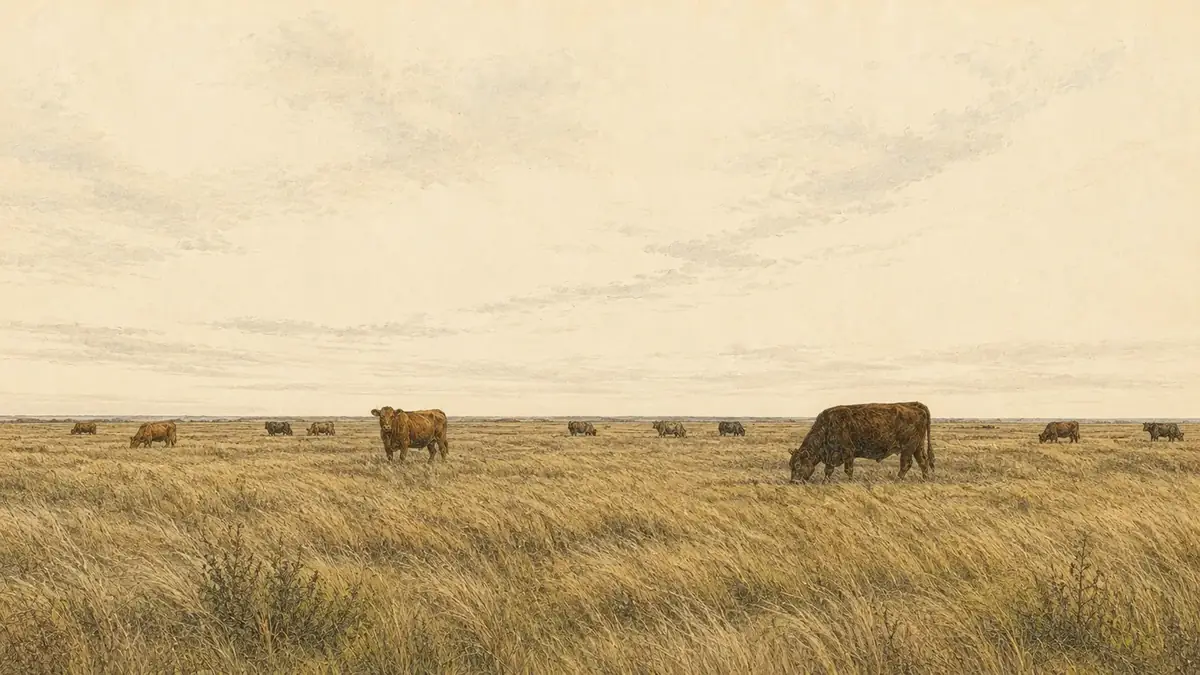
Most Argentine cattle are raised on pasture, but a large and rising share are finished on grain in feedlots, so “grass-fed” is only half the story. The old image of Argentine cattle grazing the Pampas from birth to market is no longer the full picture. If you mean grass-raised, the answer is largely yes. If you mean grass-finished in the strict sense used by US labels, the answer for a lot of Argentine beef is no.
Raised on grass, finished on grain
There is a difference between how an animal spends most of its life and how it spends its last months. Argentine cattle typically graze pasture for the bulk of their lives. But finishing, the final weight-gain stage, has shifted heavily toward feedlots, where cattle are fed grain to reach a target weight and fat level quickly and predictably. The Bolsa de Comercio de Rosario reported that cattle passing through feedlots made up roughly 36 percent of all animals slaughtered in the first seven months of 2024, about two percentage points higher than the year before, and part of a trend that has climbed steadily over five years.
Why the number is probably higher for your steak
That 36 percent covers every animal slaughtered, including cull cows destined for processing. Among the young steers and heifers that supply table cuts, the feedlot share is higher, because those are exactly the animals producers finish on grain for a consistent result. In other words, the beef most likely to reach a plate as a steak is more likely than average to be grain-finished. The overall herd, for context, stood at about 52 million head in 2025 with roughly 13 million animals slaughtered, according to the USDA Foreign Agricultural Service.
Neither is objectively better
Grass-finished and grain-finished beef are genuinely different products, and neither wins on the merits alone. Grass-finished beef is usually leaner, with a more mineral, sometimes gamier flavor and yellower fat. Grain-finished beef is usually fatter, milder and more uniform. People raised on one often prefer it, which tells you the preference is cultural and personal rather than a matter of quality. Claims that one is simply healthier or tastier tend to flatten a real trade-off into marketing.
What to do with this
If grass-finished matters to you, look for that specific claim, ideally certified, rather than assuming it from the country of origin. “Product of Argentina” does not by itself mean grass-finished. If you simply want good beef, judge the cut, the fat and the cooking, and season it plainly with coarse salt the way an asado would. The provenance question is worth asking, but it deserves an honest answer rather than a romantic one.
Common questions
Most Argentine cattle are raised on pasture, but a large and growing share are grain-finished in feedlots before slaughter. So it is usually grass-raised, not grass-finished.
The Bolsa de Comercio de Rosario reported that feedlot cattle made up about 36 percent of all animals slaughtered in the first seven months of 2024, on a steadily rising trend.
It is different, not simply better. Grass-finished beef tends to be leaner with a distinct flavor; grain-finished beef is often fatter and milder. Which you prefer is a matter of taste.
Often not. Unless beef is specifically certified grass-finished, you generally cannot tell from a supermarket label whether an animal was finished on grass or grain.
Economics and consistency. Feedlots let producers finish cattle faster and to a predictable fat level regardless of pasture conditions, which is why their share of slaughter has climbed for years.
Sources
The Salt Guide
We are recording the salts on the American shelf one jar at a time — label, panel, price paid, crystal on white. Browse the guide →
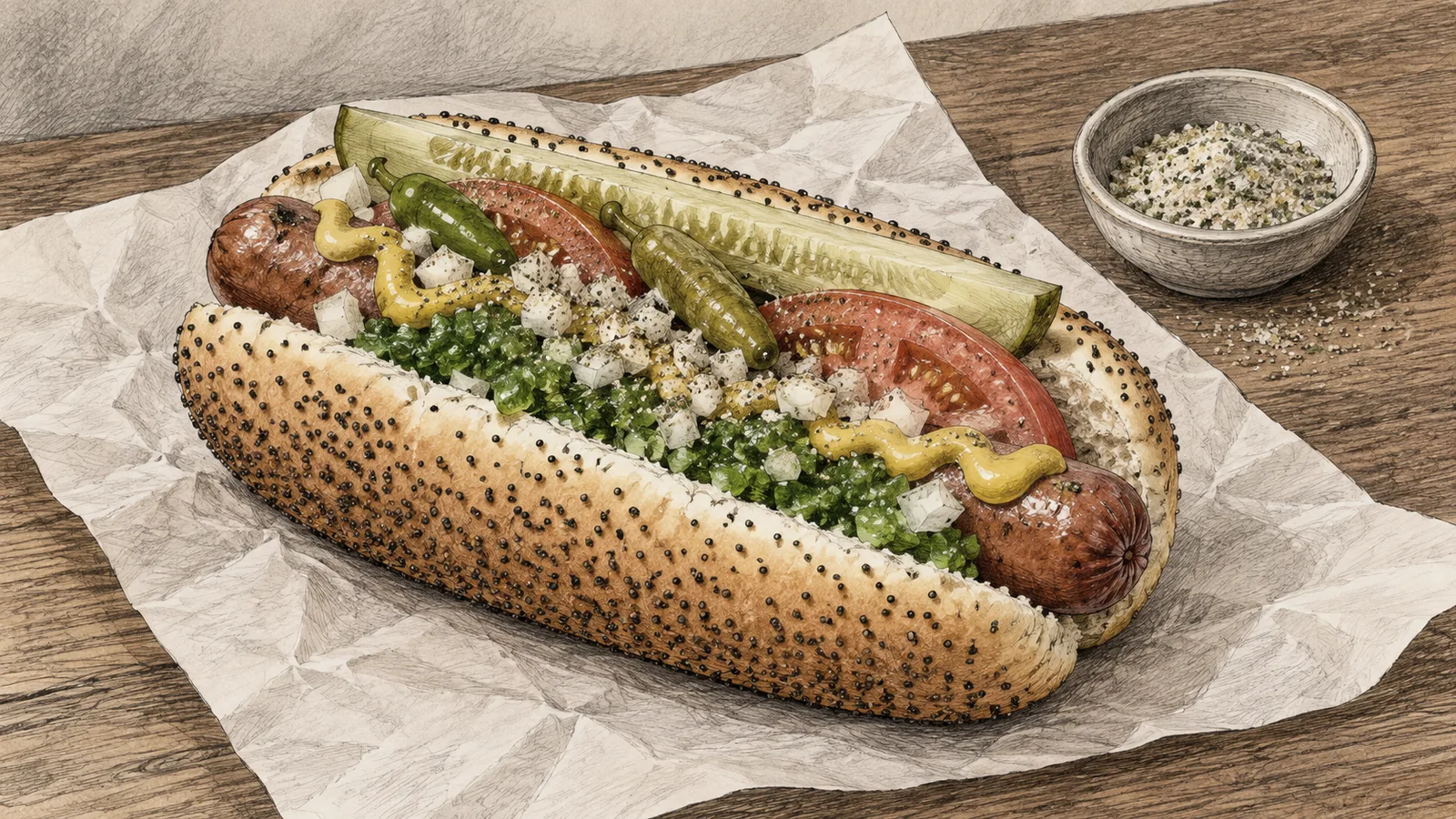
Celery Salt and the Chicago Hot Dog
Celery salt is salt and ground celery seed, not dried celery, and no maker publishes the ratio. It is the seventh and last topping on a Chicago dog, and the first ingredient in Old Bay.
Read the article →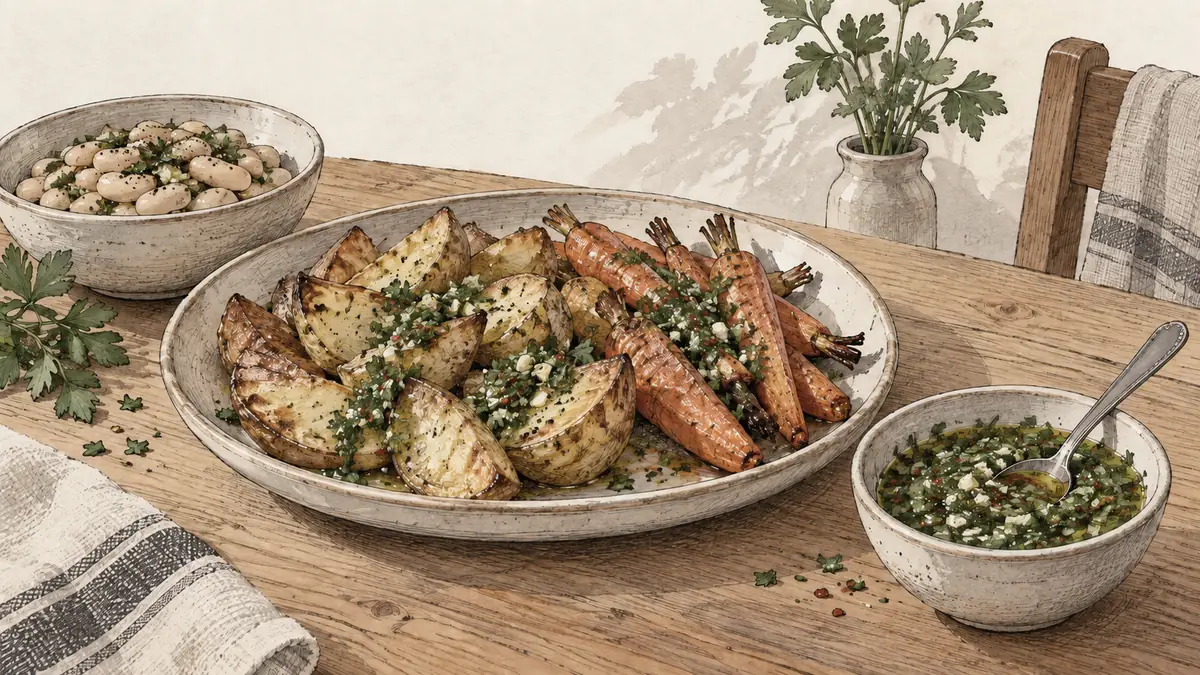
Chimichurri for Vegetables: When to Add It
Roasted potatoes, carrots and warm white beans. Three ways to bring chimichurri to the everyday table, with the sauce added after the heat.
Read the article →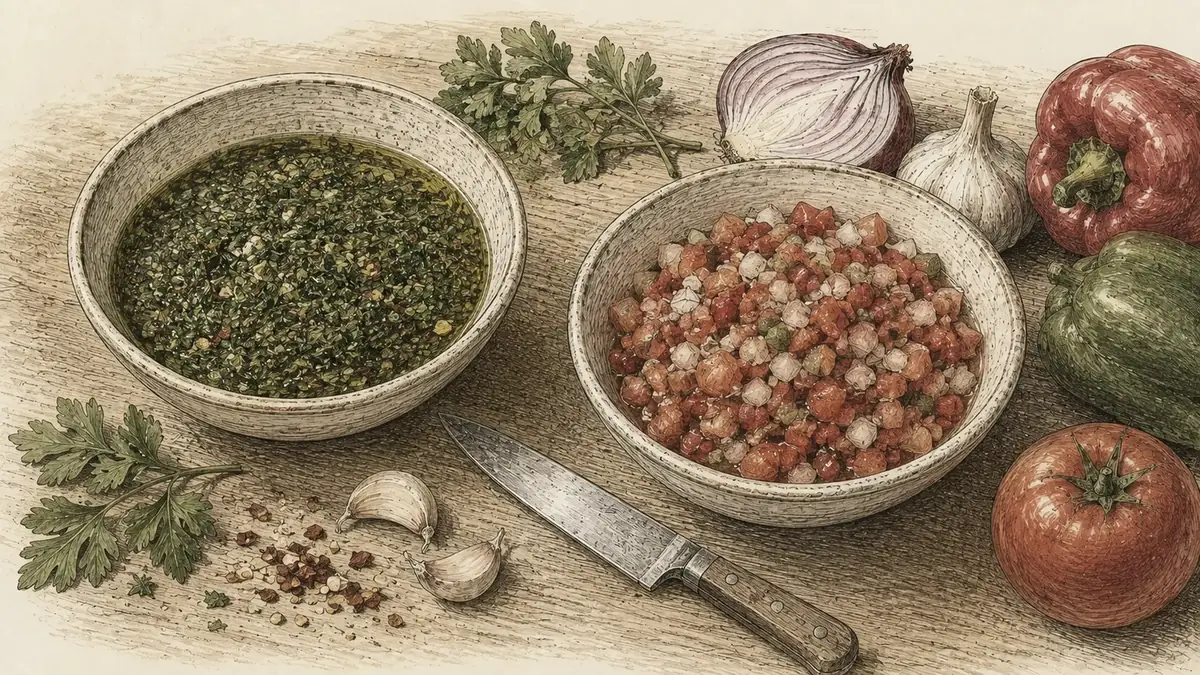
Chimichurri vs Salsa Criolla: Two Sauces of the Asado
One is herbs and oil, the other is chopped fresh vegetables. What separates chimichurri from salsa criolla, and how each is used.
Read the article →Get the next guide
An email when we publish a new salt guide or recipe, and first word when the Patagonian salts are ready to order.
We write when there is something to say, not on a schedule.