
How to Cook Argentine-Style Without a Parrilla
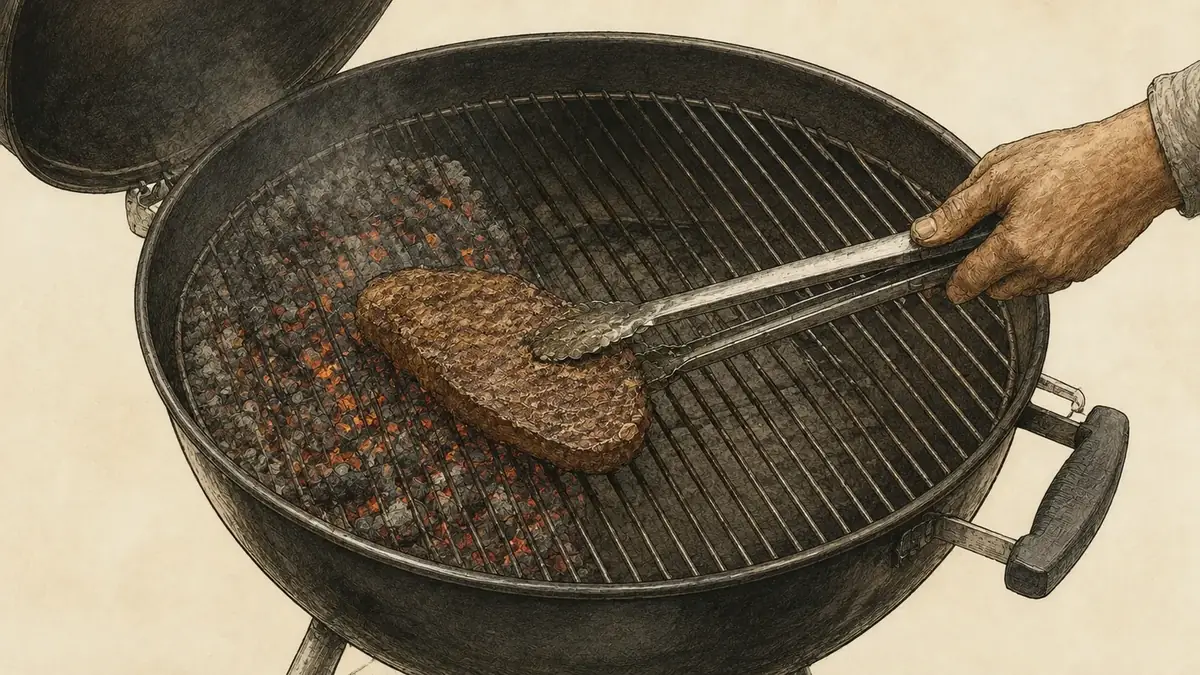
You do not need a parrilla to cook Argentine-style; you need a bed of wood or charcoal coals and a way to control the distance between the meat and the heat. A standard kettle grill does the job well. The essentials are the same as any asado: cook over glowing embers rather than flame, work in two heat zones, go slow, and season simply with coarse salt.
Start with coals, not flame
The defining move of asado is cooking over embers. Light hardwood or lump charcoal and let it burn down until the pieces glow and wear a coat of gray ash, with no active flame licking up. This is the single most important step, and it is the one home cooks skip when they rush. Coals give steady radiant heat; flame gives char and soot. The Instituto de Promoción de la Carne Vacuna Argentina describes the tradition itself as cooking over the coals of a wood fire, and that principle carries over to any grill.
Build two zones
On a parrilla, the asador controls temperature by raising or lowering the grill and by raking coals. On a kettle grill you get the same control by banking the coals to one side. That gives you a hot zone for searing and a cooler zone for slow finishing. Sear a cut over the hot side, then move it to the cooler side to cook through gently. For thick cuts, most of the time is spent over the cooler zone, lid on if your grill has one, so the inside catches up without burning the outside.
Go slower than feels natural
Asado is patient cooking. Resist high heat and constant flipping. Let a cut develop a crust, turn it once or twice, and give it time. A cast-iron pan or a flat plancha set over the coals is useful for provoleta or for cuts that would slip through the grill bars. If you want the smoke character without a wood fire, a couple of hardwood chunks on the charcoal add it; you do not need a dedicated smoker.
Season like an asador
Keep it plain. Coarse salt on the surface before the meat goes on is the standard, and a coarse salt made for the grill clings well to a wet cut. Sauces such as chimichurri or salsa criolla go on at the table, not during cooking. The whole approach trusts fire and salt over marinades, and the reward is beef that tastes like beef. Give yourself the afternoon, mind the coals, and the equipment matters far less than the method.
Common questions
Yes. Any charcoal grill that lets you build a bed of coals and control distance from the heat will do. The method matters more than the equipment.
Charcoal is much closer to the tradition, because the point is cooking over glowing embers. Gas can grill the meat but skips the coal-cooking that defines asado.
Banking the coals to one side so you have a hot zone and a cooler zone. You sear over the hot side and finish over the cooler side, which mimics distance control on a parrilla.
When they glow and are covered in gray ash, with no active flame. If you can hold your hand over them only briefly, they are hot enough to start.
Salt the surface with coarse salt before or just as the meat goes on. Argentine practice leans on coarse salt and little else.
Sources
The Salt Guide
We are recording the salts on the American shelf one jar at a time — label, panel, price paid, crystal on white. Browse the guide →
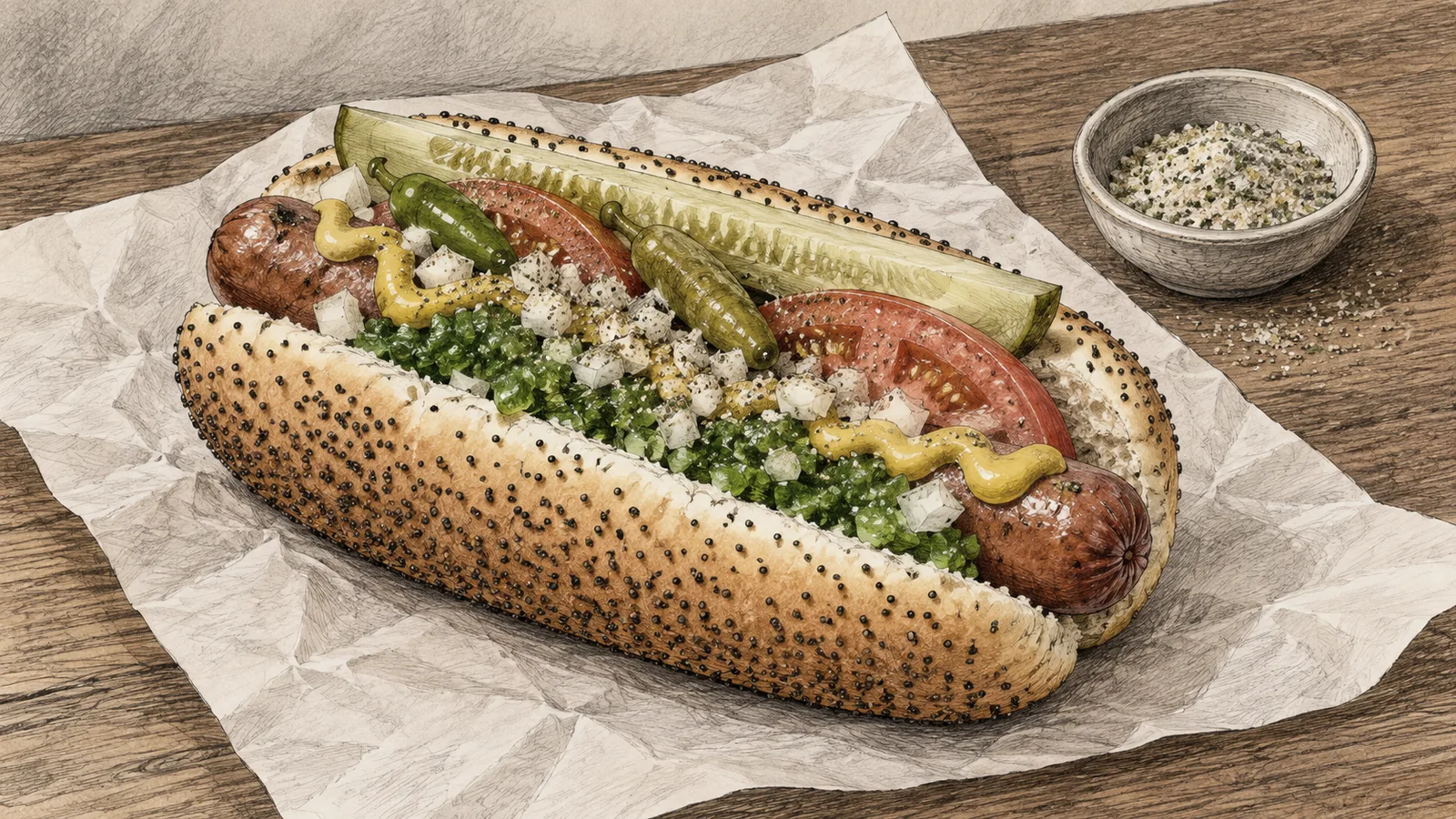
Celery Salt and the Chicago Hot Dog
Celery salt is salt and ground celery seed, not dried celery, and no maker publishes the ratio. It is the seventh and last topping on a Chicago dog, and the first ingredient in Old Bay.
Read the article →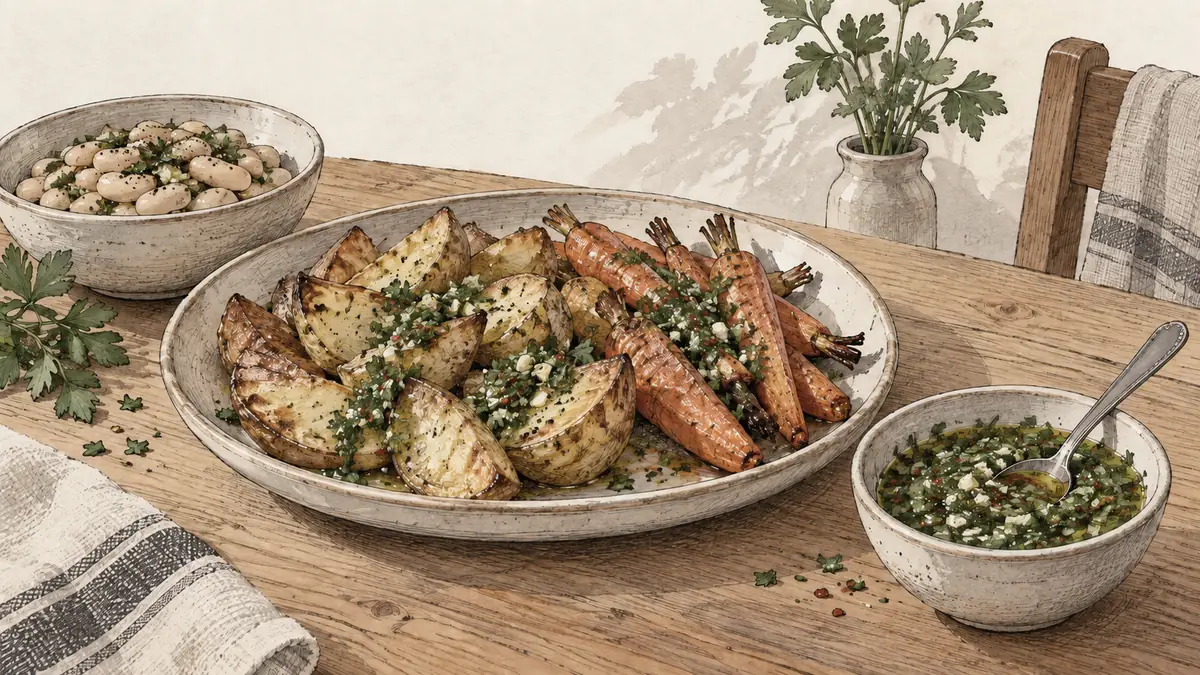
Chimichurri for Vegetables: When to Add It
Roasted potatoes, carrots and warm white beans. Three ways to bring chimichurri to the everyday table, with the sauce added after the heat.
Read the article →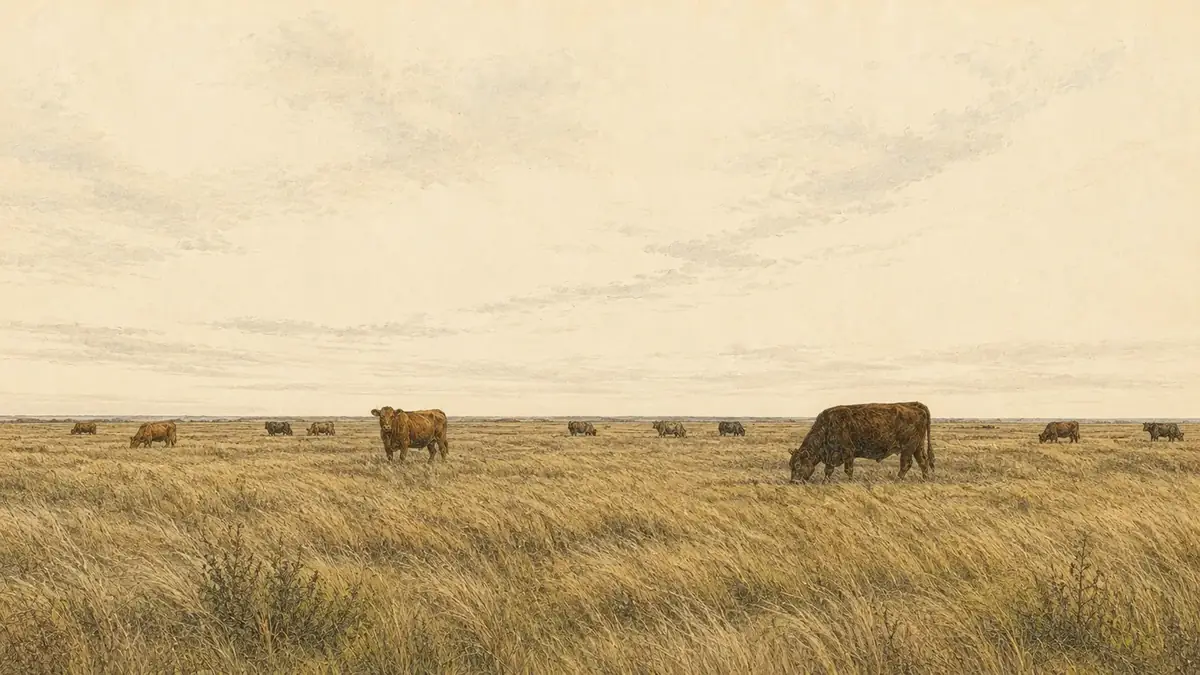
Is Argentine Beef Actually Grass-Fed?
Mostly grass-raised, increasingly grain-finished. What the pasture image gets right, what it misses, and what the feedlot numbers actually say.
Read the article →Get the next guide
An email when we publish a new salt guide or recipe, and first word when the Patagonian salts are ready to order.
We write when there is something to say, not on a schedule.