
Patagonian Salt vs. Himalayan Pink Salt
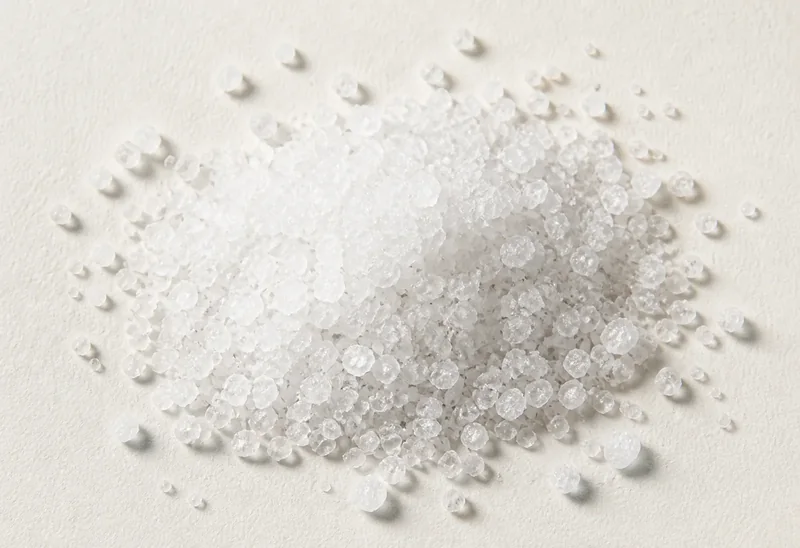
Himalayan pink salt is rock salt, mined from ancient underground deposits at the Khewra Salt Mine in Punjab, Pakistan. Patagonian sea salt is evaporated from present-day Atlantic seawater on the coast of Argentine Patagonia. They sit at opposite ends of the salt world: one is geology, the other is ocean. Neither is meaningfully healthier than the other, or than table salt — both are overwhelmingly sodium chloride.
Here is the honest comparison.
Two completely different origins
| Himalayan pink salt | Patagonian sea salt | |
|---|---|---|
| What it is | Mined rock salt | Evaporated seawater |
| Where | Khewra Salt Mine, Punjab, Pakistan — foothills, not the high Himalaya | Chubut coast, Argentine Patagonia |
| Age of the salt | An ancient marine deposit, buried and compressed over hundreds of millions of years | Present-day — seawater is collected, filtered, and evaporated at low temperature |
| Color | Pink to red from trace iron compounds | White to translucent |
| Scale | One of the world’s largest salt mines, industrial output | Artisanal — the entire genuine category is a few tonnes per month |
| Typical form | Dense ground grains or large blocks for grinders and slabs | Fine grain, coarse grain, or large separated crystals |
Both origins are real and both are legitimate. What is worth resisting is the blur between them: “ancient sea salt” is a phrase that tries to claim both at once. A salt is either an ancient deposit or it is the modern sea. It cannot be both, and each has to give up the other’s story.
The health question, answered plainly
Neither is healthier. Published analyses of Khewra salt put it at 96–99% sodium chloride; sea salts run similar or higher. The pink color comes from trace iron — visually striking, nutritionally irrelevant at the milligram-per-serving level. Cargill’s review of the category puts it flatly: no science-based evidence supports the health claims attached to pink salt. The mineral difference between any of these salts and table salt is far too small to matter in a diet; if sodium is your concern, the answer is less salt, not a different salt.
We sell salt, and we will not tell you ours is medicine. The case for a good salt is texture, origin, and how it behaves on food.
How they behave in the kitchen
This is where the products genuinely diverge.
Himalayan salt is dense and dry. It grinds cleanly, keeps forever, and looks remarkable — the blocks make functional serving slabs. Its weakness is the one America’s Test Kitchen found in blind testing: the large crystals are so dense that as a finishing salt they “failed to dissolve properly,” leaving bland spots and a “salty gravel” texture. It is at its best in a grinder, ground fine, doing ordinary salting with extraordinary looks.
Patagonian sea salt is a marine evaporate. Fine grain dissolves fast for everyday cooking; coarse grain is the sal parrillera register Argentines use on the grill; the large slow-grown crystals are finishing salt — brighter and more friable than rock salt crystals, which is precisely the property gravel-dense pink crystals lack.
The general rule that falls out: rock salt wants to be ground; sea salt wants to be used in its native crystal. Grinding a slowly evaporated sea crystal down to powder erases what you paid for.
Provenance — where the two categories differ most
Himalayan salt’s story is verifiable at industrial scale: the Khewra mine is a documented, centuries-old operation with tourist galleries, and Pakistan exports pink salt by the shipload.
Patagonian salt is the opposite case: the name is easy to say and hard to earn. Argentina produces around 1.4 million tonnes of salt a year, but almost all of it is continental — inland playas, relict lake beds, and brine wells that have never touched the ocean. Salt actually evaporated from Patagonian seawater is a tiny artisanal category, and some products sold internationally as “Patagonian sea salt” are harvested from an inland salina 42 meters below sea level whose water comes from rain, not the sea. Argentina’s food code has defined sal marina — the product of evaporating seawater — only since 2023, and created a stricter Sal Marina Argentina standard in 2024, requiring calcium, magnesium and potassium above 2% of dry residue.
So the practical advice runs in opposite directions. With Himalayan salt, authenticity is rarely the question — the mine is vast and the supply chain established. With Patagonian salt, provenance is exactly the question, and a producer should be able to name the beach and the method. Ours can: seawater from Playa Santa Isabel on the Chubut coast, filtered and evaporated indoors at low temperature. That is where it stops. Our producer describes a low-temperature process and has never put a time or a temperature to us in writing, so we do not print one.
Which should you buy?
Both, honestly, if you like salt — for different jobs. Neither is objectively better; they do different work.
- For a grinder on the table, for salt blocks, for looks: Himalayan.
- For finishing texture that dissolves rather than crunching like gravel: a sea salt crystal or flake.
- For grilling in the Argentine register: coarse sea salt.
- For health: neither, and no salt — that claim is not available to anyone.
Common questions
From the Salt Range in Punjab, Pakistan — foothills south of the Himalaya proper. The Khewra mine is the source of essentially all commercial pink salt.
No. It is mined rock salt from an ancient marine deposit. “Sea salt” refers to salt evaporated from present-day seawater.
Trace iron compounds in the crystal. The tint varies from pale pink to deep red depending on the vein.
The claim traces to marketing, not to a peer-reviewed analysis with health relevance. Whatever the trace count, the quantities are nutritionally trivial — the product is 96–99% sodium chloride.
At equal weight, no — both are essentially pure sodium chloride. Perceived saltiness differs by crystal size and dissolution speed, not origin.
A category in Argentina’s food code (Art. 1264 tris, 2024): salt from the evaporation of Argentine seawater, with calcium + magnesium + potassium above 2% of dry residue and defined contaminant limits.
Sources
- Cargill — Himalayan Salt vs Table Salt vs Sea Salt
- America’s Test Kitchen — Substituting Gourmet Salt
- Wikipedia — Khewra Salt Mine
- Resolución Conjunta 4/2023 — CAA Art. 1264 bis, Sal Marina
- Resolución Conjunta 6/2024 — CAA Art. 1264 tris, Sal Marina Argentina
- SEDICI / UNLP — Geohydrology of a northern Chubut coastal peninsula
- El Chubut (2020) — La sal marina: condimento sano y muy buscado en la cuarentena
- Drake, S.L. & Drake, M.A. (2011), Journal of Sensory Studies 26(1) — Wiley
The Salt Guide
We are recording the salts on the American shelf one jar at a time — label, panel, price paid, crystal on white. Browse the guide →
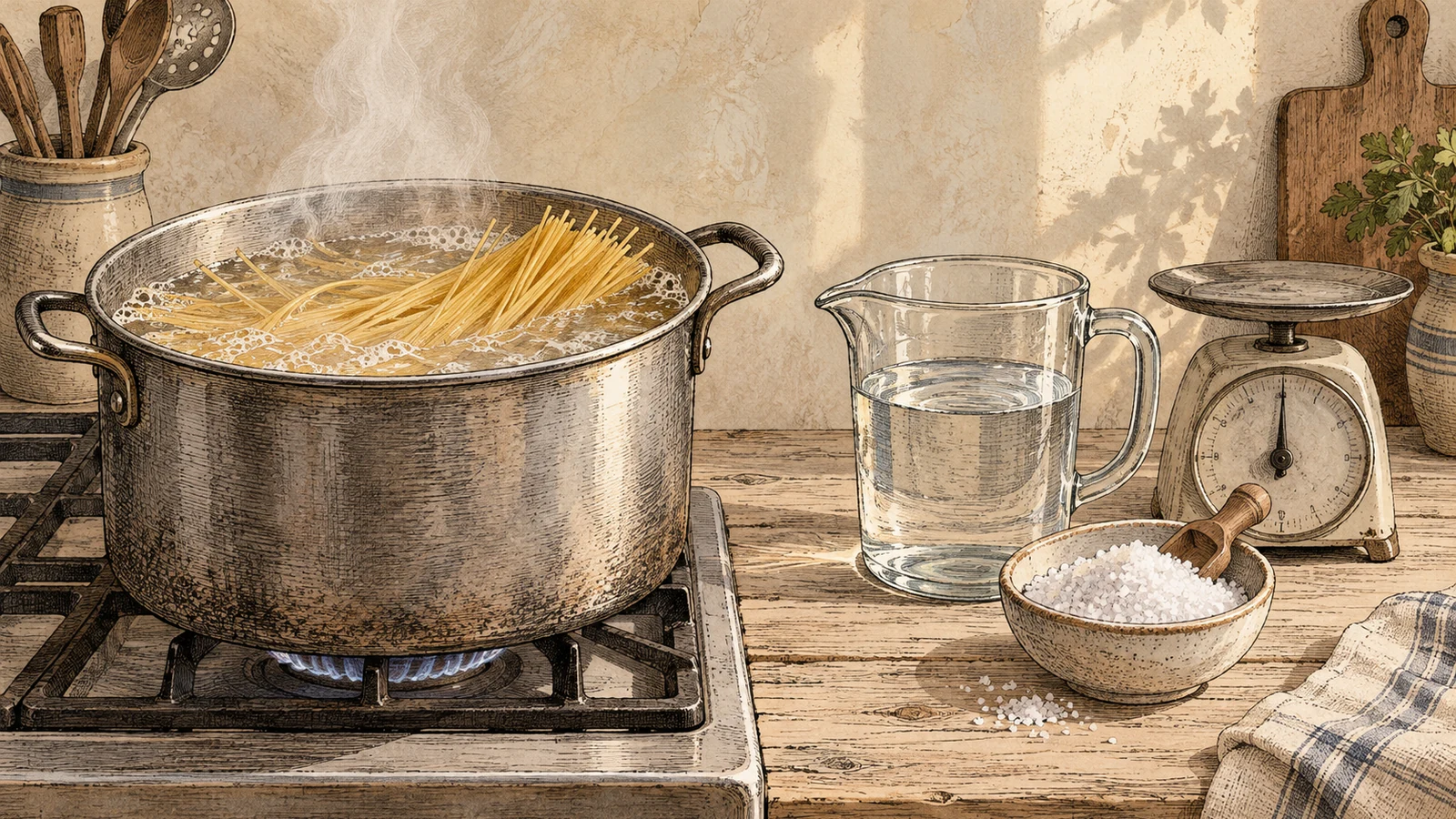
How Much Salt Should Go in Pasta Water?
The sea is far too salty. Start around 1% salt by weight of water, then adjust for the sauce, the pasta shape and how much cooking water you plan to keep.
Read the article →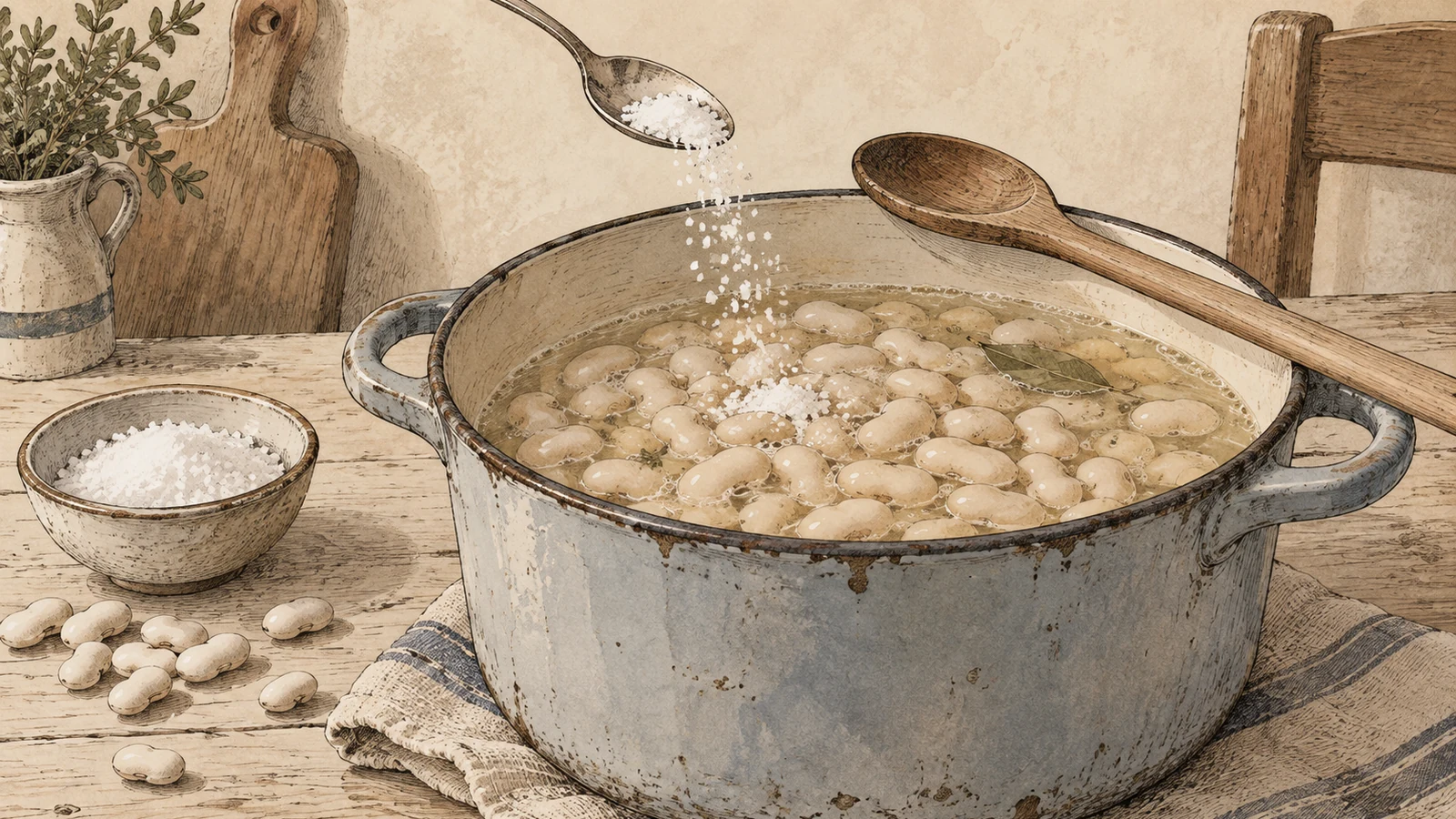
When Should You Salt Beans?
You do not have to wait until the beans are soft. Ordinary salt can go into the soak or the cooking water; bean age, acidity and calcium-rich water are more likely to explain a stubborn pot.
Read the article →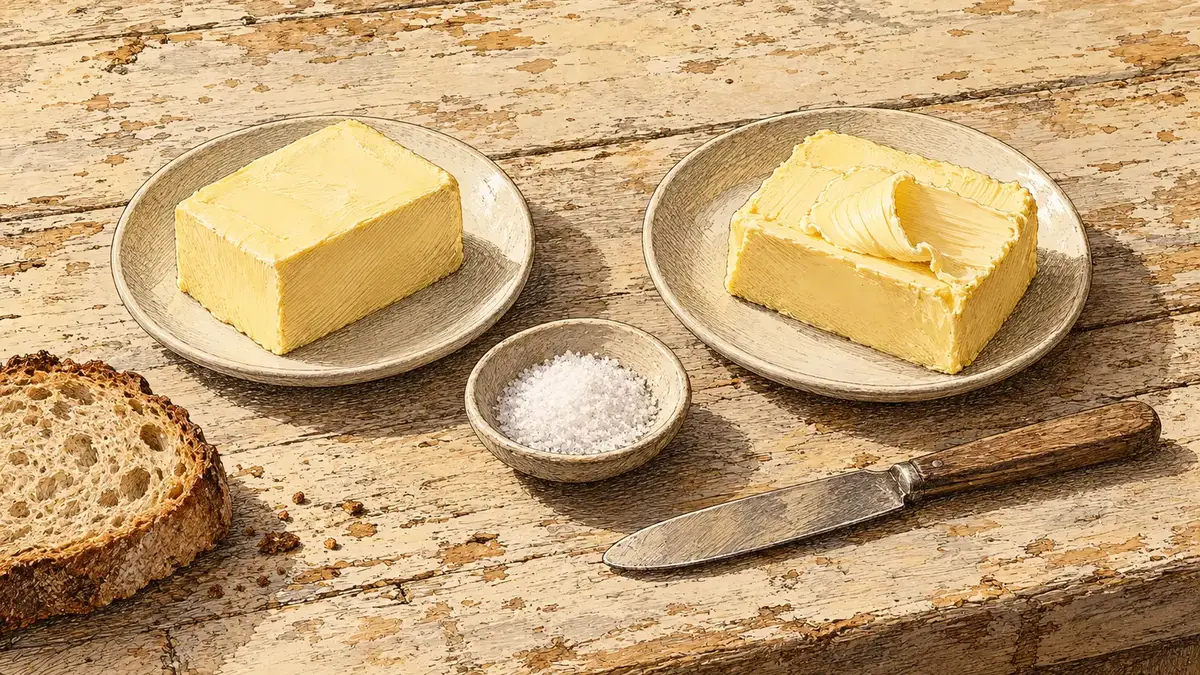
Salted vs. Unsalted Butter: How to Make the Swap
Keep the butter quantity. Adjust the salt. A practical guide to the quarter-teaspoon rule, its limits, and the other butter differences that affect a bake.
Read the article →Get the next guide
An email when we publish a new salt guide or recipe, and first word when the Patagonian salts are ready to order.
We write when there is something to say, not on a schedule.