
When Should You Salt Beans?
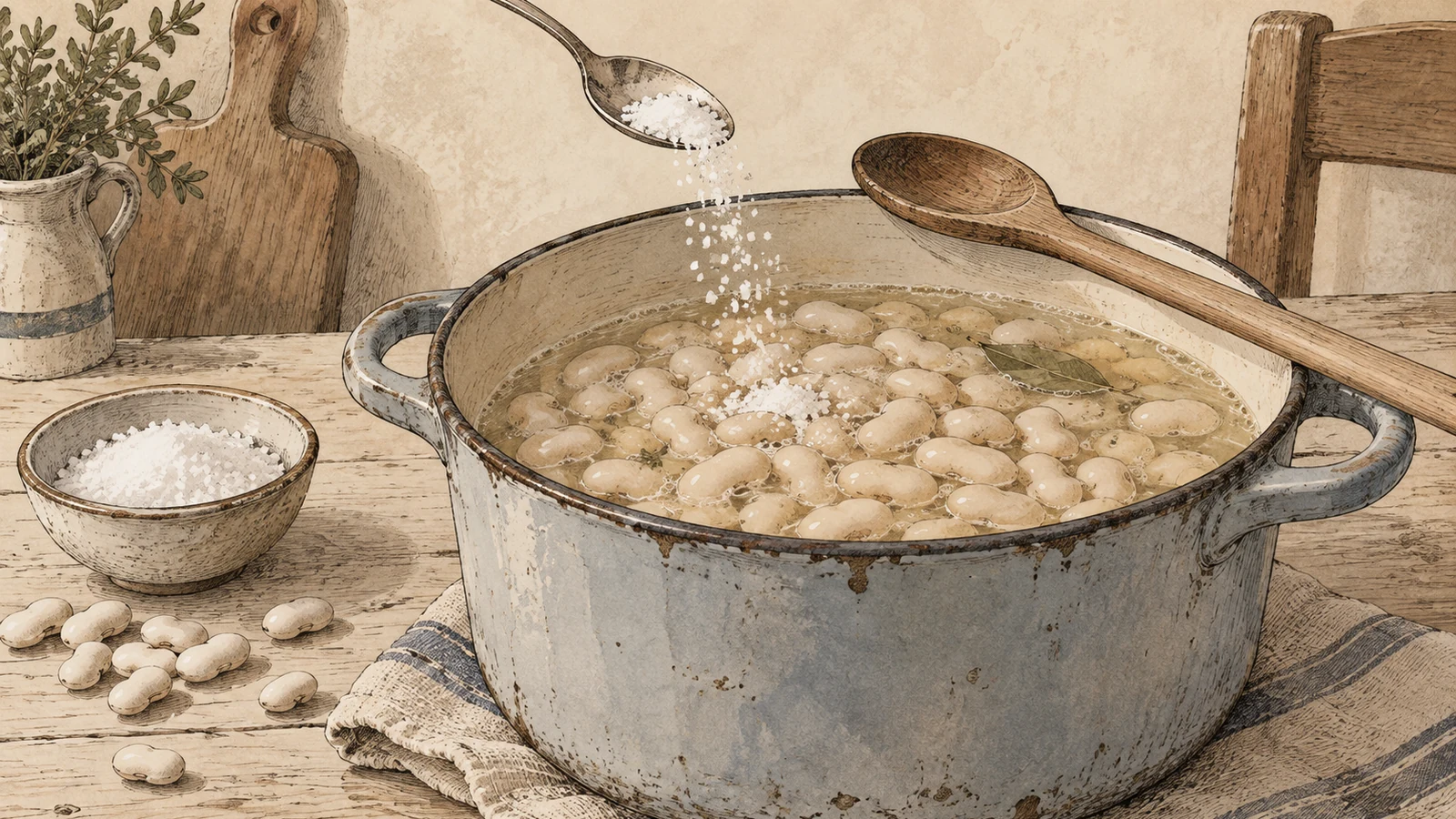
Salt dried beans during the soak or from the beginning of cooking. Ordinary sodium chloride does not justify the old rule that beans must remain unsalted until tender. What often keeps beans firm is age, acidic ingredients or calcium and magnesium in hard water.
Why the old warning sounds plausible
Beans soften as heat and water change the pectin-rich material between their cells. That makes it tempting to group every dissolved mineral under one rule. But the ion matters.
Calcium can cross-link pectin and delay softening. Studies of common beans repeatedly use calcium chloride to produce or examine firmer, slower-cooking beans. Sodium chloride is not calcium chloride, and baking soda is not ordinary salt. Treating all three as the same kitchen ingredient hides the useful part of the science.
What sodium chloride does
Research on common beans has found that salt solutions can shorten cooking in some conditions, especially when sodium and potassium displace or outweigh the effect of calcium and magnesium. Other work shows that variety, storage history and the seed coat can change the result substantially.
That is why the defensible advice is modest: normal culinary salting does not automatically condemn beans to hardness. It also does not guarantee that an old bag will become creamy on schedule.
Salt the soak or the pot?
| Method | What to do | Why use it |
|---|---|---|
| Overnight soak | Salt the soaking water, then drain | Seasoning begins while the beans hydrate. |
| Quick soak | Salt the hot soaking water | Useful when an overnight start was missed. |
| No soak | Salt the cooking water from the start | The beans season as they cook; allow extra time. |
| Soup or stew | Salt early, add acidic ingredients later | Tomato, wine and vinegar can slow softening. |
For a neutral pot, start with roughly 5 to 10 grams of salt per litre of water and adjust the finished dish. This is seasoning water, not a curing brine. If the broth will reduce heavily or receive salty meat, begin at the low end.
Why are the beans still hard?
Age: long or warm storage can create the well-studied hard-to-cook defect. No timer on the packet tells you how the beans were stored before you bought them.
Acid: tomatoes, vinegar and wine are better added after the beans are nearly tender when softness is the goal.
Hard water: calcium and magnesium can reinforce bean structure. If one kitchen consistently produces stubborn beans, try filtered or low-mineral water before blaming the salt.
Bean variety: chickpeas, black beans, white beans and lentils do not share one schedule. Even cultivars within common beans soften at different rates.
What about baking soda?
Sodium bicarbonate can accelerate softening much more aggressively than sodium chloride, but it changes pH and can push the texture from creamy to broken. It is a separate technique, not evidence that all "salt" behaves the same way.
For an everyday pot, use ordinary salt for seasoning, simmer gently and judge doneness by tasting several beans. The useful correction to the old rule is not "salt fixes everything." It is "salt is usually not the villain."
Keep reading
- Does Salt Expire? — why old salt is stable but old beans are not
- Sea Salt vs. Table Salt — plain salt by weight
- Salt Glossary — cooking and label terms in one place
The Salt Guide
We are recording the salts on the American shelf one jar at a time — label, panel, price paid, crystal on white. Browse the guide →
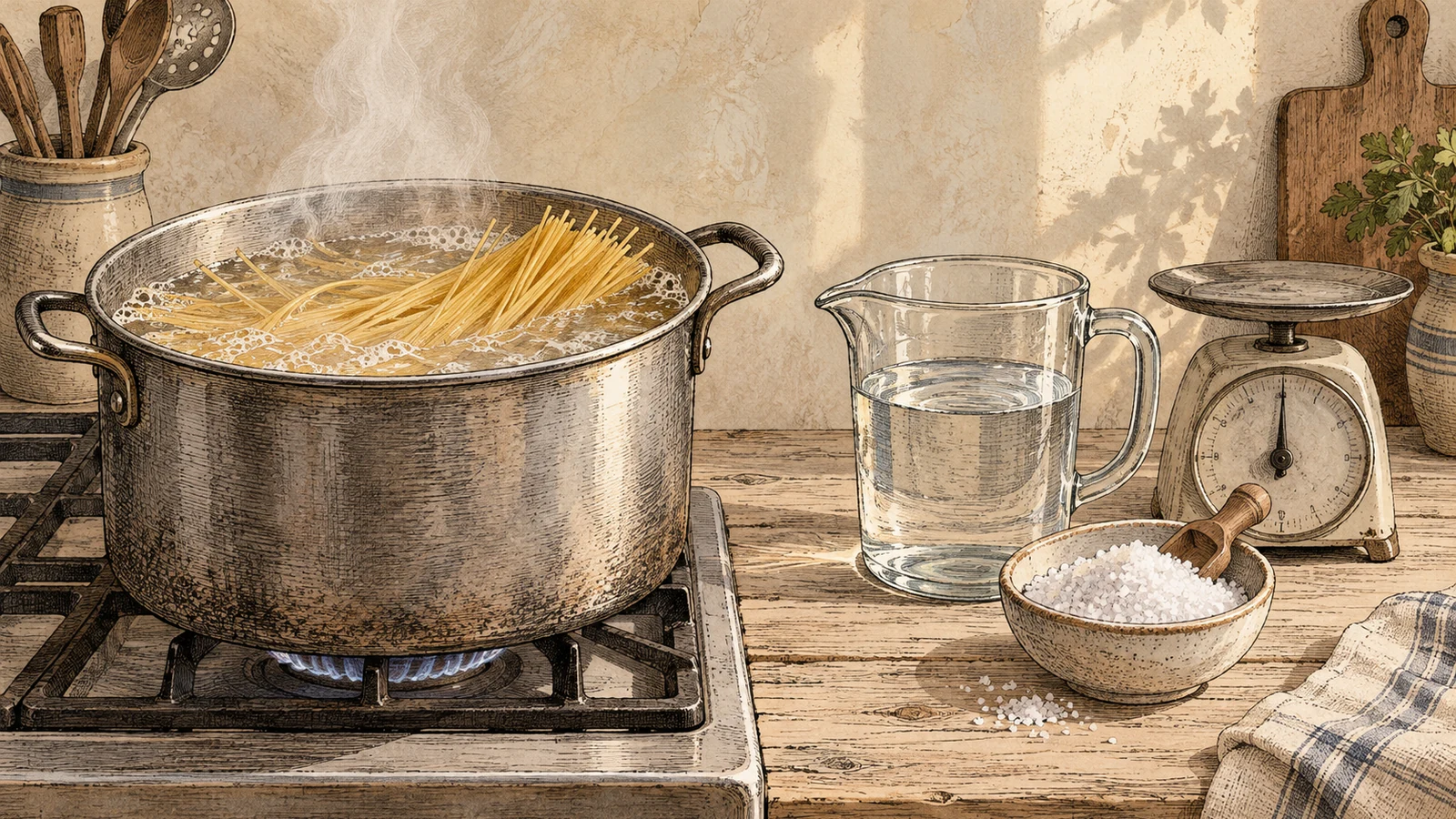
How Much Salt Should Go in Pasta Water?
The sea is far too salty. Start around 1% salt by weight of water, then adjust for the sauce, the pasta shape and how much cooking water you plan to keep.
Read the article →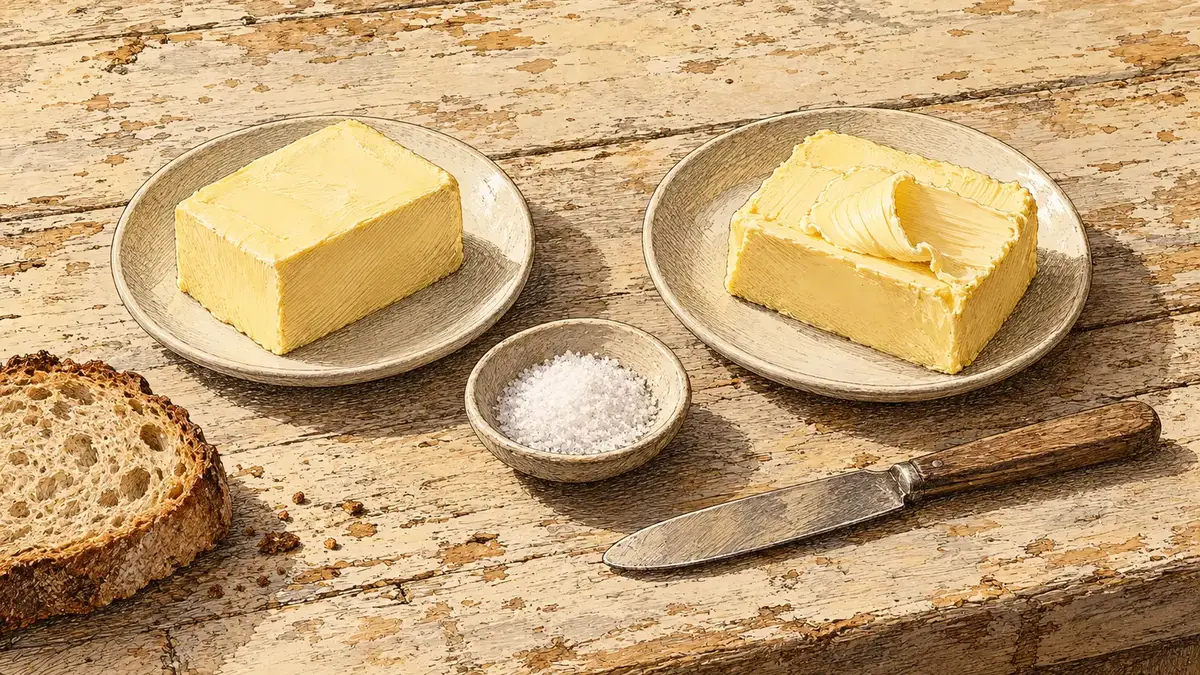
Salted vs. Unsalted Butter: How to Make the Swap
Keep the butter quantity. Adjust the salt. A practical guide to the quarter-teaspoon rule, its limits, and the other butter differences that affect a bake.
Read the article →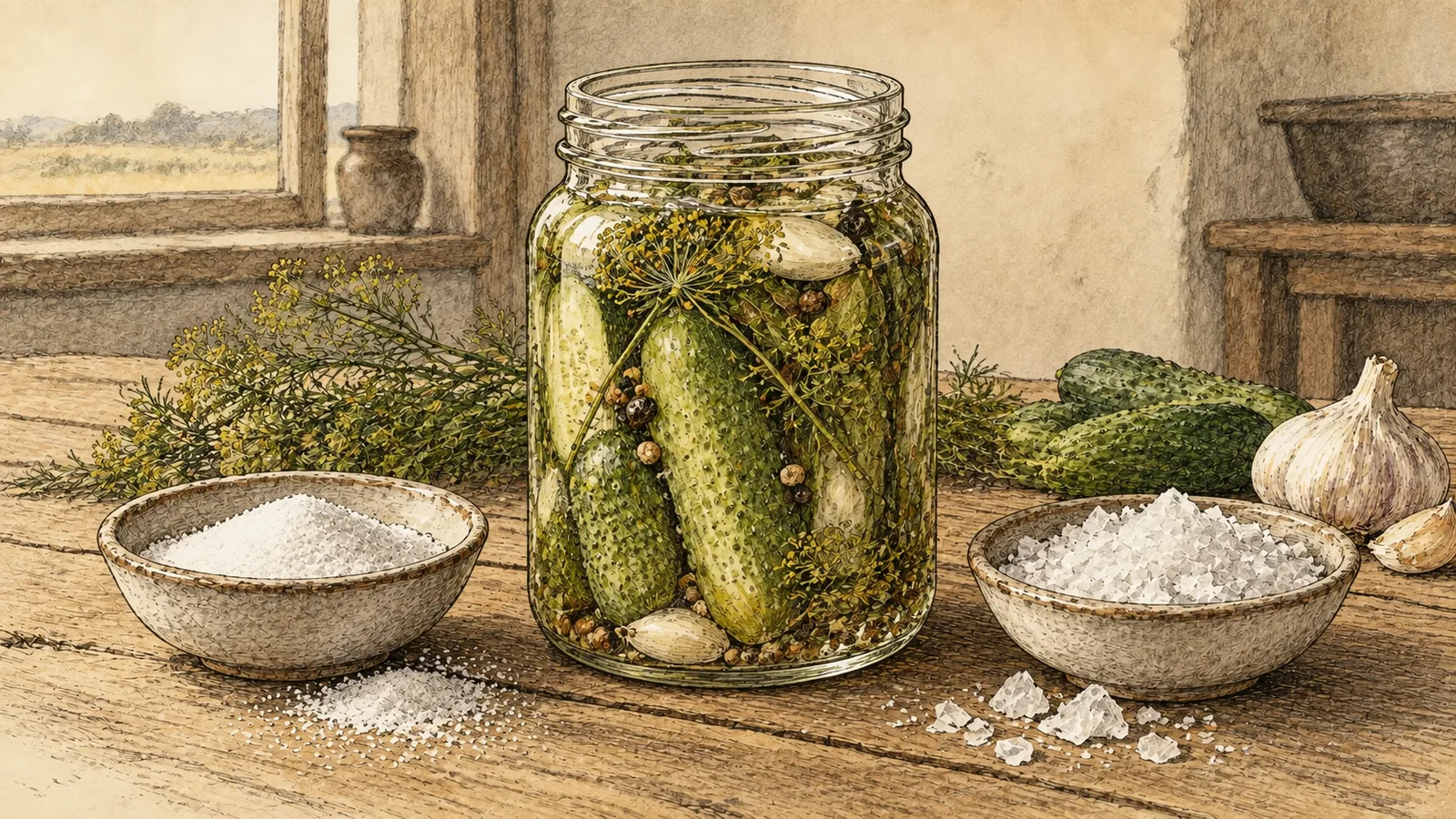
Pickling Salt vs. Kosher Salt: Can You Substitute?
Canning salt and pickling salt are the same fine, additive-free format. Kosher salt can work only when a tested recipe permits it and the amount is converted by weight, because flake density varies.
Read the article →Get the next guide
An email when we publish a new salt guide or recipe, and first word when the Patagonian salts are ready to order.
We write when there is something to say, not on a schedule.