
Does Salt Expire, and Why Does Good Salt Clump?
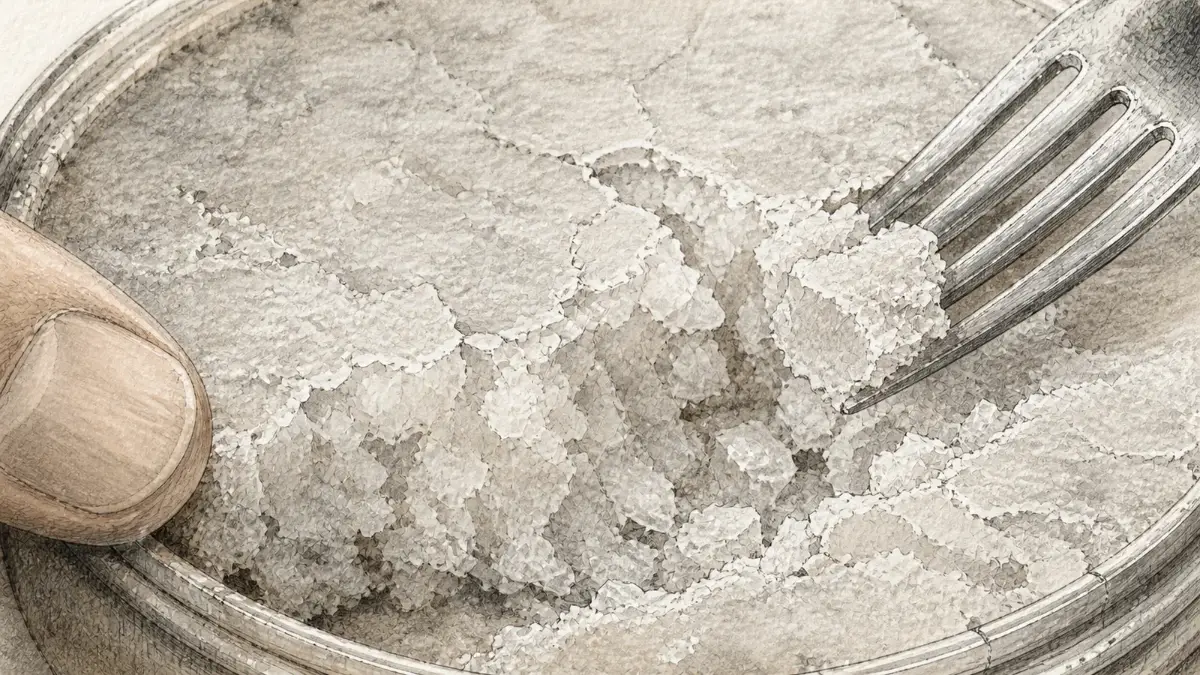
Sodium chloride formed hundreds of millions of years ago and is not going to go off in your cupboard. The date on the box is about the other ingredients, and the clumping is about humidity.
Does salt have a shelf life?
The salt does not. Anything added to it might.
Morton's own position: “While salt itself has no expiration date, salt products that contain iodine or seasonings that contain other ingredients such as spices, colors and flavors can deteriorate over time.” They put a five-year recommended use-by date on it — and here is the detail that corrects a common claim: they date plain and iodized alike, not just the iodized.
In the United States, federal law requires a date label on exactly one food: infant formula. Everything else is the manufacturer's choice.
Iodine is the one component that genuinely fades. Potassium iodide can oxidise off the crystal surface, which is why iodized salt carries dextrose as a stabiliser. The well-documented loss figures come from storage trials at 40 °C and high humidity, designed for tropical distribution chains, and they do not describe a sealed canister in an American kitchen. We are not going to transfer those percentages to your cupboard.
Why does salt clump?
Because of a threshold called deliquescence, and because most salt is not only sodium chloride.
Every salt has a relative humidity above which it starts pulling water out of the air. Below it, nothing happens. The numbers, measured at 25 °C:
| Compound | Deliquescence humidity |
|---|---|
| Sodium chloride | 75.29% |
| Potassium chloride | 84.34% |
| Magnesium chloride | 32.78% |
That gap is the whole story. Pure salt sits inert until the air passes 75% humidity. Magnesium chloride starts drawing water in at under 33% — a humidity your kitchen probably exceeds every day of the year.
So a salt carrying magnesium picks up moisture where pure salt would not. The surface dissolves slightly. When the humidity falls again the brine recrystallises and welds neighbouring crystals into a cake.
There is a further wrinkle: mixtures deliquesce lower than either component alone. Sodium chloride with sodium nitrate goes at 67.07%; with sodium sulfate at 74.39%; with both, 66.61%. Impurity, in this specific sense, always makes salt thirstier.
So a clumping salt is a mineral-rich salt?
Usually, yes — and that is the trade-off nobody puts on the front of the box. The magnesium and calcium chlorides that unwashed sea salts retain are exactly the compounds that make them clump. A salt that never cakes has either been refined until only sodium chloride is left, or had something added.
Diamond Crystal is the clean demonstration. Its ingredient list is one word, and its own packaging warns that caking may occur and tells you to shake the container. No anti-caking agent, so it cakes.
What are anti-caking agents?
Substances that get between crystals and stop them welding. American salt uses a handful, each with a regulated ceiling:
| Agent | Limit | Where you will see it |
|---|---|---|
| Calcium silicate | 2% of the food | Morton iodized table salt |
| Yellow prussiate of soda | 13 ppm in salt | Morton coarse kosher, Morton fine sea salt |
| Silicon dioxide | 2% of the food | Seasoned and flavoured salts |
| Iron ammonium citrate | 25 ppm in salt | Various |
Yellow prussiate of soda is sodium ferrocyanide, and the name reliably alarms people. It is a tightly bound iron complex rather than free cyanide, and the legal maximum in salt is 13 parts per million. Whether you want it is a preference. Whether it is cyanide in any meaningful sense is not.
Salts that carry none: Diamond Crystal kosher, Maldon, most fleur de sel and most hand-harvested sea salt. All of them cake.
Is clumped salt still good?
Yes. Clumping is a physical process — dissolving and recrystallising — not a biological one. Salt at these water activities cannot support microbial growth; it is what we use to stop microbial growth. Both major manufacturers treat caking as a handling matter rather than a safety one.
Break it up with a fork or your fingers and use it. A jar you can crack is normal. A solid brick means the container was not sealed.
Does the weight change?
It can, for the same reason. Pure sodium chloride below 75% humidity does not gain water and will not shift in weight. A moist, magnesium-bearing sea salt in an imperfectly sealed container can move in either direction as the seasons change.
US weights-and-measures guidance recognises this in general terms — packaged products may lose or gain moisture after packing — though it does not address salt specifically, and we found no published measurement of net-weight drift in retail salt. Which is a fair summary of the whole subject: the chemistry is well understood, and remarkably little of it has been measured on a shelf.
Common questions
No. If it is plain salt, it is the same compound it was on the day it was packed. If it is iodized, the iodide may have declined; the salt has not.
It gives the water somewhere else to go, which helps at the margins. It does not change the deliquescence point of the salt. A tight lid does more.
Almost certainly magnesium chloride, plus the absence of an anti-caking agent. Table salt is refined closer to pure sodium chloride and usually carries calcium silicate.
A low oven will drive the water off and it will run free again. There is no need to unless it bothers you.
Sources
- Greenspan L, J Res National Bureau of Standards 1977;81A(1):89–96 — humidity fixed points of binary saturated aqueous solutions
- Rörig-Dalgaard I, ACS Omega 2021;6(25):16297–16306 — mutual deliquescence in salt mixtures
- Morton Salt — salt expiration guide
- 21 CFR Part 172 Subpart E — anticaking agents and permitted levels
- 21 CFR 107.20 — infant formula, the only federally mandated food date label
- NIST Handbook 133 — checking the net contents of packaged goods
In the Salt Guide
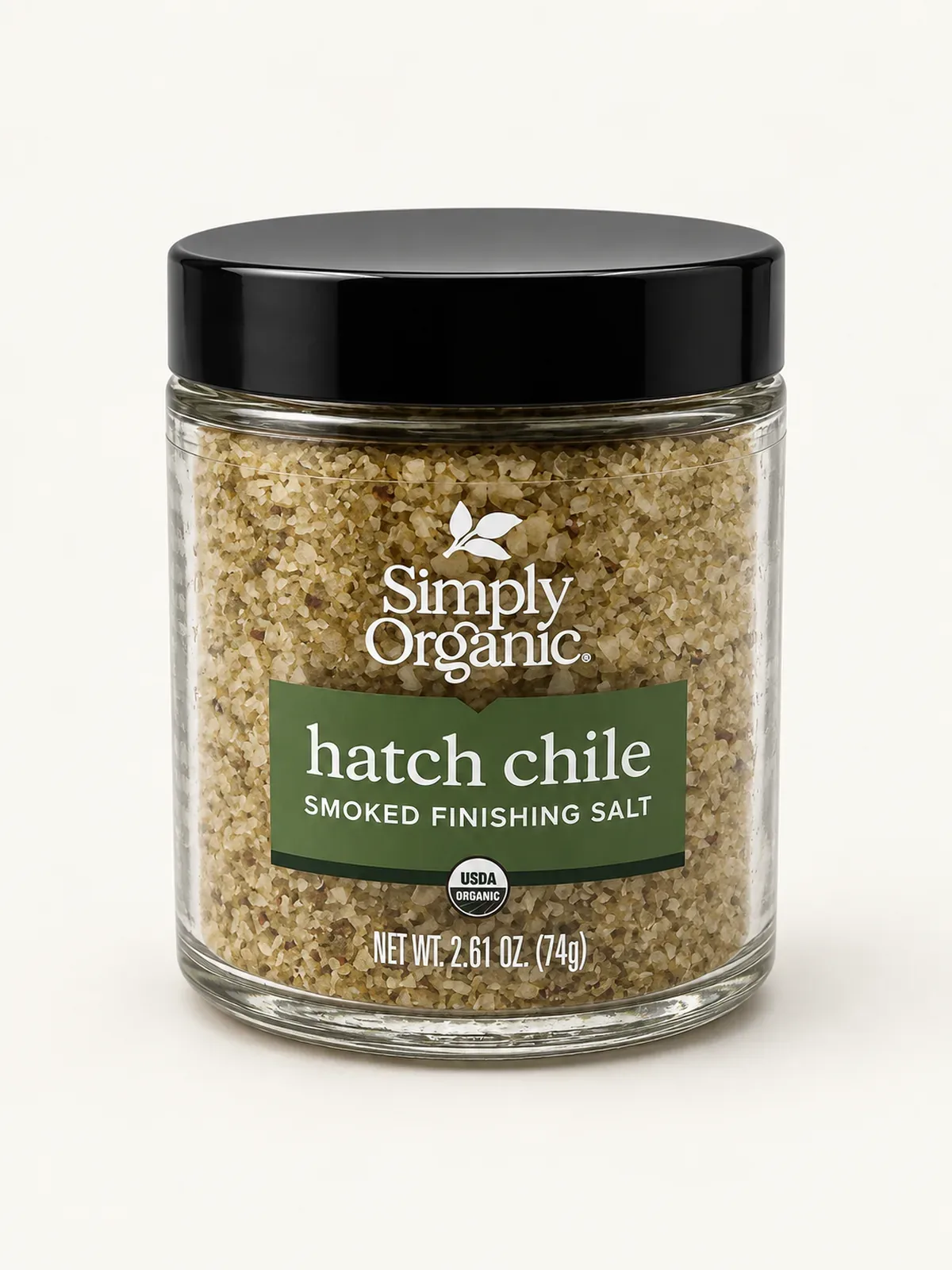
Simply Organic — Hatch Chile Smoked Finishing Salt
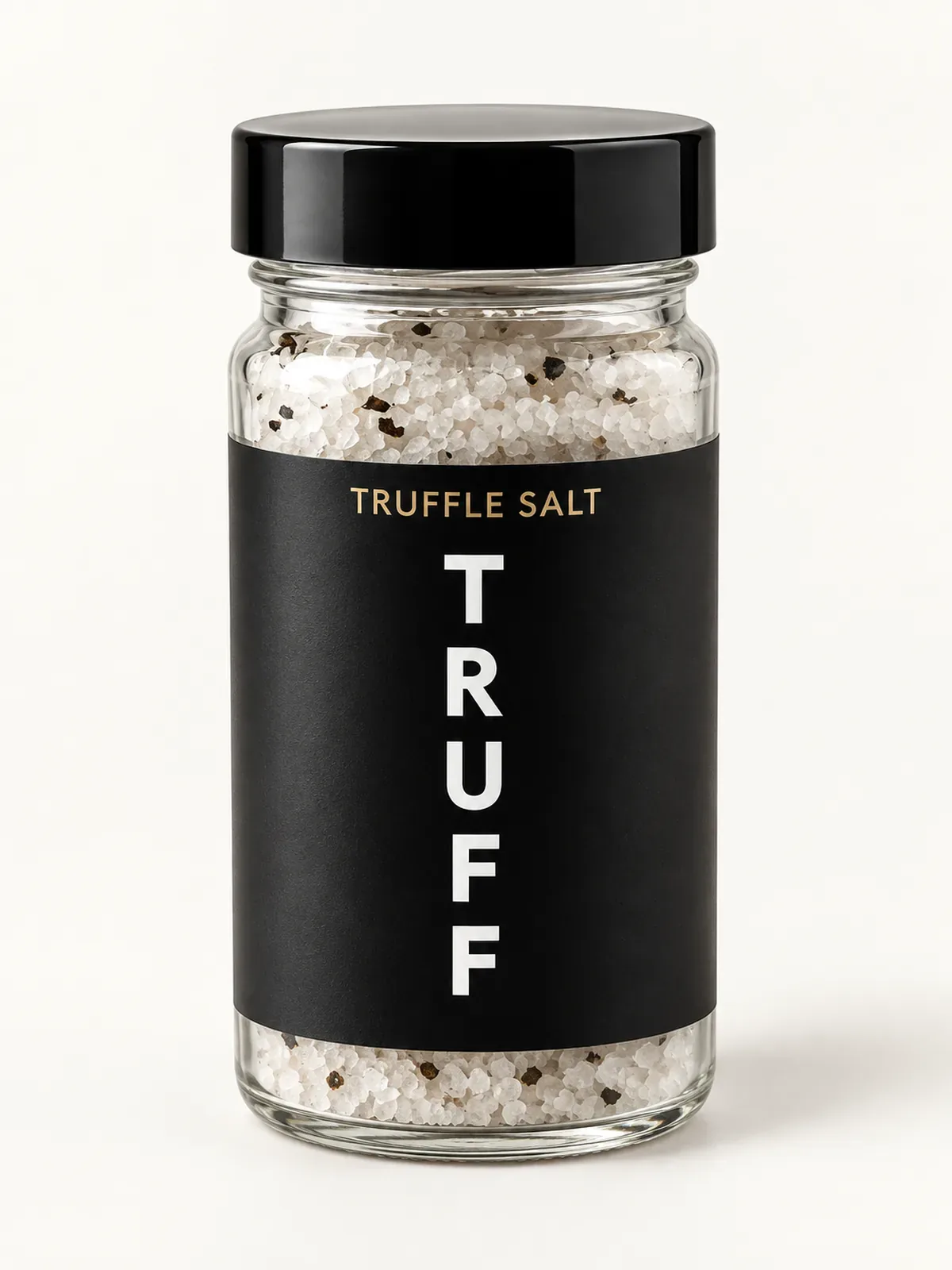
TRUFF — Black Truffle Salt
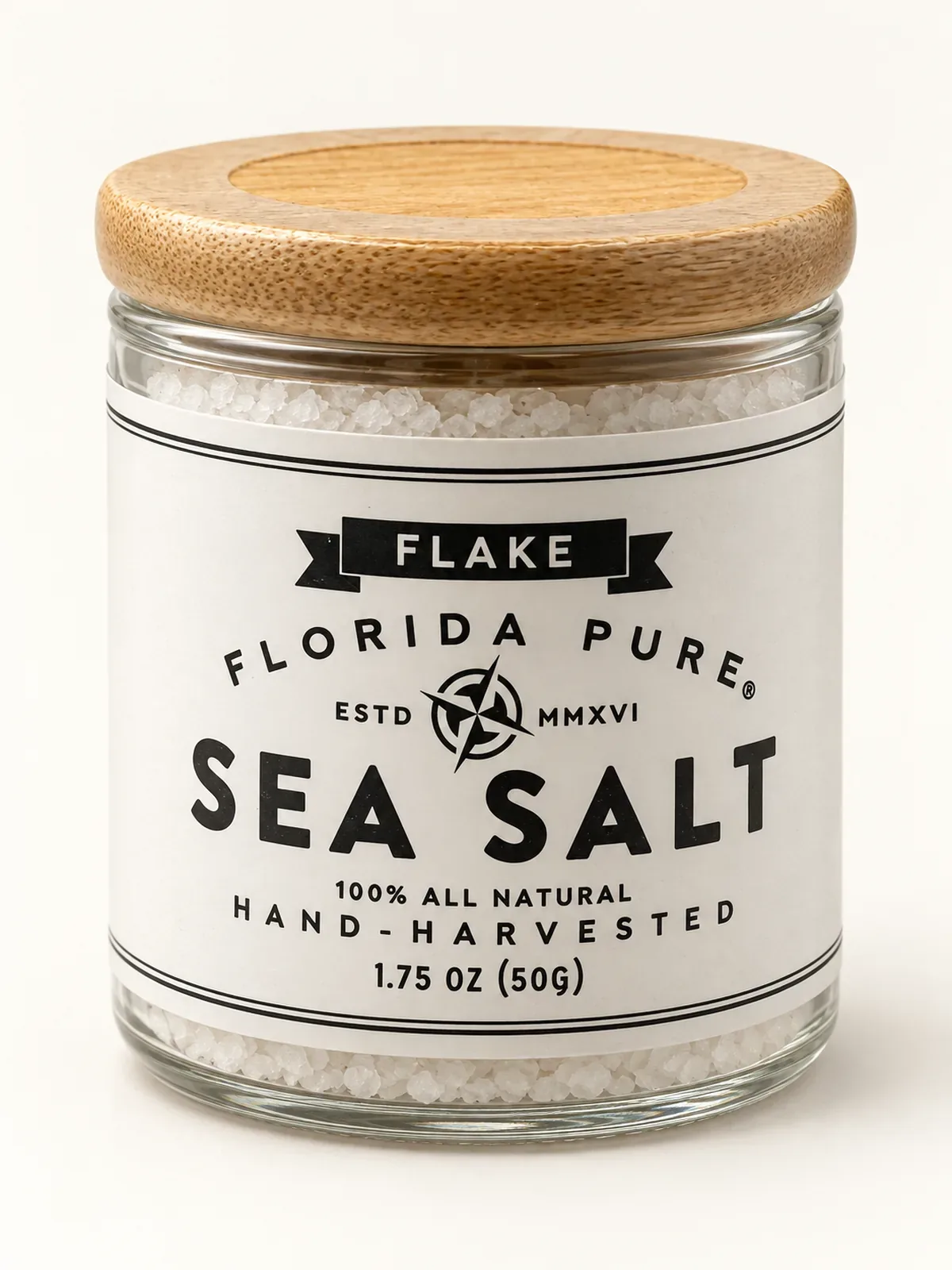
Florida Pure — Flake Sea Salt
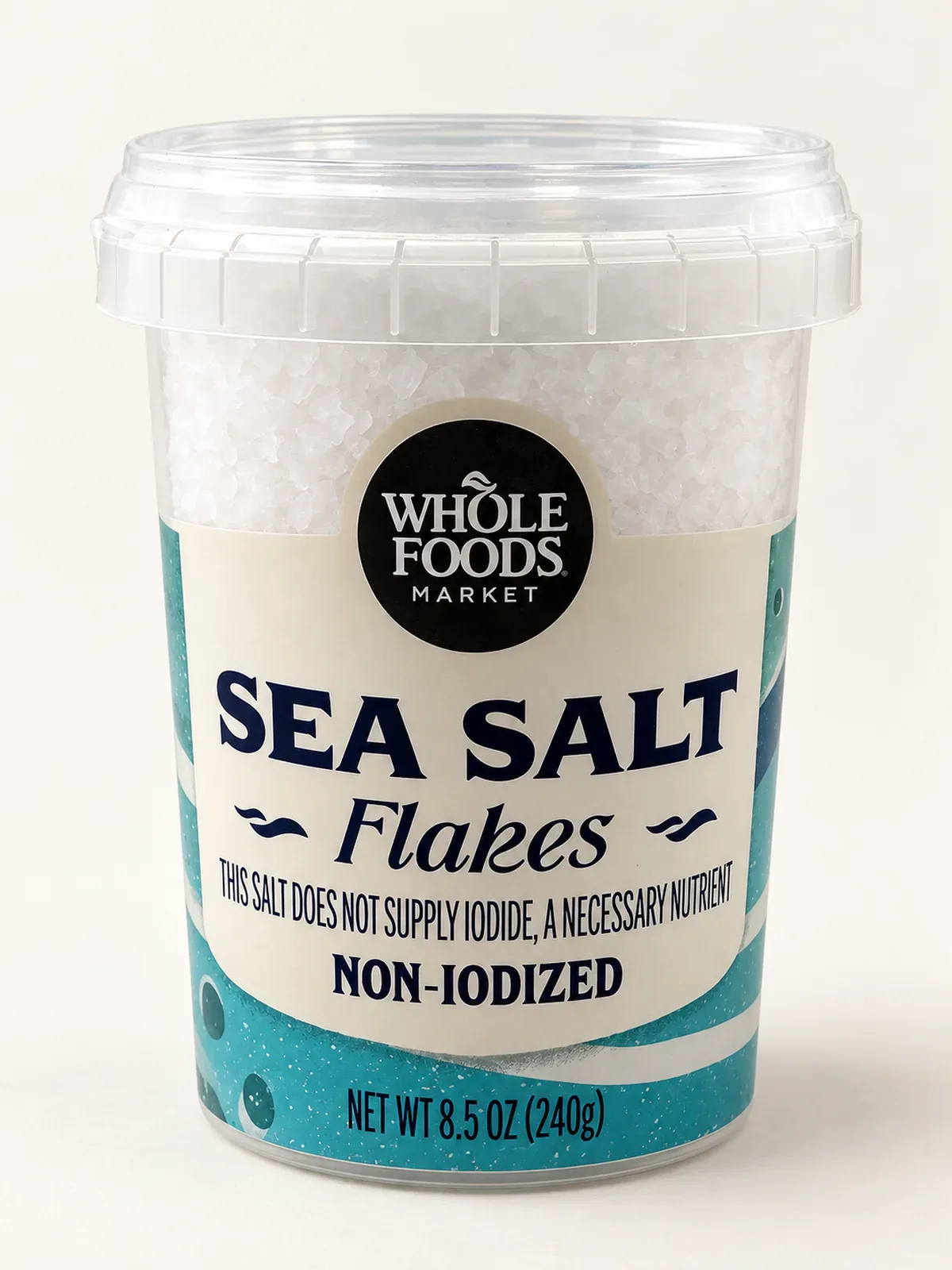
Whole Foods Market — Sea Salt Flakes
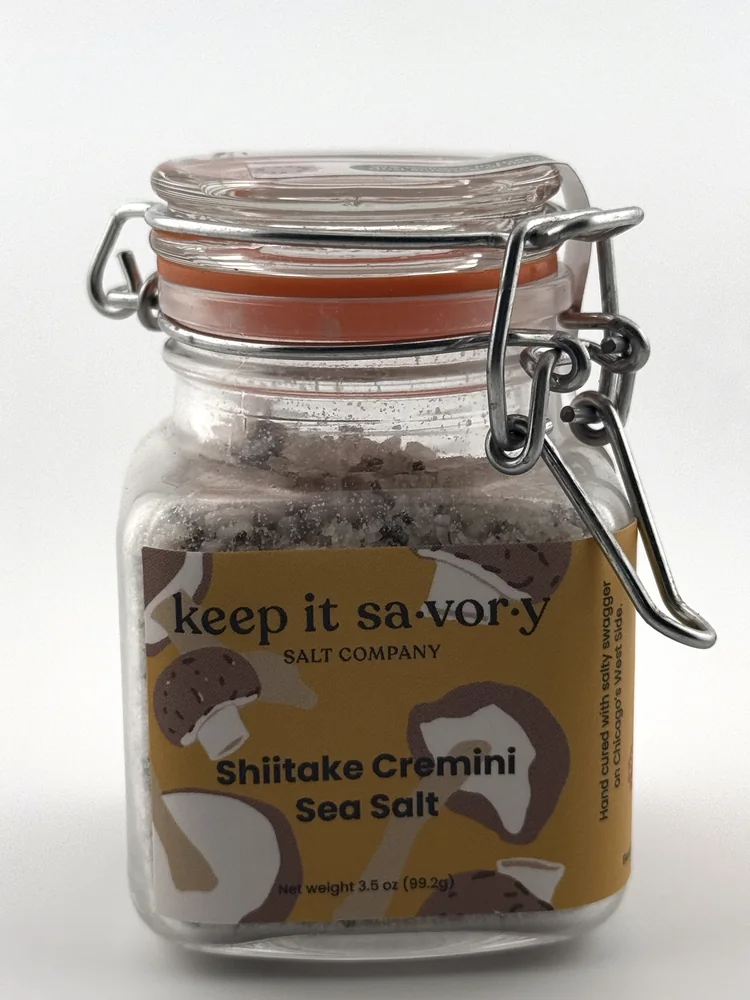
Keep It Savory — Shiitake Cremini Sea Salt
Retail salts, one entry each: label, panel, price paid, and the crystal on white. Browse the guide →
Get the next guide
An email when we publish a new salt guide or recipe, and first word when the Patagonian salts are ready to order.
We write when there is something to say, not on a schedule.