
A Tuscan Villa on a Patagonian Lake Is Not a Contradiction
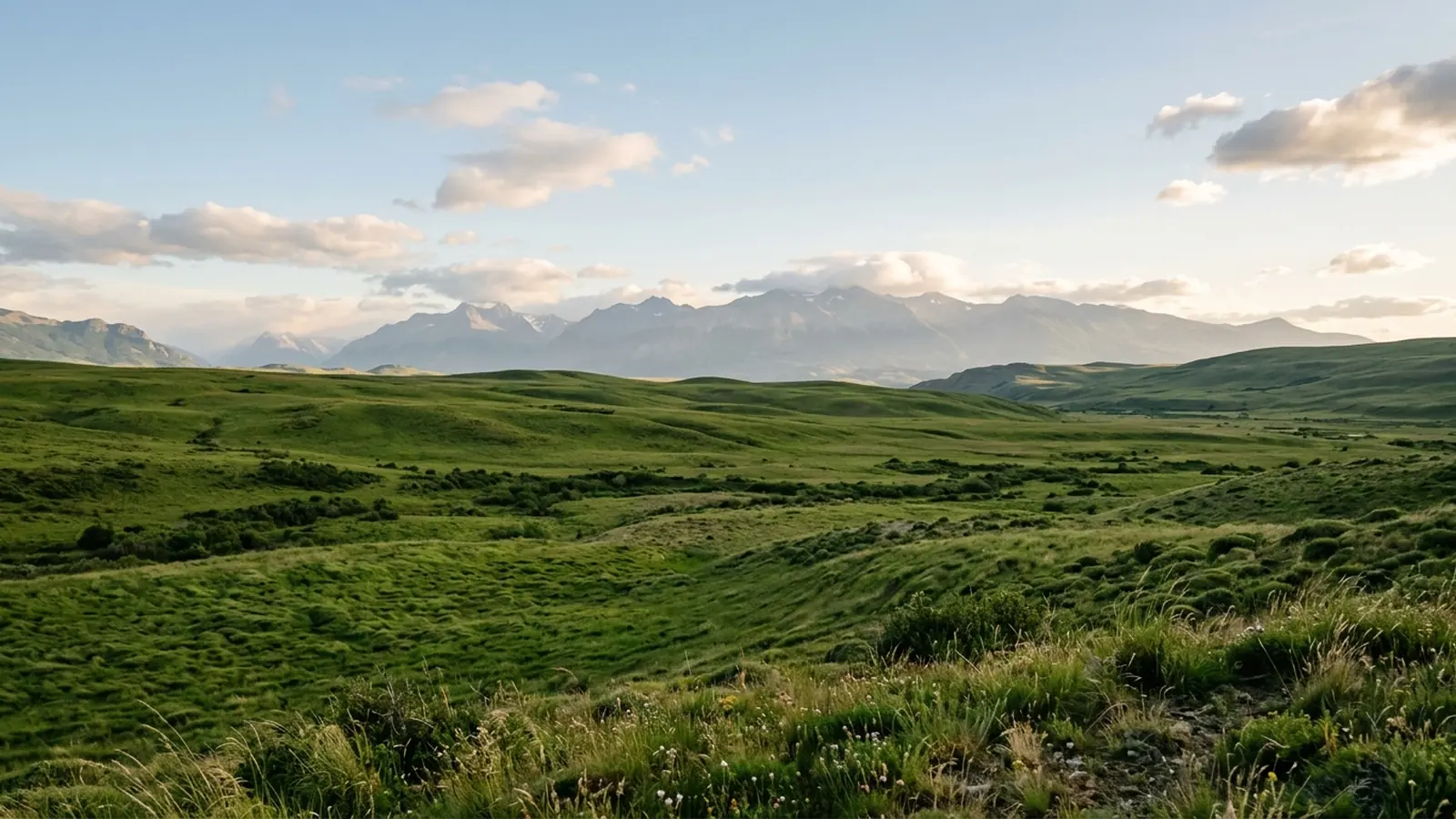
Villa Toscana — Villa La Angostura, Neuquén, Argentina · listed with Christie’s International Real Estate · price on request
There is a house for sale on the northwest shore of Nahuel Huapi with National Route 40 along one edge of the lot and the lake along the other. Eight suites, eleven and a half bathrooms, three acres, and an ancient forest of coihue and cypress around it. It is built in the style of a Tuscan villa.
A Tuscan villa in Patagonia sounds like a mistake, or like money with no idea where it landed. It is neither. It is the most Argentine thing in the listing.
Argentina is a country that arrived by boat
Between the 1880s and the 1950s something close to half of everyone who came to Argentina came from Italy. They brought what they knew and cooked it with what was here, and that collision is the whole national cuisine. Milanesa is Milan. Provoleta is provolone that met a grill. Sunday lunch in Buenos Aires is a pot of tomato sauce that has been going since morning, and nobody calls it Italian because it stopped being Italian four generations ago. It is what Argentines eat.
So a house that borrows an Italian form and builds it out of lenga and coihue and Patagonian stone is not confused about where it is. It is doing the thing the country did. The listing says the Tuscan style “intends to faithfully mirror the surrounding nature through the predominant use of wood, stone and iron,” which is a real estate way of saying: the shape came from somewhere else and the material came from here.
The tree in the brochure is wrong
The description lists the forest as coihue, cypress and bayberry. There is no bayberry in Patagonia. The tree is the arrayán — Luma apiculata — and translating it into an unrelated northern shrub is a small thing that happens to be funny, because the arrayán is the entire reason anyone outside Argentina has heard of this town.
Three kilometres from Villa La Angostura, on the Quetrihué peninsula, is Los Arrayanes National Park: about seventeen square kilometres protecting a forest of them, some over six hundred years old. The bark is cinnamon-orange and smooth and noticeably cold to the touch, and the trunks lean and split so that the whole grove looks less like woodland than like something built. People take the twelve-kilometre path out from the port to stand in it.
Getting that tree wrong while standing inside the forest that made the place famous is what happens when you describe a location instead of learning it. We would rather notice.
What you would actually cook there
Lamb, first. This is the top of the Patagonian lamb country, and the method here is al asador: the animal splayed on an iron cross planted at an angle beside the coals, leaning in, turning maybe twice in six hours. Rosemary and thyme and garlic grow in that soil, which is why the rub built for it tastes the way it does.
Then trout, which the lake is full of and the town sells beside its chocolate and its beer. Then whatever comes off the Ruta de los Siete Lagos, which starts here and runs north through San Martín de los Andes past seven of them.
The listing mentions the kitchen only in passing. It gives the spa a paragraph — heated indoor-outdoor pool, sauna, a Scottish shower in a room that smells of firewood — and the heating system a sentence, because the radiators are old French cast iron with fleur-de-lis on them. It is a house that has been described by someone looking at it rather than someone living in it.
Two notes for anyone taking it seriously
The stated size does not agree with itself. The summary reads 10,495 sq ft; the description says 13,455 sq ft for the main house plus a separate 1,507 sq ft chalet on the upper part of the lot. Those are different numbers and worth a question.
And in June 2011 the Puyehue–Cordón Caulle complex erupted across the border in Chile and buried this town in ash deep enough that it was declared a disaster area. Roofs failed. The lake went grey. It took years. Patagonia is not a postcard with a lake in it; it is a young volcanic range that is still working. That is not an argument against the house. It is an argument for knowing what you are buying into, which is the same argument we make about a jar of spice.
We have no relationship with the seller, the brokerage or the agent, and no interest in whether this house sells. We wrote about it because of where it is.
Nineteen photographs of the house — the lake-facing suites, the stone exterior, the spa, and an aerial that shows how the lot sits between Route 40 and the water — are on the Christie’s listing page. They are the brokerage’s photographs, so we have not reproduced them here.
See all 19 photos at Christie’s →Elsewhere
- Villa Toscana — Christie’s International Real Estate — the listing itself
- Los Arrayanes National Park — the Quetrihué peninsula forest
- Villa La Angostura — Neuquén tourism board — official, in Spanish
- Camino de los Siete Lagos — the road north
Get the next guide
An email when we publish a new salt guide or recipe, and first word when the Patagonian salts are ready to order.
We write when there is something to say, not on a schedule.