
What Is Smoked Salt and How Is It Made?
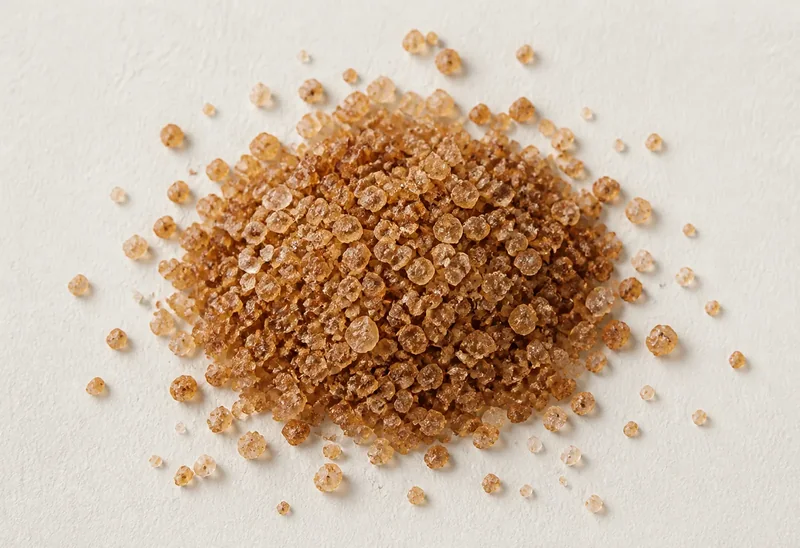
Smoked salt is salt that has been smoked over smoldering hardwood — usually for one to three days, though published times run from 24 hours to 14 days — so that smoke compounds condense onto the surface of the crystals. It contains exactly two things: salt and smoke. A product flavored with liquid smoke is a different product. U.S. law bars smoked claims only for artificial smoke flavor, and no rule we can find stops a salt made with “natural smoke flavor” from calling itself smoked, so the ingredient list is how you tell them apart.
How it is actually made
Cold smoking means the smokehouse stays cool enough that nothing cooks — in the peer-reviewed literature, roughly 15–25 °C, with wood smoldering in a separate firebox so heat never reaches the product. The salt is spread in thin layers and turned regularly so every crystal sees the smoke.
The producers who publish real numbers are a short list. Most of their figures fall between one and three days, and not all of them call the process cold:
| Producer | Wood | Documented process |
|---|---|---|
| SaltWorks (Salish) | Pacific red alder | Cold-smoked 48 hours |
| Redmond | Red alder base, with hickory, cherry, apple and pecan, or a five-wood blend | 30–42 hours by variety, “blue smoke at 130 degrees Fahrenheit” (54 °C) — not described as cold |
| Olsson’s | Red gum | “Cold-smoked for 72 hours” |
| The Spice & Tea Exchange | Red alder | 24 hours |
| Halen Môn | Welsh oak | “Slowly over oak chippings until golden” — no figure for the salt; their oak-smoked water runs four days |
| Maldon | Oak | “Gently smoking over oak” — no time or temperature published |
| Jacobsen | Cherrywood | “Cold-smoked” — no figures published |
You will sometimes read “smoked for up to two weeks.” That figure is real but singular: SaltWorks’ 2011 release says its Bonfire salt is “naturally cold smoked for 14 days.” The other published times run from 24 to 72 hours, so the honest range is usually one to three days, with one long outlier.
The smoke stays on the surface
A salt crystal is non-porous — no water phase, no fat, no protein for smoke compounds to dissolve into. In smoked meat and fish, smoke condenses on the surface and then diffuses into the food; on salt, that second step has nowhere to go. Every practical detail of production says the same thing: the salt is spread thin and turned constantly, which would be pointless if smoke penetrated the pile.
Smoked salt is a coated crystal, not an infused one. Two useful consequences follow:
- Surface area is everything. Flakes and irregular crystals carry more smoke per gram of salt than dense cubes — one reason the classic smoked salts are flake salts.
- The flavor rides on the outside, so grinding smoked salt fine, or dissolving it into a big pot, dilutes a fixed small quantity of smoke into insignificance. That — not fragility — is why it belongs at the end of cooking.
What makes it amber
Wood smoke’s color and flavor come largely from phenolic compounds produced when lignin breaks down — chiefly guaiacol (clove-like, carried in taste) and syringol (the ashy-smoky aroma). On meat, smoke color is partly a browning reaction with the meat’s proteins. Salt has no proteins, so the toffee color of a genuinely smoked salt is the deposited smoke fraction itself — you are looking directly at the flavor.
Honest caveat: color depth is still not a reliable intensity gauge across brands, because woods, times, and salts differ. Within one producer’s line it means more.
Smoked vs. “smoke flavored” — and what the law says
This is the distinction the category quietly runs on.
Genuinely smoked salt lists salt and smoke, nothing else: “Sea Salt, Smoke” (Jacobsen); “Halen Môn Pure Sea Salt PDO, Smoke from Oak Chippings”; “Smoked Sea Salt” (SaltWorks). The cheaper shortcut is mixing salt with liquid smoke — condensed smoke, known since the 18th century as pyroligneous acid.
U.S. regulation is direct here, but narrow. FDA’s flavor-labeling rule, 21 CFR 101.22(h)(6), says that no representation may be made, directly or implied, that a food flavored with artificial smoke flavor “has been smoked or has a true smoked flavor.” And “natural smoke flavor,” the phrase you actually see on labels, is not an FDA-defined term at all — the same liquid can be described as a natural flavor under one paragraph of the rule and an artificial smoke flavor under another.
Enforcement is another matter: products marketed as “cold-smoked” whose ingredient panels read “salt, smoke flavor” are on sale today, and courts have been unsympathetic to consumers who sued over similar labels.
So the only reliable test is the one printed on the jar: read the ingredient list. Two ingredients — salt, smoke — is the real thing. Any mention of “smoke flavor,” natural or otherwise, is a flavored salt. Price is a weaker second signal: producers who genuinely run a smokehouse charge 50–90% more for their smoked salt than for the same salt plain, because a two-day smoke is real labor.
How to use it
Smoked salt is the shortest route to fire flavor without fire — which makes it disproportionately useful for indoor cooking and for vegetables.
- Finish, don’t simmer. Rested steak, roasted vegetables, eggs, avocado, corn, tomato. On anything grilled it doubles down; on anything from the oven it stands in for the grill you didn’t light.
- The sweet crossover is real: chocolate, caramel, brownies — smoke reads beautifully against sugar.
- Plant-based cooking is the quiet power use: a smoked salt puts campfire on cauliflower, beans, or a vegan chowder with two ingredients’ worth of label.
One myth to retire: smoke flavor does not “cook off” the moment heat touches it — guaiacol boils above 200 °C and smoke phenols persist in cheese and meat for weeks. The reason to add smoked salt late is dilution and cost, not chemistry panic.
Common questions
Traditionally smoked salt is salt plus real wood smoke — two ingredients. Salts made with liquid smoke or “natural smoke flavor” involve a manufactured flavoring, which is what the label language reveals.
Read the ingredients. “Salt, smoke” or “smoked sea salt” alone means genuinely smoked. Any listed “smoke flavor” — including “natural smoke flavor” — means flavored.
Published commercial times mostly run one to three days: 24 hours (The Spice & Tea Exchange) to 72 (Olsson’s). SaltWorks gives 14 days for one salt, Bonfire. Not every maker calls its process cold: Redmond smokes at 130 °F (54 °C).
Salt itself is indefinitely stable. The smoke coating is the perishable part — keep the jar sealed, away from light and heat, and use it within a year or two for peak intensity.
Wood smoke contains polycyclic aromatic hydrocarbons, which is true of every smoked food and every grill session. The exposure from milligram pinches of a finishing salt is a very small fraction of what a plate of smoked meat delivers. As with all smoked foods, it is a flavor to enjoy in normal amounts, not a health food.
Yes — a thin layer of coarse salt in a cold smoker (under about 27 °C / 80 °F), stirred every half hour, for 4–12 hours produces a real result. What you cannot do is replicate it with liquid smoke and honestly call it smoked.
Sources
- Nizio, Czwartkowski & Niedbała (2023), “Impact of Smoking Technology on the Quality of Food Products: Absorption of Polycyclic Aromatic Hydrocarbons (PAHs) by Food Products during Smoking,” Sustainability 15(24):16890 — MDPI
- 21 CFR 101.22 — FDA flavor labeling, incl. (h)(6) on smoke representations
- Culinary Institute of America — The Smoking Process (PDF)
- Vazquez, T.D. (2022), Formation of Key Aroma Compounds in Condensed Wood Smoke, Ohio State University — OhioLINK
- SaltWorks — Salish alderwood smoked sea salt (48-hour process)
- Redmond — What is smoked salt? (30–42 hour processes)
- Redmond — What process is used to smoke Redmond Smoked Real Salt? (130 °F)
- Olsson’s — Red gum smoked salt (cold-smoked 72 hours)
- SaltWorks — Bonfire smoked sea salt press release, June 2011 (14 days)
- Halen Môn — Pure Sea Salt Smoked over Oak
- Jacobsen Salt Co. — Cherrywood smoked salt (“Sea Salt, Smoke”)
- Maldon — What is smoked salt and how best to use it
- Oregon State Seafood Network — smoke absorption and surface moisture (PDF)
- Wikipedia — Liquid smoke / pyroligneous acid
The Salt Guide
We are recording the salts on the American shelf one jar at a time — label, panel, price paid, crystal on white. Browse the guide →
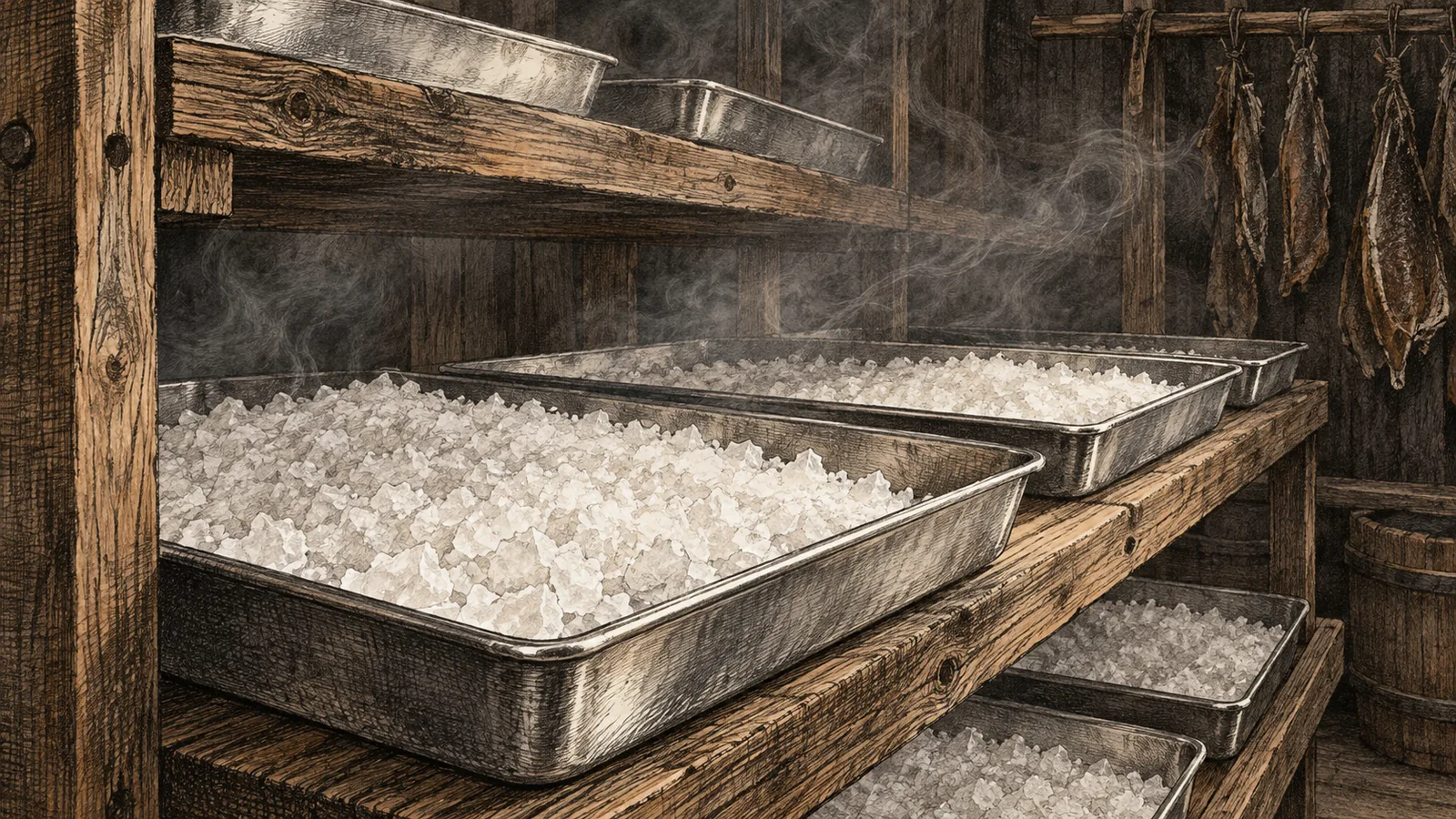
Cold Smoke, Hot Smoke and Why Salt Is Not Meat
The only US line between cold and hot smoking, 90 degrees F, was written for fish. Nothing defines cold-smoked salt, and the one salt maker we found that publishes a temperature smokes at 130.
Read the article →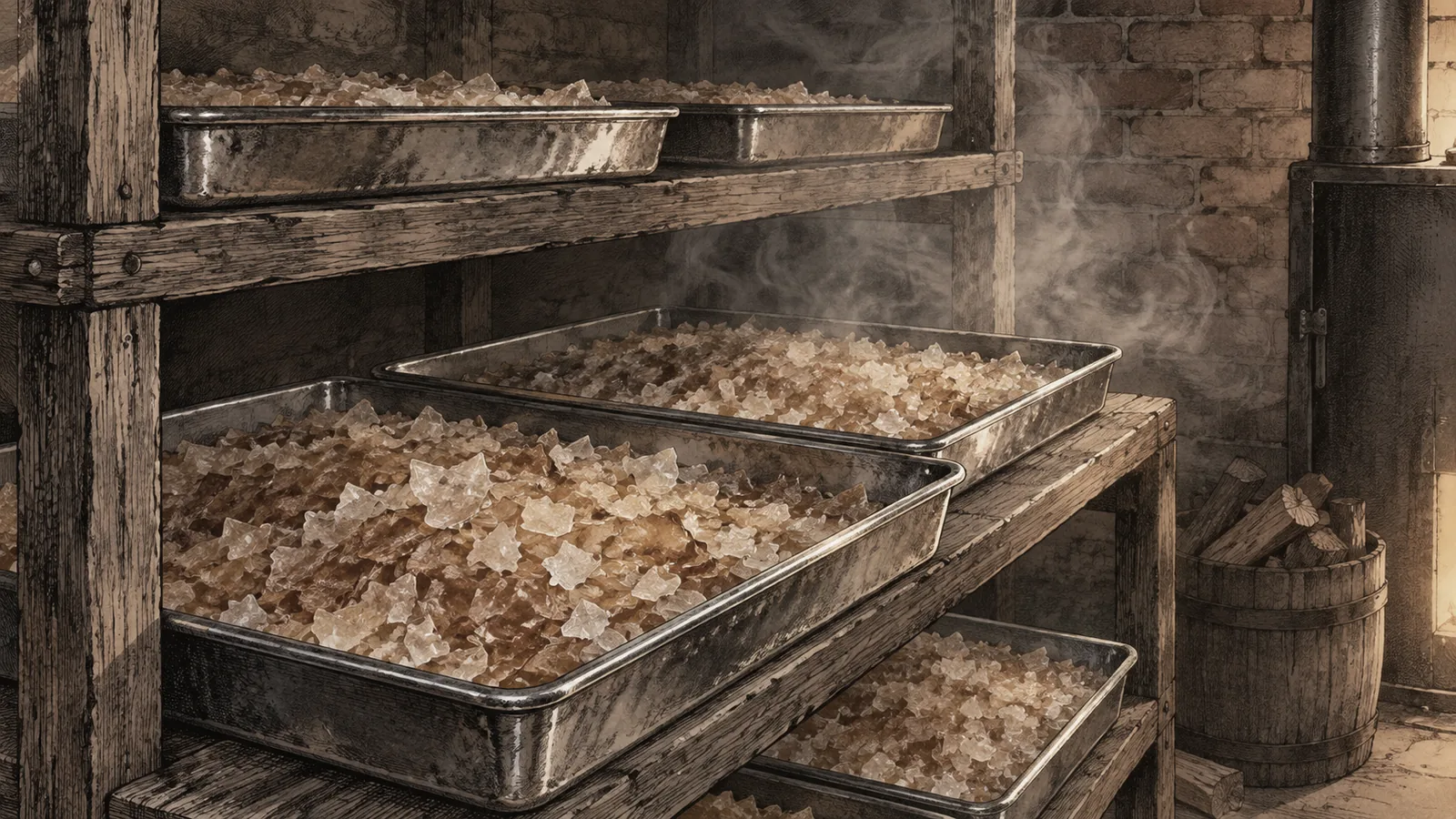
The EU Banned Smoke Flavourings. Here Is What That Means for Salt
Since 1 July 2026, no new smoke-flavoured salt can be placed on the EU market. None of the ten flavourings has come back, a court challenge is pending, and salt smoked over real wood was never covered.
Read the article →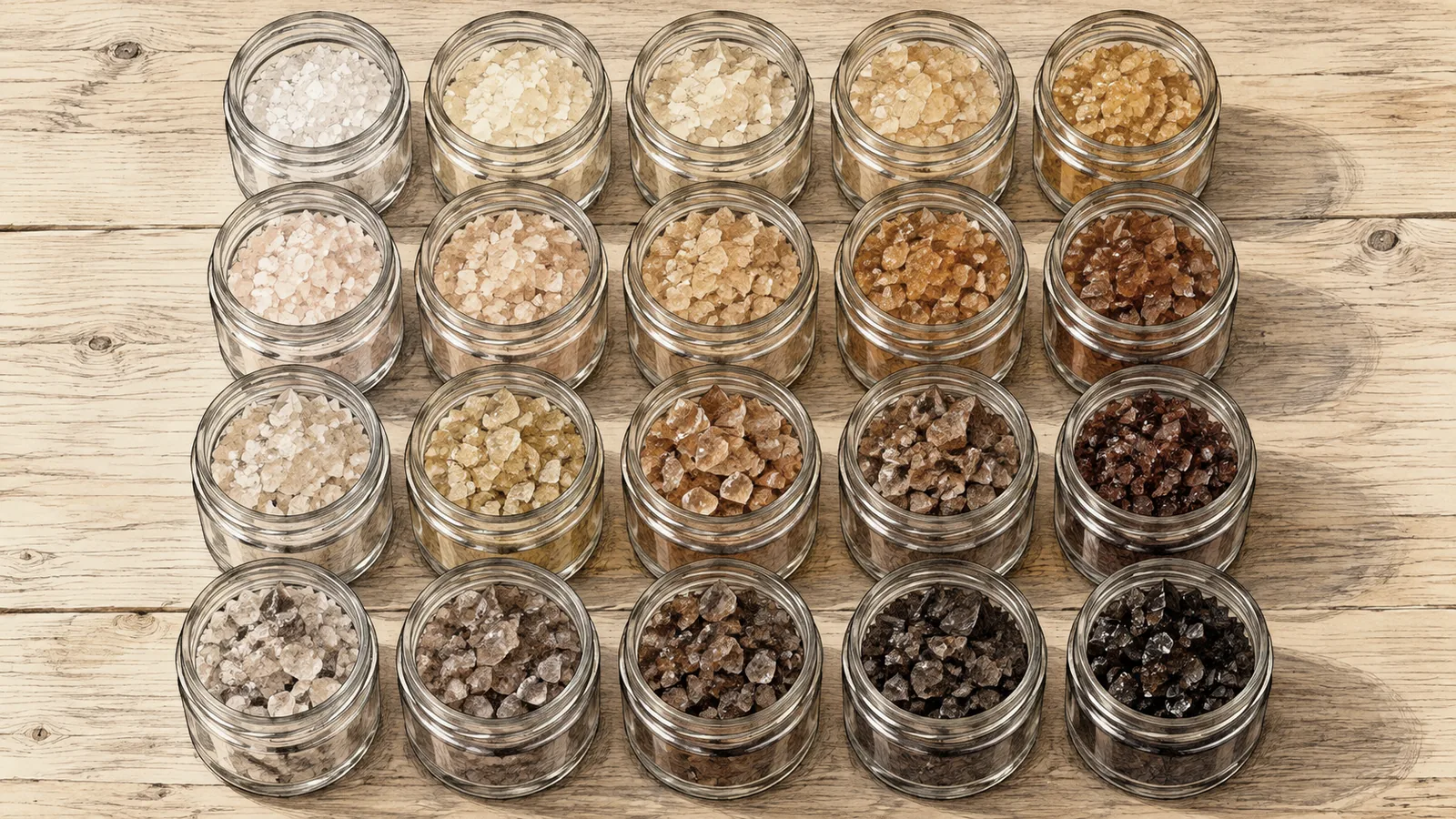
Every Smoked Salt We Could Verify, and Who Actually Smokes It
We checked 24 smoked salts against their makers' own pages. Two are gone, one of the rest is smoke-flavoured, and five do not say where their salt was made at all.
Read the article →Get the next guide
An email when we publish a new salt guide or recipe, and first word when the Patagonian salts are ready to order.
We write when there is something to say, not on a schedule.