
How to Bloom Spices Without Burning Them
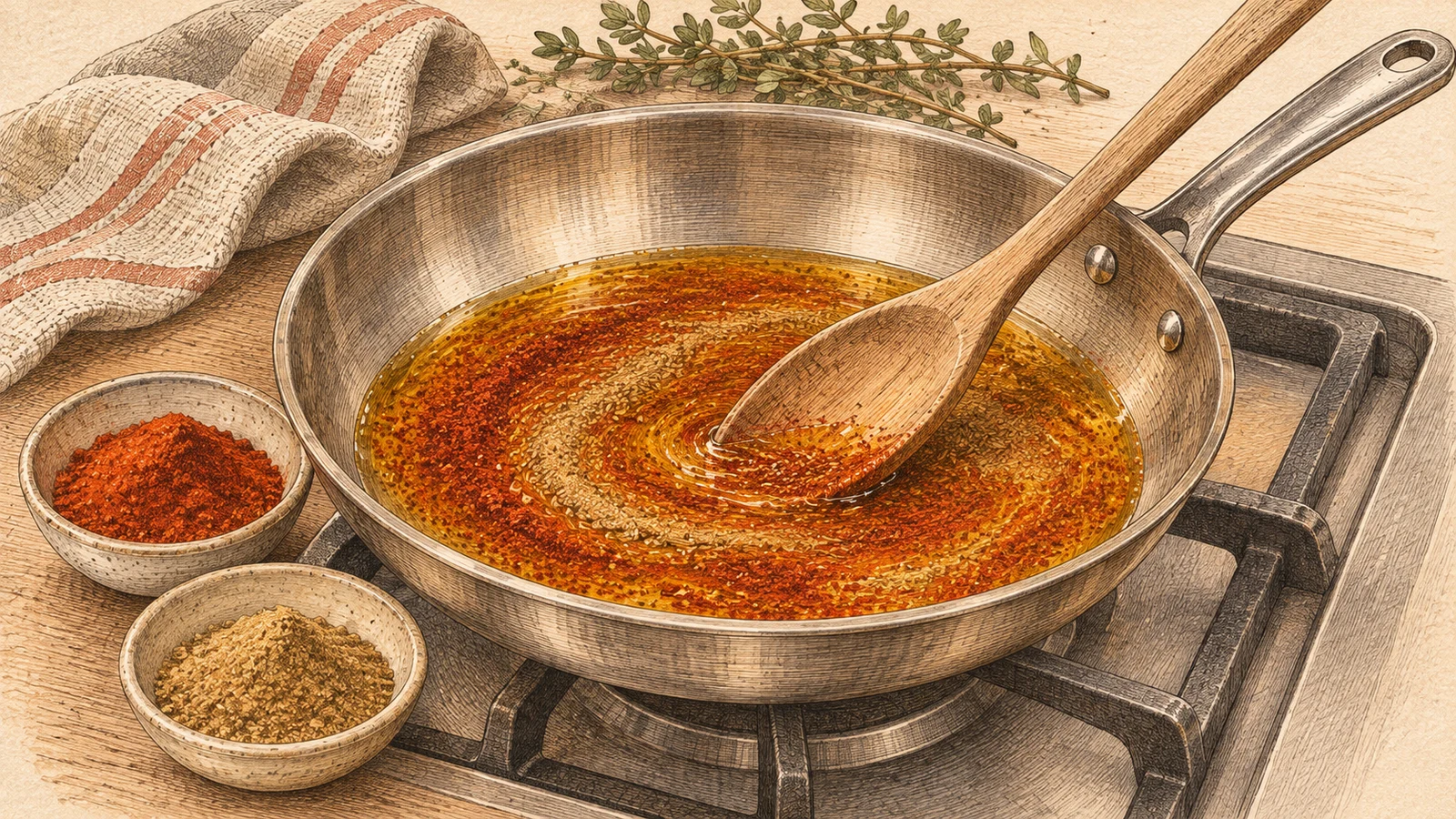
A spoonful of cumin can smell quiet in the jar and suddenly fill the kitchen when it meets warm oil. That brief step is called blooming. It is useful, but it is not an instruction to fry every seasoning you own.
What blooming means
Blooming means warming spices in fat before continuing with the dish. Oregon State University's cooking guide describes adding ground spices to oil or ghee before the liquid ingredients; when onions are part of the recipe, the spices can go in once those onions are almost cooked. The aim is a fragrant base, not a browned crust.
Dry toasting is different: the spices meet a dry pan, without oil. Whole spices can be toasted, cooled slightly and then ground. Neither technique is compulsory. Follow the method the recipe was designed around rather than adding an extra hot-pan step automatically.
Set up before the spices go in
- Measure first. Have the spices and the recipe's next ingredients ready. This is not the moment to search for a missing lid.
- Keep the heat controlled. Use the recipe's fat and heat setting; oil should not be smoking. Stir so the spices do not sit against one hot patch of pan.
- Watch the change. Look for the oil taking on the spice's colour and the aroma becoming noticeable. Do not wait for black specks, smoke or a burnt smell.
- Continue promptly. Move to the next step in the recipe. Do not leave the spice-and-oil mixture heating while you finish the rest of the preparation.
There is no useful universal stopwatch setting here: the pan, burner, quantity and grind all differ. A recipe's timing is a guide to that recipe, not a guarantee for a hotter pan. If the spices scorch, start that base again rather than trying to hide it under more ingredients.
A seasoning blend is not just ground spice
A jar labelled taco seasoning, barbecue rub or seasoning salt may also contain salt, sugar, garlic, starch or other ingredients. Treat the whole formula as the ingredient. A method written for ground cumin is not automatically a method for a spoonful of that blend.
Before experimenting, read the ingredient list and check the maker's cooking directions. Our Spice & Seasoning Guide makes those package details easier to compare. It does not establish that every blend has been cooked or tested by Gaucho.
A useful next cook
Choose a soup, bean dish or sauce recipe that already calls for warming spices in oil. Keep its quantities unchanged and pay attention to the moment before and after the spices enter the pan. That is a more informative first experiment than changing the spice, dose and technique all at once.
For the next decision, see whole versus ground spices. This is researched cooking guidance, not a report of a Gaucho kitchen trial.
Sources & scope
Oregon State University Extension: Spices of India, leader's guide, cooking techniques on pages 9-10. The source supports the distinction between dry toasting and blooming, and the sequence with onions and liquids. No medicinal claims or fixed timing for every spice are adopted here.
Keep exploring
- Spice & Seasoning Guide — Read the labels and compare recorded product details.
The Salt Guide
We are recording the salts on the American shelf one jar at a time — label, panel, price paid, crystal on white. Browse the guide →
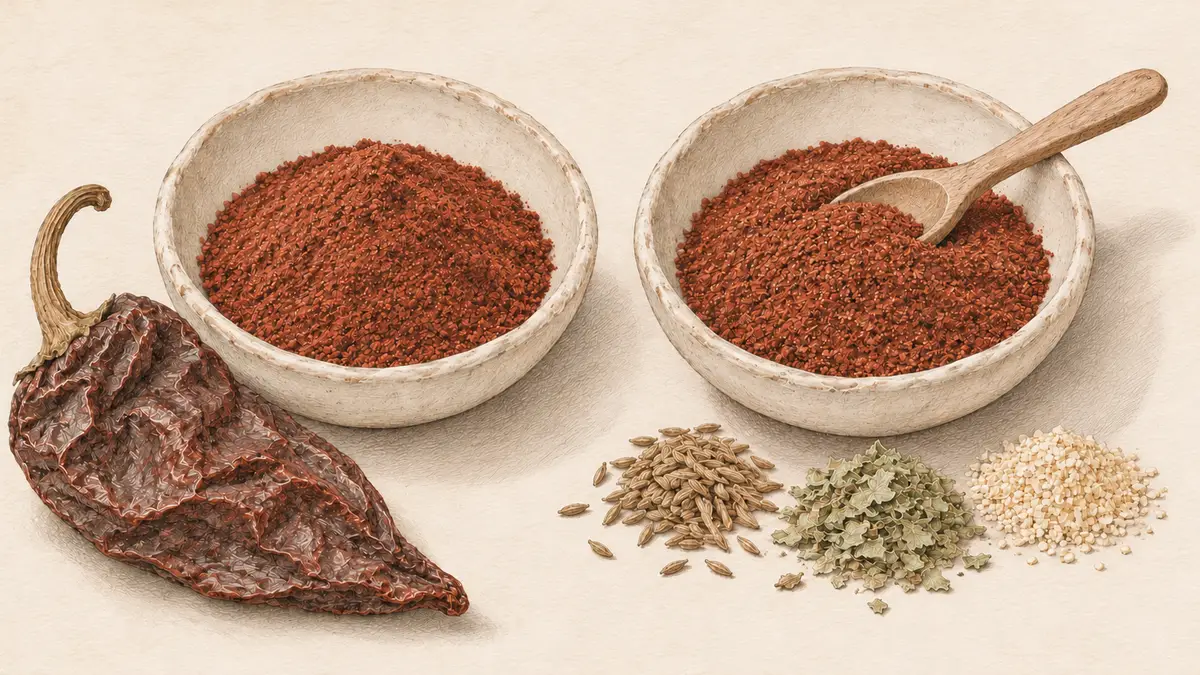
Chili Powder vs. Ground Chile: Read the Ingredient List
A seasoning blend and a named ground pepper can look alike while bringing different ingredients to dinner.
Read the article →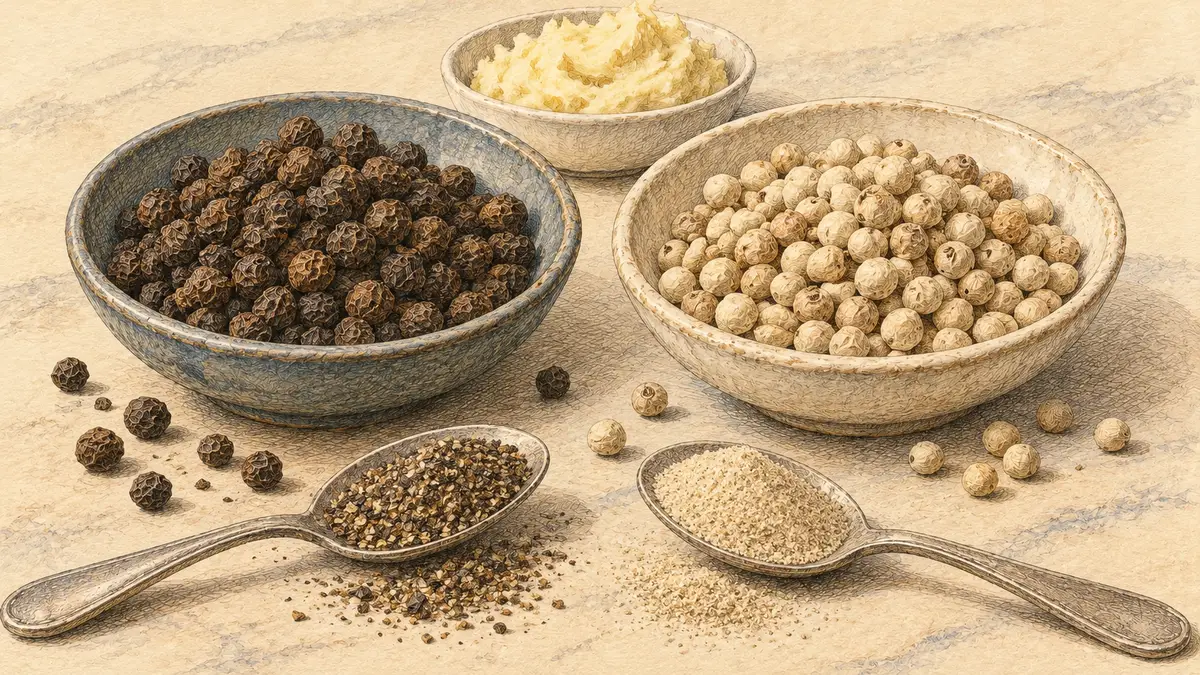
Black vs. White Pepper: More Than a Difference in Colour
The same plant, different preparation: what changes in the peppercorn, the grind and the dish.
Read the article →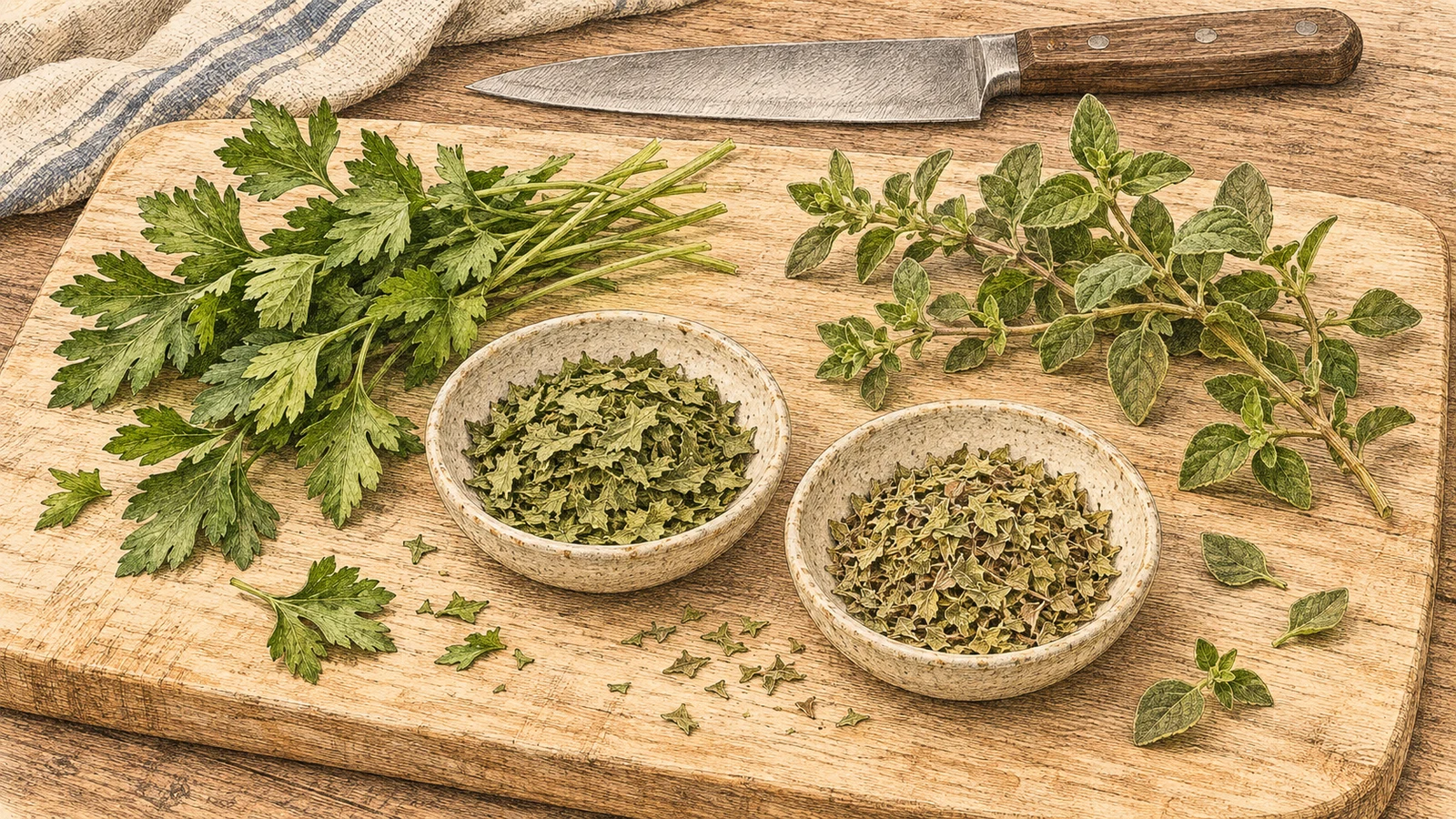
Fresh vs. Dried Herbs: When the Swap Works
A useful starting ratio, the right moment to add herbs, and why a fresh sauce is not interchangeable with a salted blend.
Read the article →Get the next guide
An email when we publish a new salt guide or recipe, and first word when the Patagonian salts are ready to order.
We write when there is something to say, not on a schedule.