
Fresh vs. Dried Herbs: When the Swap Works
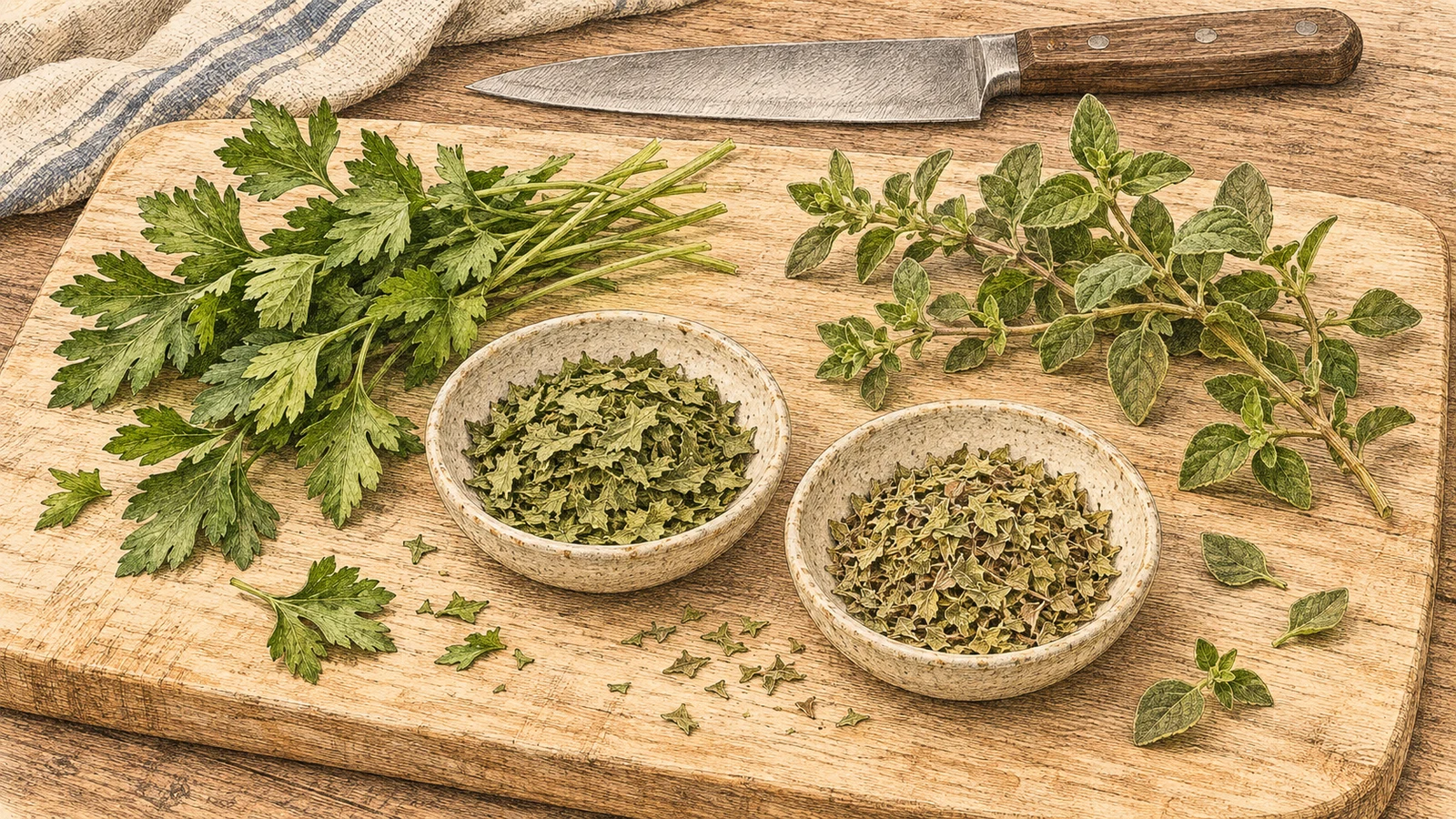
A handful of fresh parsley and a teaspoon of dried oregano do different jobs. Both can make dinner better. The useful question is not which is more authentic or more serious, but what the herb needs to do in this particular dish.
A starting ratio, not a promise
Health Canada's general substitution is one teaspoon of dried herb for one tablespoon of fresh. Start there when the swap makes sense, then adjust within the recipe. It is a volume guideline, not a promise of identical flavour, colour or texture.
Check the form in the jar, too. Iowa State Extension distinguishes dried leafy herbs from powdered herbs; its general equivalent for that same tablespoon of fresh herb is just a quarter teaspoon of powdered herb. A fine powder is not the same measure as loose flakes.
Timing matters as much as quantity
Dried herbs suit dishes with time to simmer, including soups, stews and sauces. Health Canada recommends adding them early enough to release their flavour. Fresh herbs are particularly useful in uncooked dishes and where the leaves themselves are a central part of what you are eating.
There is an important exception to the shorthand that all fresh herbs go in last. Iowa State groups rosemary, thyme, sage and bay as sturdier herbs that can enter earlier; soft herbs such as parsley, basil, chives and dill are better added near the end or after cooking. Follow the recipe's instructions for the particular herb rather than treating a bunch of rosemary like a bunch of parsley.
When not to make a simple swap
If a dish depends on a generous amount of fresh leaf, reducing it to a small dose of dried herb changes more than strength. Imagine a herb salad without its leaves, or a bowl of parsley-led sauce without that green bulk. A substitution may still make something enjoyable, but it is no longer simply the same dish with one ingredient exchanged.
Our chimichurri guide is a useful place to see that distinction. Fresh sauce, dried herb mix and chimichurri seasoning salt are different preparations, even when they share a name.
A blend needs its own calculation
Do not apply the fresh-to-dried ratio to an entire spoonful of seasoning salt. Part of that spoon may be salt, garlic, chile or other ingredients. Replacing a tablespoon of parsley with a teaspoon of a salted blend is not the substitution the herb guideline describes.
Compare the ingredient list first. The Whole Foods Market Organic Chimichurri profile, for example, records a no-salt-added label; other products use salt as part of the blend. Our guide to chimichurri salt explains why the name alone cannot tell you the proportion.
For a simple habit, write down which form you used and how much when adapting a recipe. Next time, you will have a useful starting point rather than a memory of adding "some herbs." This guide draws on published cooking advice; it does not claim a Gaucho side-by-side tasting.
Sources & scope
Health Canada: Best uses for fresh and dried herbs, for the general dried-to-fresh ratio and cooking uses. Iowa State University Extension: Fresh Herbs, for powdered-herb distinction and sturdy versus soft herb timing. These are starting guidelines, not exact equivalence for every variety or blend.
Keep exploring
- Spice & Seasoning Guide — Read the labels and compare recorded product details.
The Salt Guide
We are recording the salts on the American shelf one jar at a time — label, panel, price paid, crystal on white. Browse the guide →
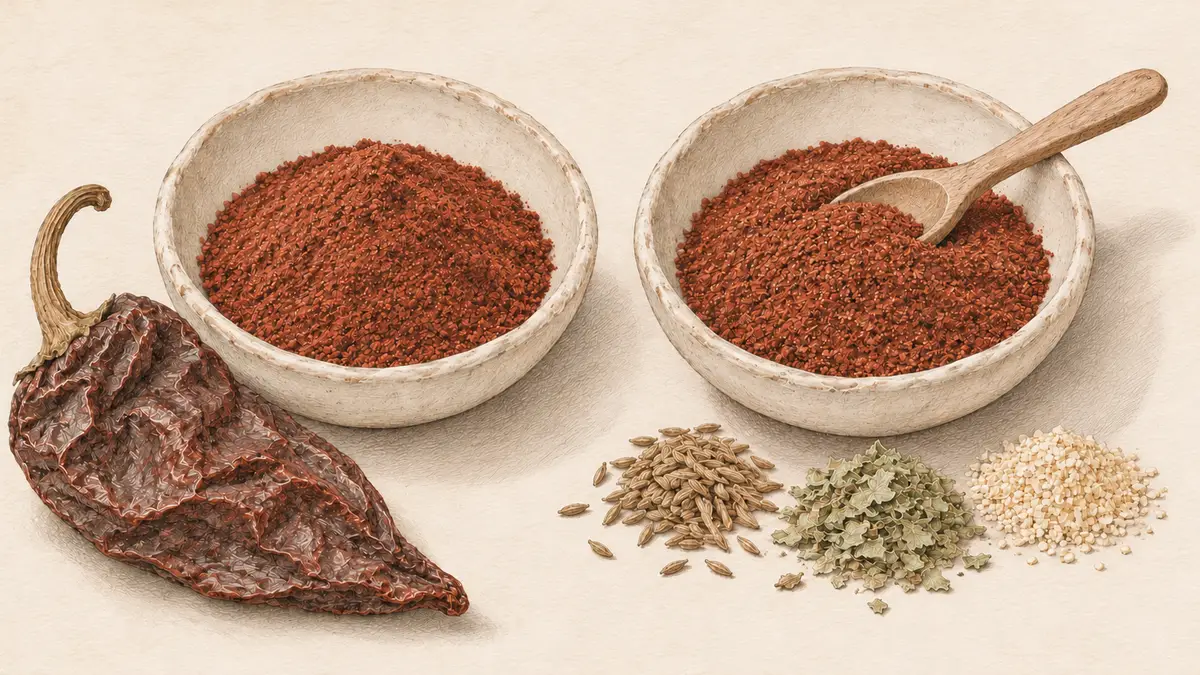
Chili Powder vs. Ground Chile: Read the Ingredient List
A seasoning blend and a named ground pepper can look alike while bringing different ingredients to dinner.
Read the article →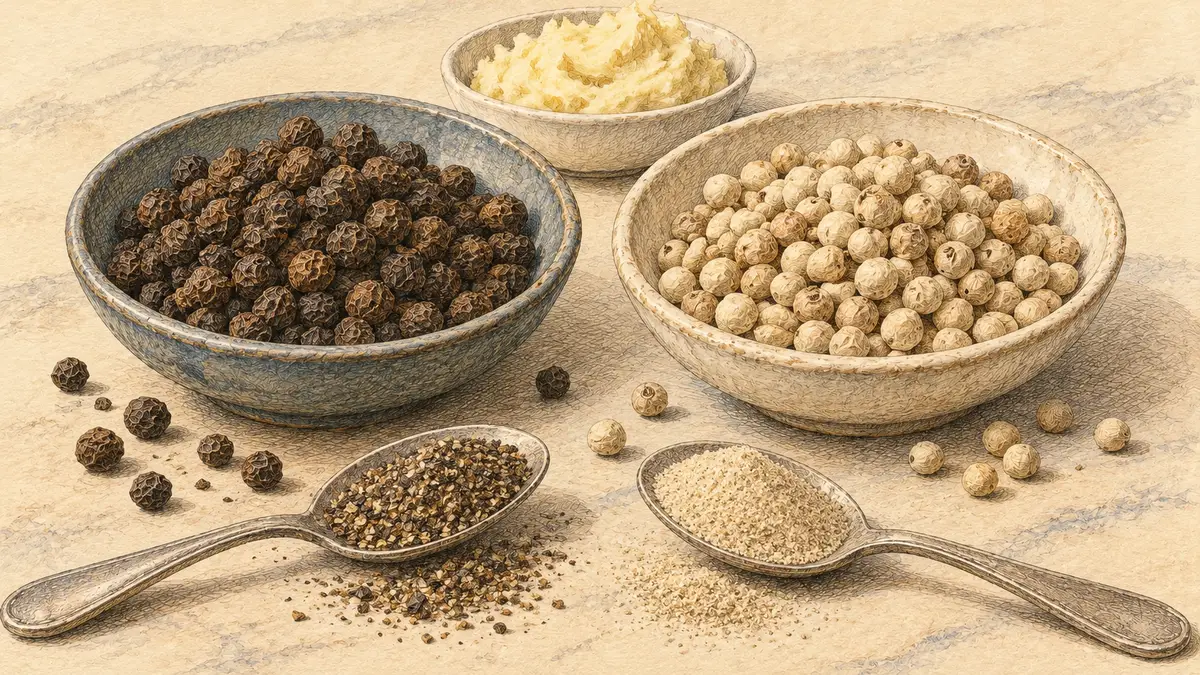
Black vs. White Pepper: More Than a Difference in Colour
The same plant, different preparation: what changes in the peppercorn, the grind and the dish.
Read the article →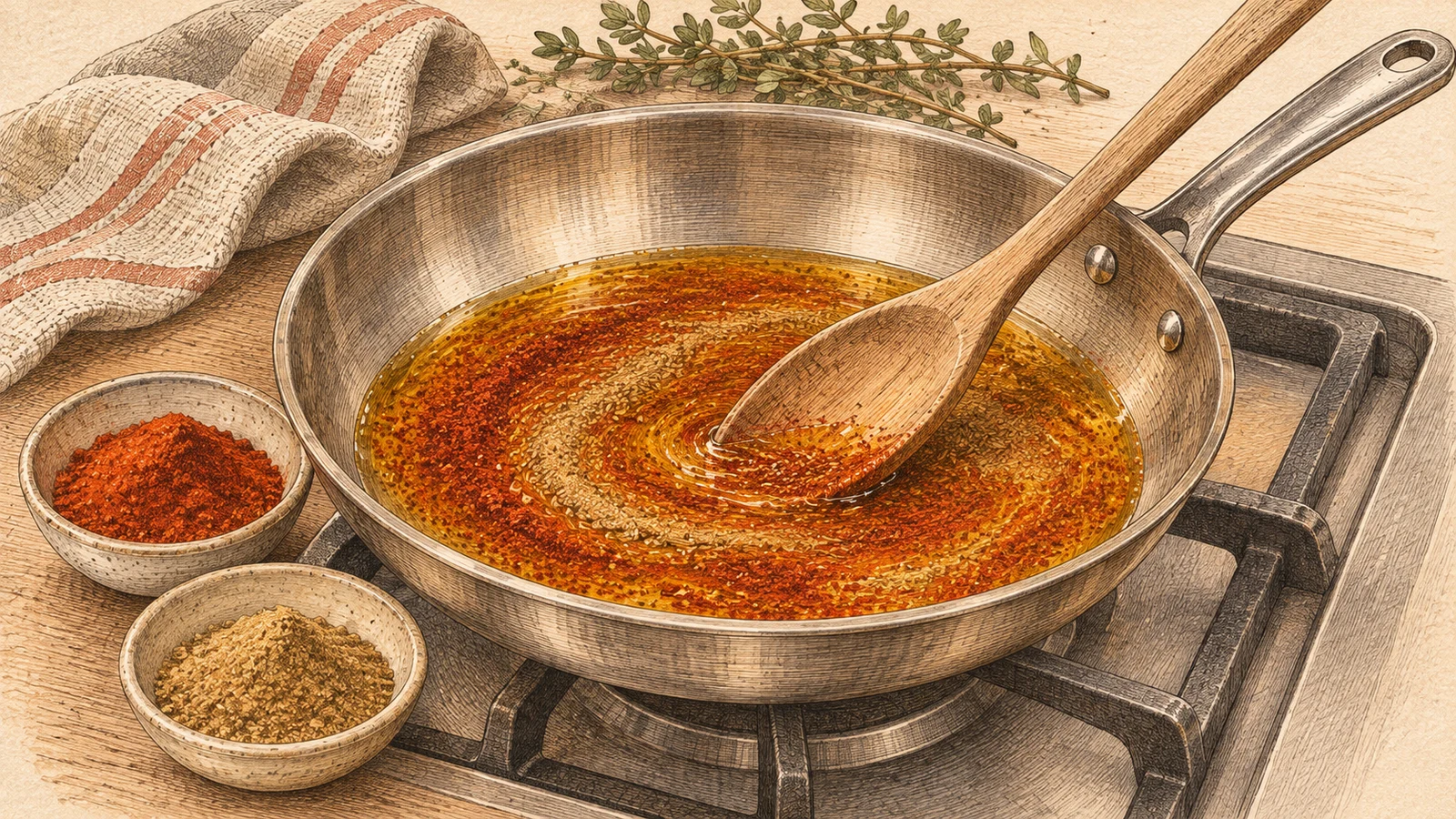
How to Bloom Spices Without Burning Them
What warming spices in oil does, how it differs from dry toasting, and why a seasoning blend needs its own instructions.
Read the article →Get the next guide
An email when we publish a new salt guide or recipe, and first word when the Patagonian salts are ready to order.
We write when there is something to say, not on a schedule.