
Black vs. White Pepper: More Than a Difference in Colour
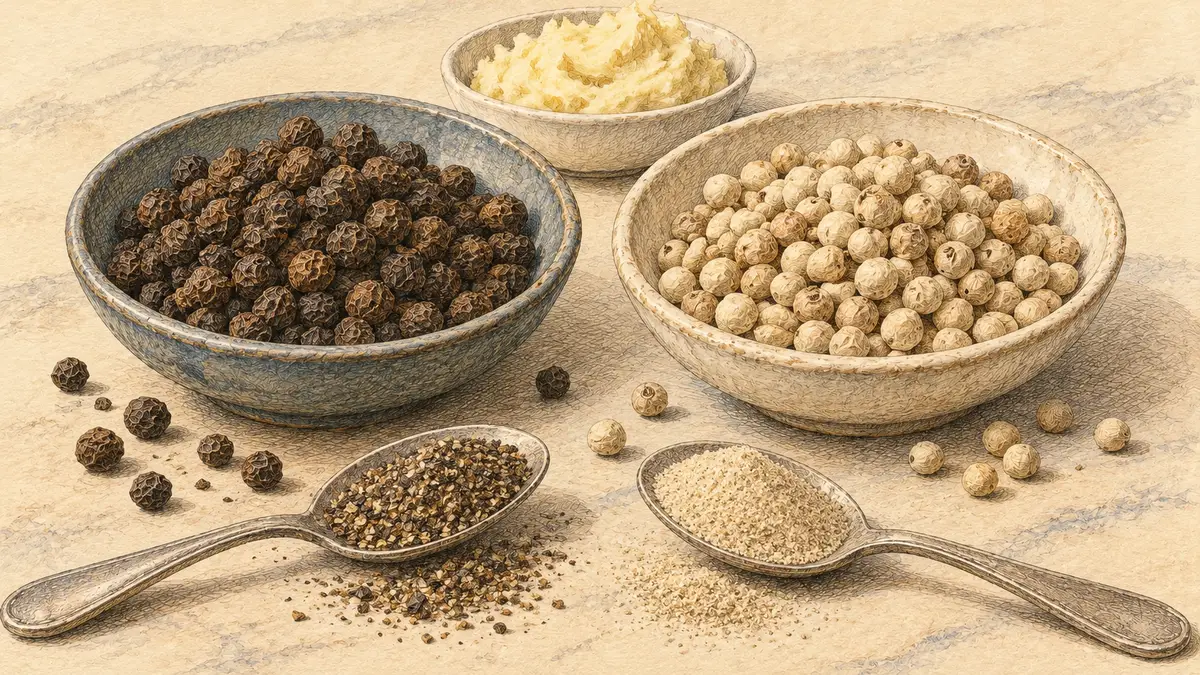
White pepper is more than a way to hide dark flecks in a pale sauce. It begins with the same plant as black pepper, but a different preparation gives you another ingredient to cook with, not simply a change of colour.
One plant, different peppercorns
Kew identifies black, white and green peppercorns as products of Piper nigrum. Harvest stage and processing distinguish them. For white pepper, the outer fleshy layer is removed; soaking is part of the method Kew describes.
The McCormick Science Institute explains the visible contrast: black pepper retains a dark, wrinkled outer layer around a lighter interior. White pepper has that outer layer removed. This also explains why a spoonful of cracked black pepper contains pale pieces as well as dark ones.
Less visible does not mean absent
White pepper can be useful where you want pepper seasoning without prominent black flecks. McCormick suggests pale sauces, soups and potatoes, and describes an earthy flavour. Its cooking guidance also warns that white pepper is pungent. Those descriptions are a better starting point than assuming that a pale powder must be weak.
Black pepper's visible flecks may be exactly what you want on a plate. Neither colour is a higher grade by itself. Choose for the recipe and the effect you want, not the idea that one is automatically the more refined option.
Check the grind before making a swap
A coarse crack of black pepper and a fine white powder differ in texture as well as processing. A spoon measure does not tell you how evenly either will disperse through a dish. Match the form specified in the recipe where possible, and do not treat a grinder turn as a standard unit.
If you are adapting a sauce or mashed potatoes, season a small portion first instead of changing the whole batch at once. Taste the food, not a spoonful of dry pepper. Keep the quantities small, record what you used and adjust to the dish. This is a suggested way to explore the difference, not a report of a Gaucho comparison test.
For buying and grinding decisions, our whole versus ground spice guide offers a useful starting point. Owning both forms is optional; knowing which one a recipe expects is more important.
Not everything called pepper is the same plant
Kew distinguishes Piper nigrum from chile peppers in the genus Capsicum. It also identifies pink pepper and Sichuan pepper as coming from other plants. A colourful peppercorn blend therefore needs its own ingredient check rather than an assumption that every piece is another form of black pepper.
The practical habit is simple: name the ingredient precisely in your notes. "Finely ground white pepper" says more than "pepper," just as a named ground chile says something different from a chili-powder blend. Our Spice & Seasoning Guide follows the same label-first approach.
Sources & scope
Royal Botanic Gardens, Kew: Piper nigrum for plant identity and processing; McCormick Science Institute: Black Pepper for outer-layer appearance; McCormick Kitchens: White Pepper for attributed flavour and cooking uses. Checked November 14, 2026. No health, superiority or fixed heat-equivalence claim is made.
Keep exploring
- Spice & Seasoning Guide — Compare recorded ingredients and package evidence.
The Salt Guide
We are recording the salts on the American shelf one jar at a time — label, panel, price paid, crystal on white. Browse the guide →
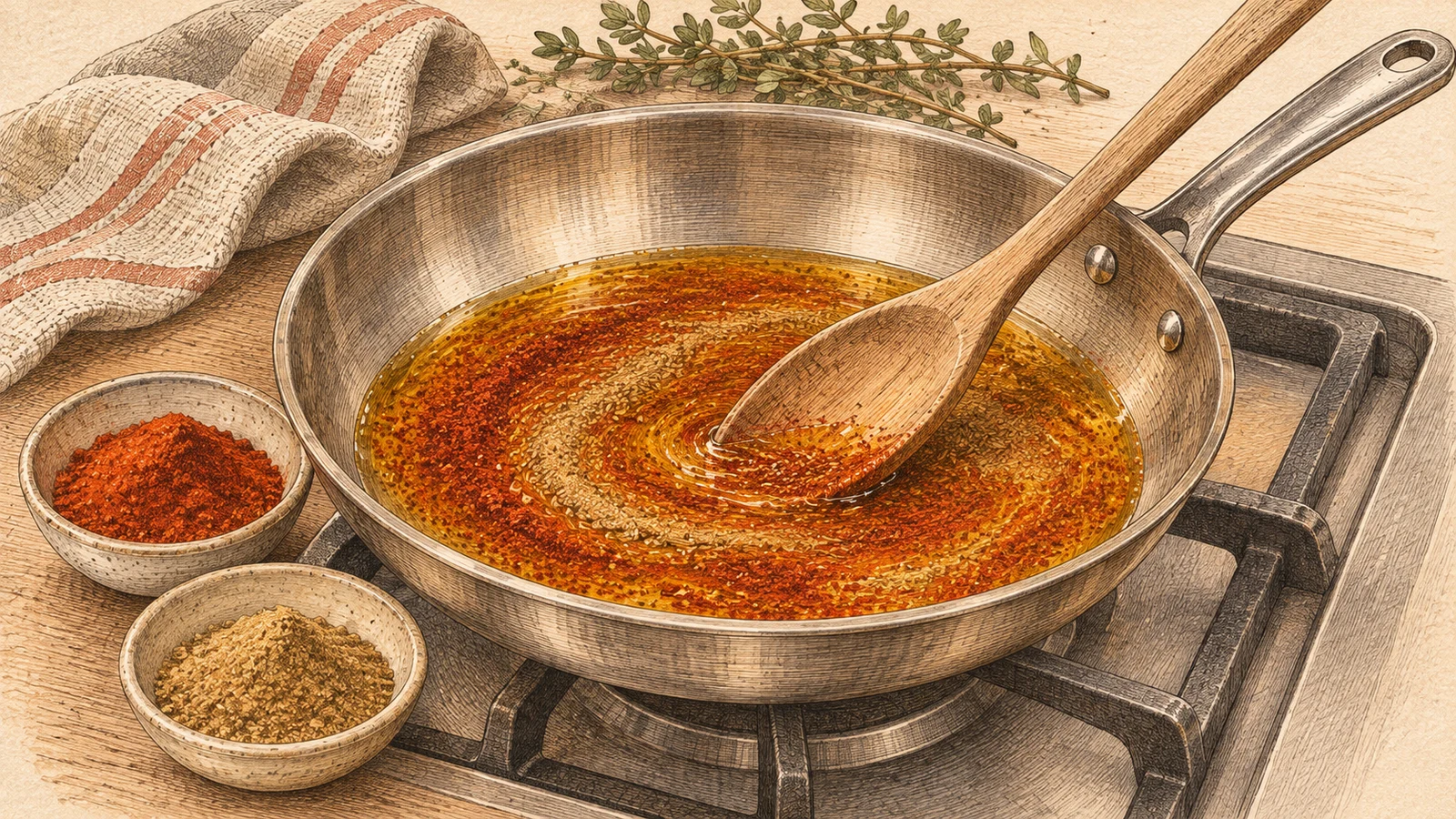
How to Bloom Spices Without Burning Them
What warming spices in oil does, how it differs from dry toasting, and why a seasoning blend needs its own instructions.
Read the article →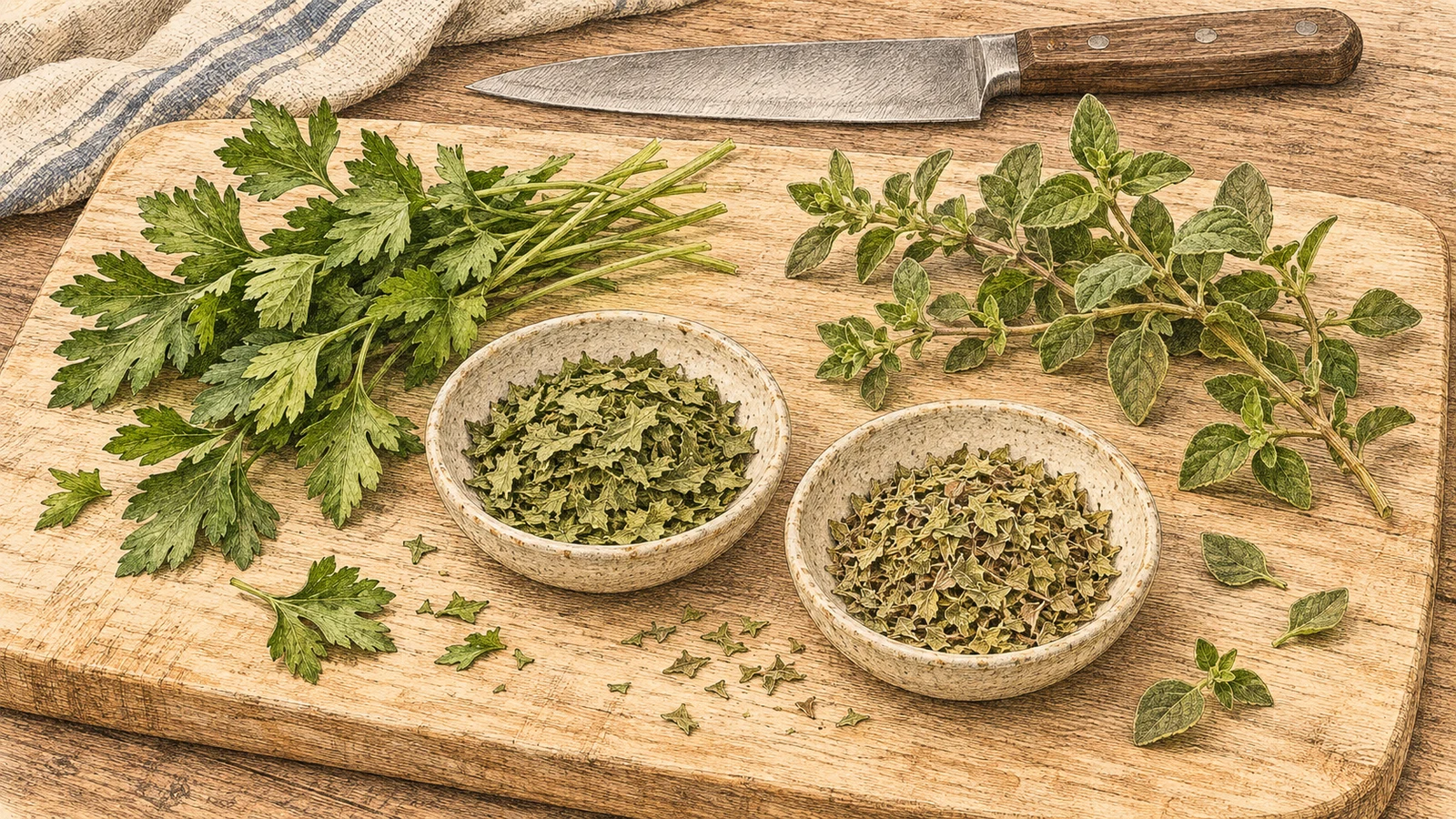
Fresh vs. Dried Herbs: When the Swap Works
A useful starting ratio, the right moment to add herbs, and why a fresh sauce is not interchangeable with a salted blend.
Read the article →
Celery Salt and the Chicago Hot Dog
Celery salt is salt and ground celery seed, not dried celery, and no maker publishes the ratio. It is the seventh and last topping on a Chicago dog, and the first ingredient in Old Bay.
Read the article →Get the next guide
An email when we publish a new salt guide or recipe, and first word when the Patagonian salts are ready to order.
We write when there is something to say, not on a schedule.