
Whole vs. Ground Spices: Which Should You Buy?
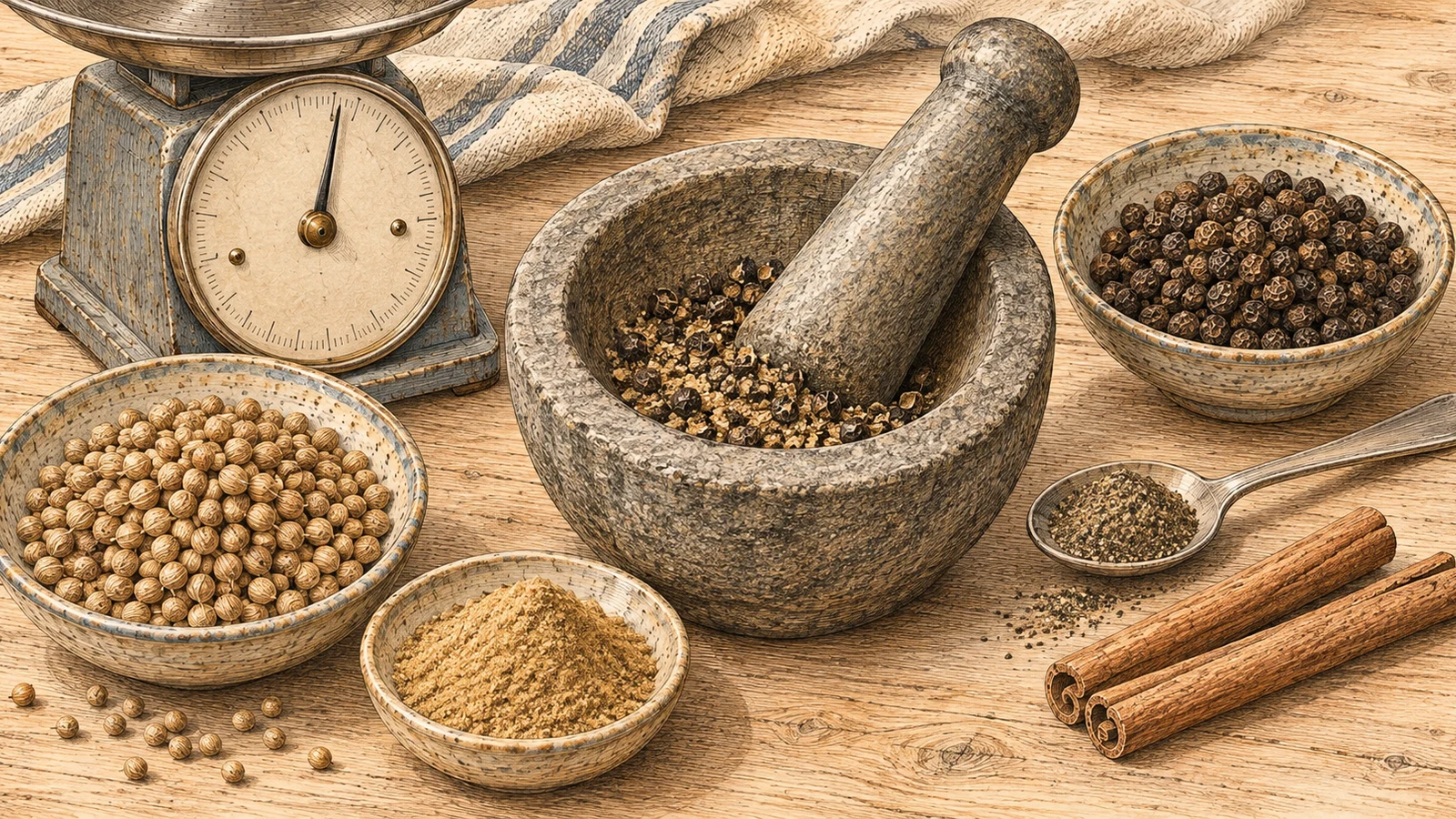
Whole peppercorns and a jar of ground cumin can both belong in a well-used kitchen. The better purchase is not always the less processed one. It is the form that suits the dish, the tools you have and the amount you will actually use.
What grinding changes
Breaking a spice releases its aromatic compounds. The Spice House explains that whole spices generally retain their flavour longer, while grinding shortly before cooking lets you choose the texture as well as the quantity. A mortar gives a different result from a fine electric grind.
That does not make ready-ground spices a compromise in every dish. If tonight's recipe needs a teaspoon of ground cumin and you have no grinder, a small jar of ground cumin is a sensible ingredient, not a kitchen failure. Convenience is useful when it means the food actually gets cooked.
Choose by the job
- A coarse finish: whole peppercorns let you crack a little at a time and keep visible pieces.
- A smooth, evenly mixed seasoning: use the ground form and fineness the recipe specifies, rather than leaving unexpected hard pieces in the finished food.
- A whole-spice infusion: follow a recipe written for whole spices, including its instruction to remove pieces before serving.
- A spice used only occasionally: compare the smallest useful packages. A large bargain jar is less attractive if most of it stays untouched.
Whole and ground are not automatic spoon-for-spoon equivalents. Air spaces and particle sizes change what fits in the spoon. Check whether the recipe measures the spice before or after grinding; use its specified weight when one is provided. Do not invent a conversion from a photograph of two piles.
You do not need a large collection
Start with the meals you already cook. Keep the ground spices those recipes repeatedly call for, then add a whole spice when there is a clear use for it. Buying both forms of everything is not a requirement.
Oregon State Extension recommends a dedicated spice grinder rather than sharing one with coffee, and advises buying small quantities. A mortar and pestle is another option for small batches. If a recipe asks for toasted whole spices, let them cool slightly before grinding; warming spices in oil is a separate technique.
Give either form a fair chance
Close containers tightly and keep them away from heat, light and damp. The Spice House specifically cautions against shaking the jar over a steaming pot. Measure into a dry spoon away from the stove instead. Marking when you opened a jar can help you track use, but it does not tell you when its contents were harvested or ground.
Aroma is a clue to flavour, not proof of food safety. Follow package storage instructions and relevant recalls; this guide is not a universal expiry-date rule.
When shopping, use our Spice & Seasoning Guide to compare what the labels actually say. Ingredients, package size and recorded observations are more useful than assuming that a premium-looking jar must be fresher. For leafy ingredients, the next question is different: fresh versus dried herbs.
Sources & scope
The Spice House: spice freshness and storage, a retailer's explanation of aroma loss, grinding and storage, not an independent comparison of brands. Oregon State University Extension: Spices of India, pages 9-10, for grinding, toasting and purchasing small quantities. This is researched guidance, not a Gaucho comparison test.
Keep exploring
- Spice & Seasoning Guide — Read the labels and compare recorded product details.
The Salt Guide
We are recording the salts on the American shelf one jar at a time — label, panel, price paid, crystal on white. Browse the guide →
Chili Powder vs. Ground Chile: Read the Ingredient List
A seasoning blend and a named ground pepper can look alike while bringing different ingredients to dinner.
Read the article →
Black vs. White Pepper: More Than a Difference in Colour
The same plant, different preparation: what changes in the peppercorn, the grind and the dish.
Read the article →
Celery Salt and the Chicago Hot Dog
Celery salt is salt and ground celery seed, not dried celery, and no maker publishes the ratio. It is the seventh and last topping on a Chicago dog, and the first ingredient in Old Bay.
Read the article →Get the next guide
An email when we publish a new salt guide or recipe, and first word when the Patagonian salts are ready to order.
We write when there is something to say, not on a schedule.