
Do You Still Need Iodized Salt?
Iodized salt is one of the cheapest public health measures ever deployed in the United States, and it has quietly stopped being how most Americans get iodine.
Why was iodine put in salt at all?
Because of goitre. In the early twentieth century a broad band of the northern United States — the Great Lakes, the upper Midwest, the interior Northwest — sat on soils stripped of iodine by glaciation, and thyroid enlargement was endemic. During the First World War, roughly a quarter of army recruits from Houghton County, Michigan showed simple goitre.
Between 1917 and 1920 David Marine and Oliver Kimball ran a trial in Akron, Ohio: 2,190 schoolgirls given iodine, 2,305 who declined as controls. Goitre developed or worsened in 0.2% of the treated group and 14% of the untreated.
Michigan's medical society endorsed iodized salt on 12 March 1924; it reached grocery shelves that 1 May, and Morton took it national that September. Within months more than ninety per cent of Michigan's table salt was iodized. Goitre in Michigan schoolchildren fell from 38.6% in 1924 to 1.4% by 1951.
No law was ever passed. Manufacturers simply did it.
Is iodized salt required in the United States?
No. Fortification is voluntary and always has been. But the labelling is not optional, and this is the part almost nobody knows.
Under 21 CFR 100.155, iodized salt must carry the statement “This salt supplies iodide, a necessary nutrient.” And salt without it must carry “This salt does not supply iodide, a necessary nutrient.” Both in letters no smaller than the net weight declaration.
So the answer is on the package by law. There is one gap worth knowing: containers under half an ounce and over two and a half pounds are exempt. That is why a three-pound box of kosher salt and the packet on a restaurant table often say nothing at all.
How much iodine is in it?
The FDA permits potassium iodide in table salt to a maximum of 0.01 per cent, and recommends 46 to 76 micrograms of iodine per gram of salt. Real product sits at the bottom of that range: measured samples average about 47 to 51 µg/g, and a quarter teaspoon supplies roughly 78 µg — about half a day's requirement in one pinch.
Is specialty salt iodized?
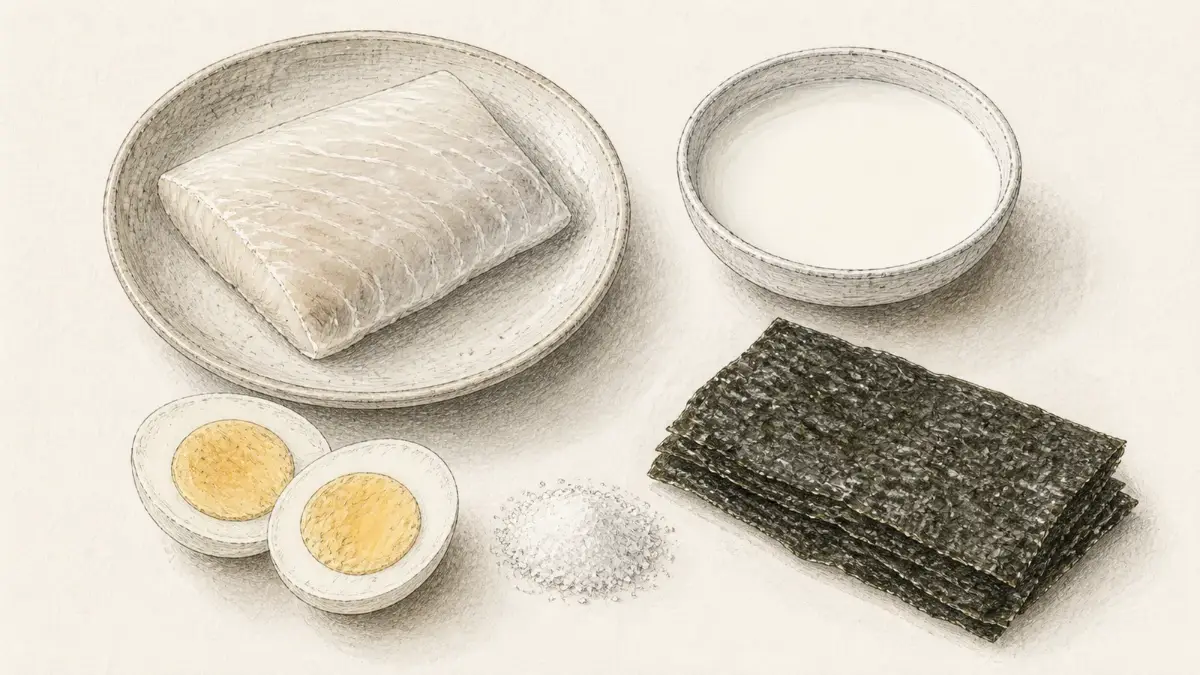
Usually not, though the gap is narrower than the usual figures suggest. The reference number is one analysis of Nielsen retail scan data for 2009, published in 2015: weighted by sales volume, 53% of the salt sold in US shops was iodized. That paper breaks the market out by type as shares of all non-blend salt sales — regular table salt 50.1% iodized and 31.8% not, sea salt 1.3% iodized and 5.5% not. Read as shares of each category rather than of the whole market, which is the reading most people want, that is roughly 61% of table salt and roughly 19% of sea salt sold iodized. Kosher, artisan and finishing salts had no iodized products at all in that sample. The NIH is blunt about the salts that are not iodized: non-iodized sea salt “provides virtually no iodine.”
Fleur de sel, kosher salt, Himalayan salt and almost every flake salt on a specialty shelf are in the same position. Some sea salts are iodized — Morton sells one — so the label statement is the only reliable check.
Does that matter, if you have swapped to sea salt?
Here is the fact that reframes the question: most of the salt Americans eat is not the salt in their salt cellar. Only about eleven to twelve per cent of sodium intake comes from salt added at the table or in home cooking. The rest is packaged and restaurant food — and food manufacturers almost always use non-iodized salt.
So for most people the switch to sea salt changes a tenth of their salt and none of the other nine tenths. Dairy is now a larger iodine source than the salt cellar for many Americans: US retail milk analysis found a median 84 µg per 240 ml serving, though with a range from 31 to 251 µg. Cod, eggs and seaweed contribute too.
So is anyone actually short?
The general population is adequate. Median urinary iodine across US adults has run comfortably in the sufficient range for years.
Two groups are watched. Across NHANES 2001–2020, women of childbearing age declined from 135.0 µg/L to 103.5 µg/L, and pregnant women averaged 145.2 µg/L — below the World Health Organization's adequacy band of 150 to 249 µg/L for pregnancy. The American Thyroid Association recommends 150 µg of supplemental iodine daily during pregnancy and lactation.
That is a question for a doctor, not a salt company. We sell salt that is not iodized, and we would rather you knew what that does and does not mean.
Common questions
Not reliably. Sea water contains iodine, but the amount surviving into finished sea salt is small and unmeasured on most packages. The NIH describes non-iodized sea salt as providing virtually no iodine.
Some people report a faint metallic note from potassium iodide, and iodized salt also carries dextrose as a stabiliser. Whether you can detect it in food is another matter.
That depends on the rest of your diet, and it is a question for a clinician rather than a food writer. What we can say is that the label tells you which you have, by law, on any package between half an ounce and two and a half pounds.
Yes, though the well-documented figures come from accelerated trials at tropical temperature and humidity and do not transfer to a sealed container in an American kitchen. Morton adds dextrose specifically to stabilise the iodide and dates both plain and iodized salt at five years.
Sources
- 21 CFR 100.155 — salt and iodized salt label statements
- 21 CFR 184.1634 — potassium iodide, 0.01% maximum in table salt
- NIH Office of Dietary Supplements — Iodine, Health Professional Fact Sheet
- Maalouf J et al., Nutrients 2015;7(3):1691–1695 — iodized salt in the US retail market
- Iodine Global Network — centennial of US salt iodization, 2024
- Zhang Q et al., BMC Pregnancy and Childbirth 2025 — NHANES 2001–2020 iodine status
- Roseland JM et al., Nutrients 2020;12:1246 — iodine in US retail milk
- Linus Pauling Institute, Oregon State University — Iodine
In the Salt Guide
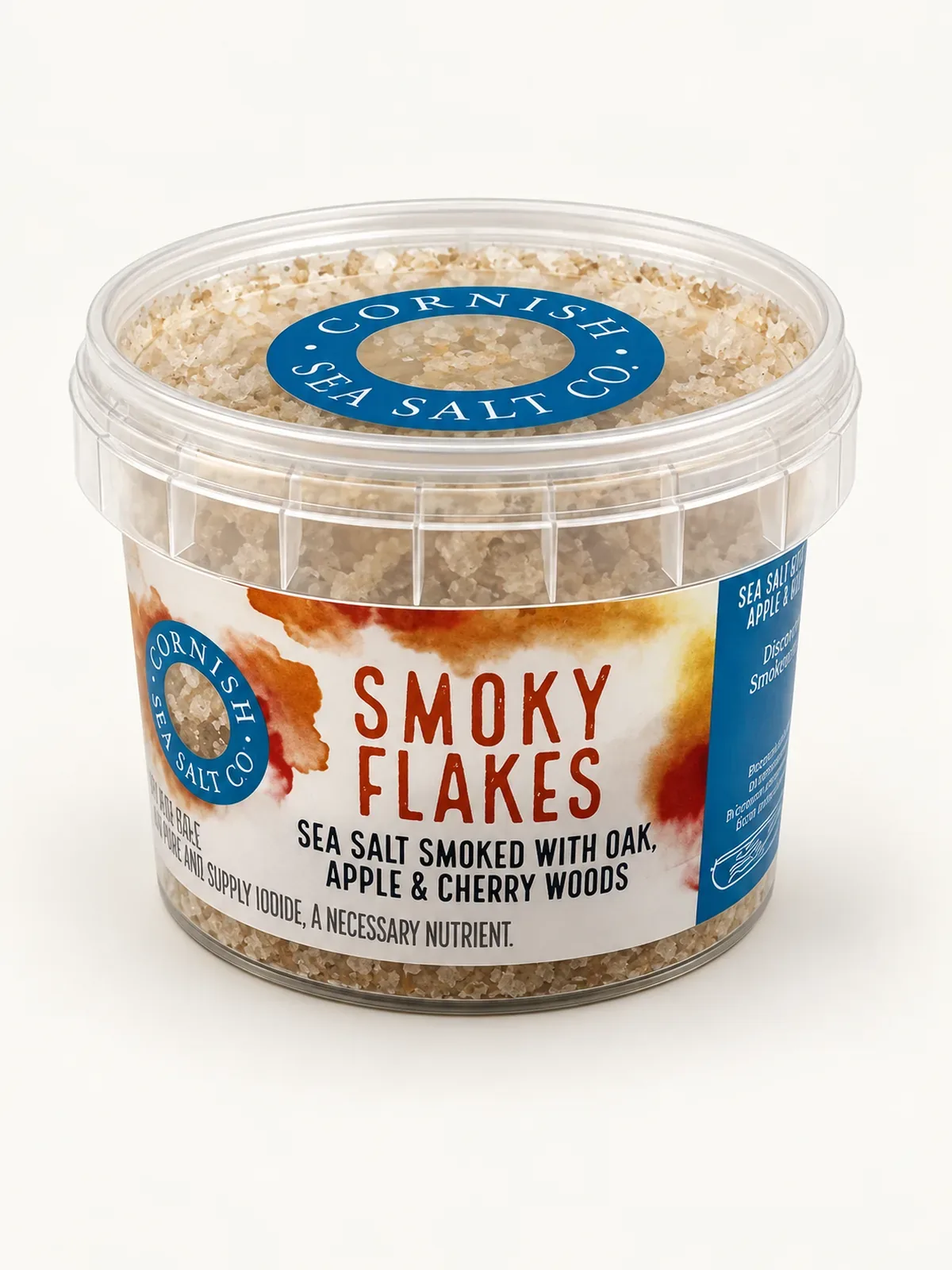
Cornish Sea Salt Co. — Smoky Flakes
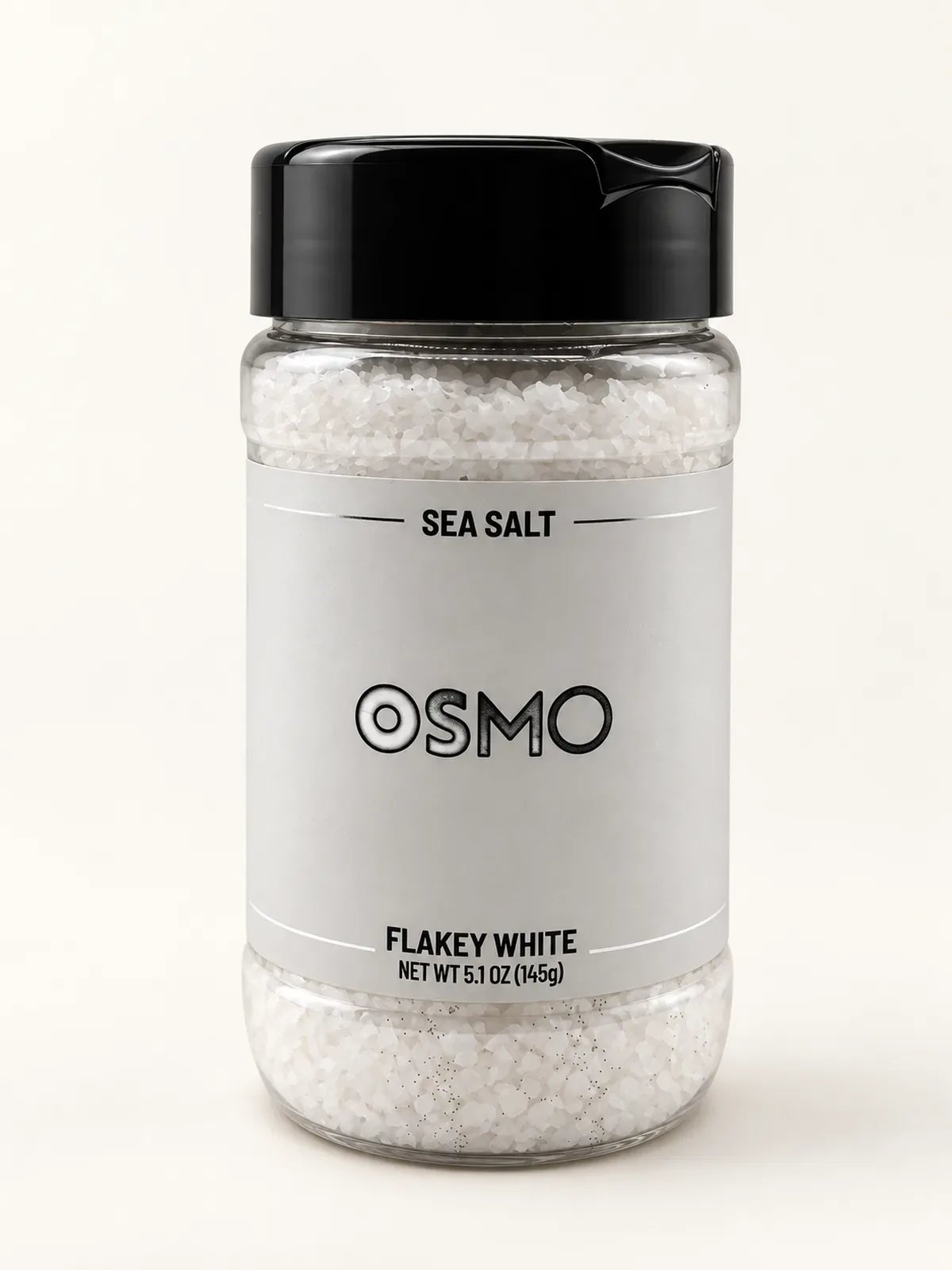
OSMO — Flakey White Sea Salt
Retail salts, one entry each: label, panel, price paid, and the crystal on white. Browse the guide →
Get the next guide
An email when we publish a new salt guide or recipe, and first word when the Patagonian salts are ready to order.
We write when there is something to say, not on a schedule.