
Applewood vs. Mesquite vs. Oak: Which Smoking Wood to Choose
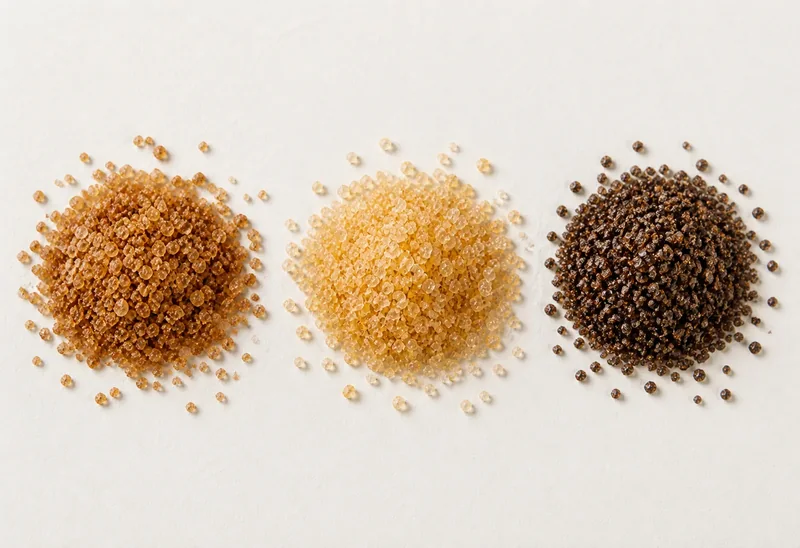
Choose applewood for a gentler smoke, mesquite for a bolder one, and oak for a middle ground. These are useful cooking starting points, not fixed strengths: the amount of smoke and how the wood burns also affect the result.
Applewood or mesquite?
Try applewood when you want the food to lead, especially with chicken, pork or vegetables. Try mesquite when you want a more pronounced smoke alongside beef or mushrooms. Oak is a useful starting point when you want one wood for several dishes.
| What to compare | Oak | Applewood | Mesquite |
|---|---|---|---|
| Character | Balanced, mid-intensity — the reference | Mild, faintly sweet | Most intense, earthy |
| Measured support | Mid-pack across compositional studies | 86% of hickory’s panel-rated smokiness | “High smoke aroma” in trained-panel work — intensity, not acridity |
| Classic pairings | Beef, everything — the default | Chicken, pork, fish, vegetables | Beef, dark vegetables, anything that can stand up to it |
| Reputation vs. evidence | Accurate | Mildness real but overstated | “Acrid” reputation not supported when smoldered properly |
These pairings are kitchen guidance, not results from a controlled trial of the three woods on the same salt. Weber’s smoking-wood guide is a practical reference.
Where wood flavor comes from
Wood smoke gets its character from what breaks down when wood smolders. Lignin — the polymer that stiffens wood — pyrolyzes into the signature smoke phenols: guaiacol, which reads clove-like and carries in taste, and syringol, the ashy top note that carries in aroma. The wood’s carbohydrates break down into a second family — acetic acid, furfural, hydroxyacetone — that supplies sharpness, sweetness and caramel. In condensed hardwood smoke those carbohydrate products actually outweigh the phenols by an order of magnitude: smoke is not just “smoky,” it is sweet and sour before it is anything else.
Temperature matters as much as species. Phenol production tracks smoldering temperature with a correlation of r = 0.94 in controlled work; the peer-reviewed window for clean flavor generation is roughly 300–400 °C (572–752 °F) at the wood, with harsh compounds and PAHs climbing above ~500 °C. The same wood, smoldered cool or scorched hot, produces genuinely different smoke.
The three woods, honestly
Oak is the reference standard — the wood of Halen Môn’s and Maldon’s smoked salts and half the barbecue in Texas. Culinary teaching literature describes it as “a mellow version of mesquite”: firmly mid-intensity, with nothing dominating. One temptation to resist: oak barrels give whisky a coconut-vanilla note from oak lactone, but that compound’s documented route into flavor is months of liquid contact with the wood — there is no evidence it transfers by smoke. Oak-smoked does not mean whisky-flavored.
Applewood is the mild one, and here the folklore has a real number behind it. In a controlled trial on smoked chicken with a trained sensory panel, apple wood scored 4.52 for smokiness against hickory’s 5.28 on a 15-point scale. Milder, yes — but that is 86% of hickory’s intensity, not a whisper against a shout. Fruitwood’s gentleness is real and modest. Apple also produced among the lowest PAH contamination of seven hardwoods tested in smoked pork sausage — quietly one of the cleanest-burning choices.
Mesquite has the fiercest reputation and the most surprising data. The only peer-reviewed sensory study to include it — trained-panel analysis of cold-smoked cheddar across nine woods — characterized mesquite as “high smoke aroma”: intense, not off. The resinous, off-flavor profile in that study belonged to cedar. Mesquite’s harshness on a grill is mostly a firing story: as fuel it burns hot and fast, and overheated wood makes acrid smoke regardless of species. Smoldered low and slow, mesquite is simply the strongest voice in the choir.
The uncomfortable finding for wood loyalists
Two credible sources push against the idea that species is destiny. A consumer study of smoked pork found the type of smoker mattered more to perceived quality than the wood in it. And the testing-driven barbecue literature makes a sharper point: the difference between the same species grown in two regions can exceed the difference between two species grown side by side. Add the temperature effect above and the ranking of levers looks like this: how the wood smolders ≥ which wood it is.
For smoked salt, treat those pairings as a starting point rather than a measured ranking. We have not established a controlled, same-salt comparison of these three woods. Crystal size, exposure and the amount you use can change the result.
For cooking ideas, read what smoked salt is or visit Sal Ahumada, our smoked salt in development.
Choosing, in practice
- One jar only: oak. It flatters everything and offends nothing.
- For chicken, pork, fish, vegetables — anything delicate: applewood.
- For beef and for cooks who want the smoke to announce itself: mesquite.
- A rule that beats memorizing pairings: match intensity to intensity. Loud smoke on quiet food shouts; quiet smoke on loud food disappears.
And a buying note that applies across woods: the wood name on the label only means something if the salt was genuinely smoked. A salt flavored with liquid smoke carries a generic condensate profile, whatever the label art shows. Two ingredients — salt, smoke — or it is a different product.
Common questions
Among common hardwoods: mesquite, then hickory and oak, then the fruitwoods. Measured gaps are smaller than reputation suggests.
Not inherently. The peer-reviewed sensory characterization of mesquite smoke is high intensity, not acridity. Harshness comes from wood burned too hot, in any species.
Balanced and even — clove-ish warmth from guaiacol, ashy depth from syringol, no single dominating note. It is the middle of the map, which is why it is the classic salt-smoking wood.
Trained-panel measurement backs the direction: apple scored about 14% below hickory for smokiness on chicken. The gap is real but modest; “mild” does not mean faint.
Tradition says never, for flavor reasons — resin and terpenes read as tar. That part holds. The claim that softwood smoke is more carcinogenic did not survive controlled measurement, and juniper, a conifer, is used deliberately in Sámi smoking tradition.
Probably not. Smoldering temperature and total exposure move the flavor at least as much as species choice — which is why producers who publish their process (wood, hours, cold smoke) are telling you more than a wood name alone ever can.
Sources
- Del Toro-Gipson, Rizzo, Hanson & Drake (2019), “Sensory characterization of smoke woods,” Journal of Sensory Studies — doi:10.1111/joss.12564
- Fu, W. (2015), Effects of smoking woods on smoked chicken breast, University of Georgia MS thesis — UGA
- Sharma, Swaney-Stueve, Severns & Talavera (2019), Journal of Sensory Studies — doi:10.1111/joss.12535
- Jira, Hitzel, Pöhlmann, Schwägele & Speer (2013), “PAH and phenolic substances in smoked products using different woods,” Food Chemistry — doi:10.1016/j.foodchem.2013.02.011
- Zhang et al. (2023), “Aroma profile of beech wood pyrolysis products by temperature,” Separations 10(3):176 — MDPI
- Vazquez, T.D. (2022), Key Aroma Compounds in Condensed Wood Smoke, Ohio State University — OhioLINK
- Racovita et al. (2020), “PAH contamination of smoked sausages by wood type,” J. Agric. Food Chem. — ACS
- Culinary Institute of America — The Smoking Process (PDF)
- AmazingRibs — The Science of Wood and Smoke
- UC Davis Waterhouse Lab — Oak lactones
The Salt Guide
We are recording the salts on the American shelf one jar at a time — label, panel, price paid, crystal on white. Browse the guide →
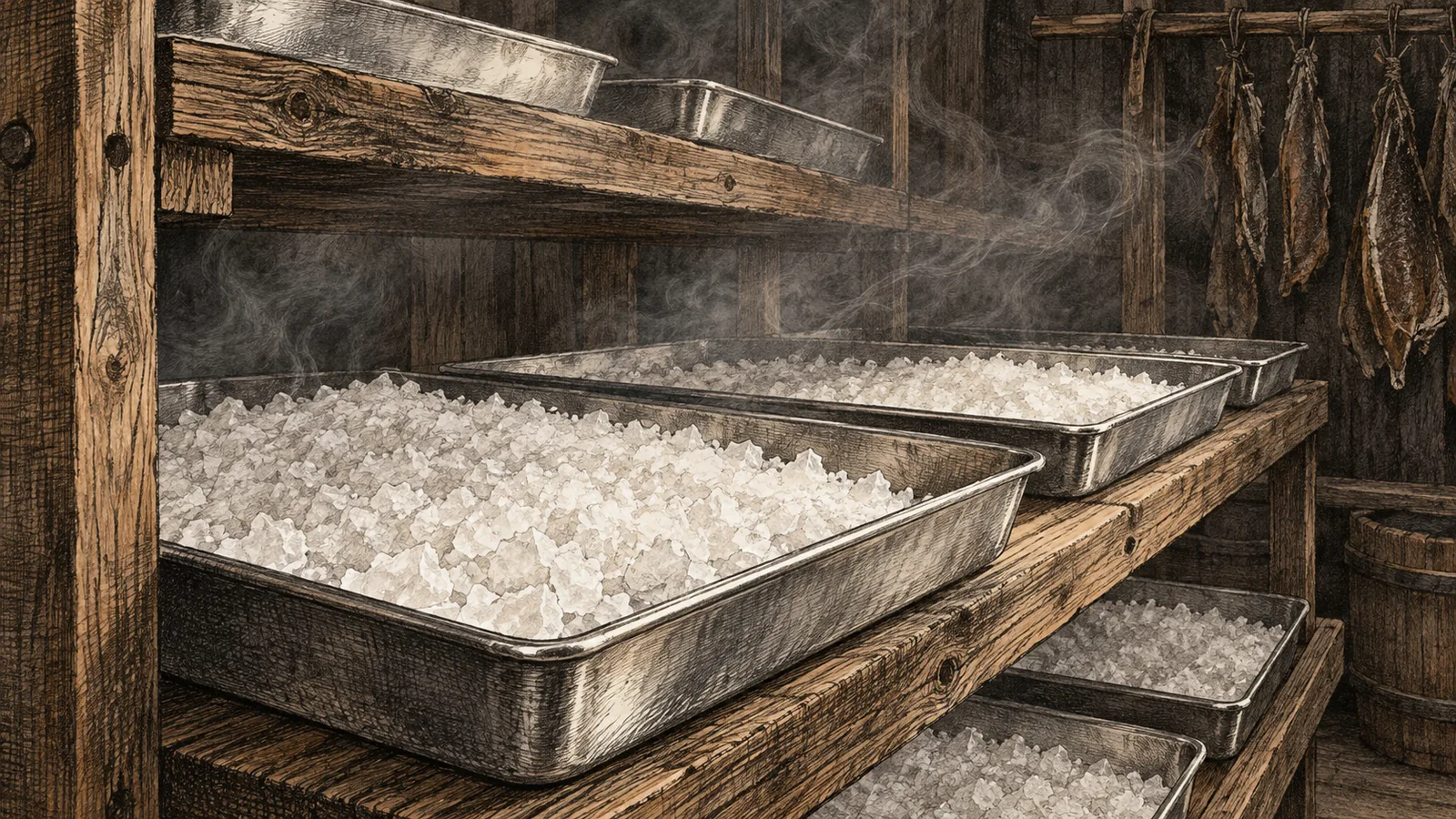
Cold Smoke, Hot Smoke and Why Salt Is Not Meat
The only US line between cold and hot smoking, 90 degrees F, was written for fish. Nothing defines cold-smoked salt, and the one salt maker we found that publishes a temperature smokes at 130.
Read the article →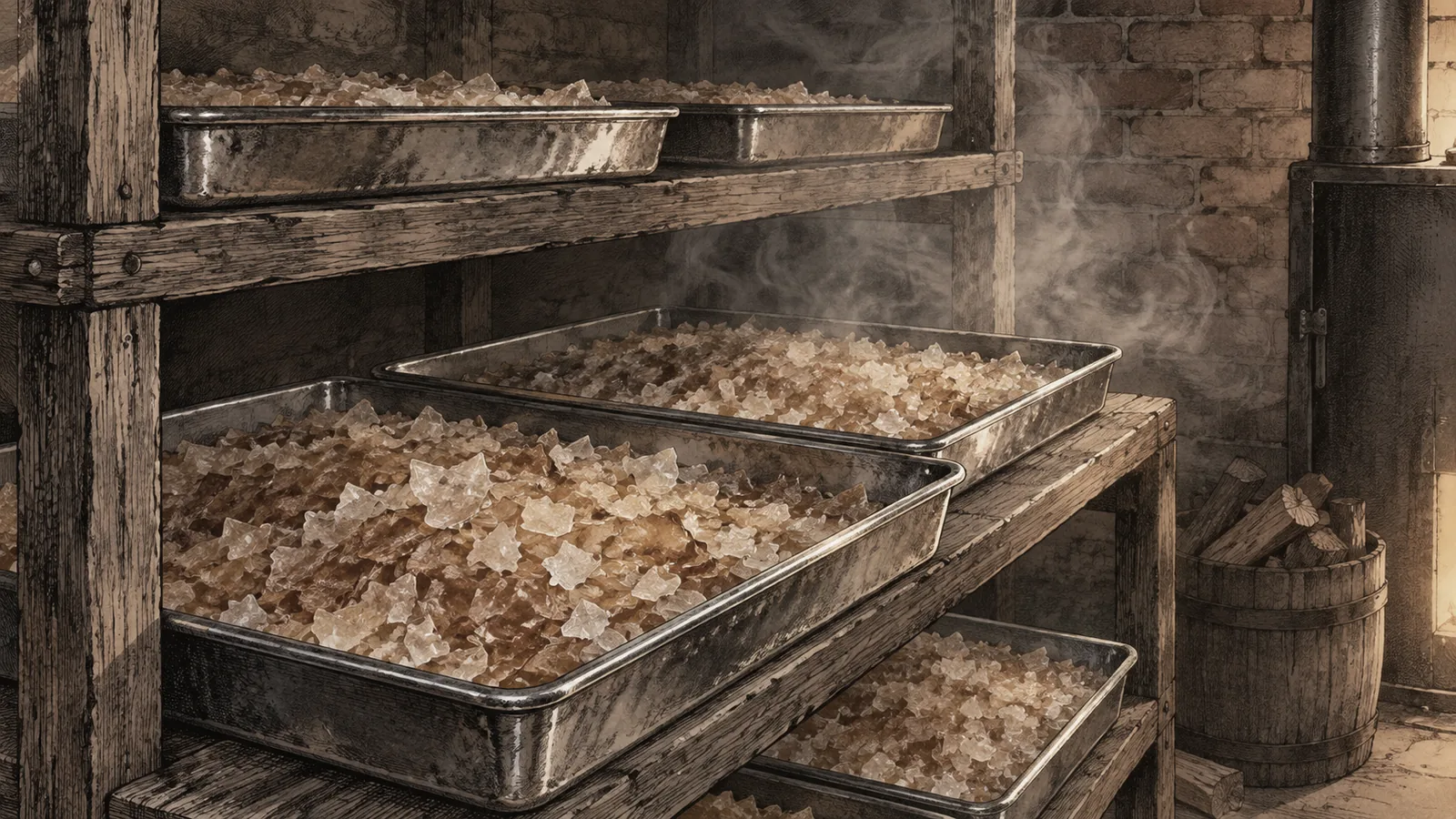
The EU Banned Smoke Flavourings. Here Is What That Means for Salt
Since 1 July 2026, no new smoke-flavoured salt can be placed on the EU market. None of the ten flavourings has come back, a court challenge is pending, and salt smoked over real wood was never covered.
Read the article →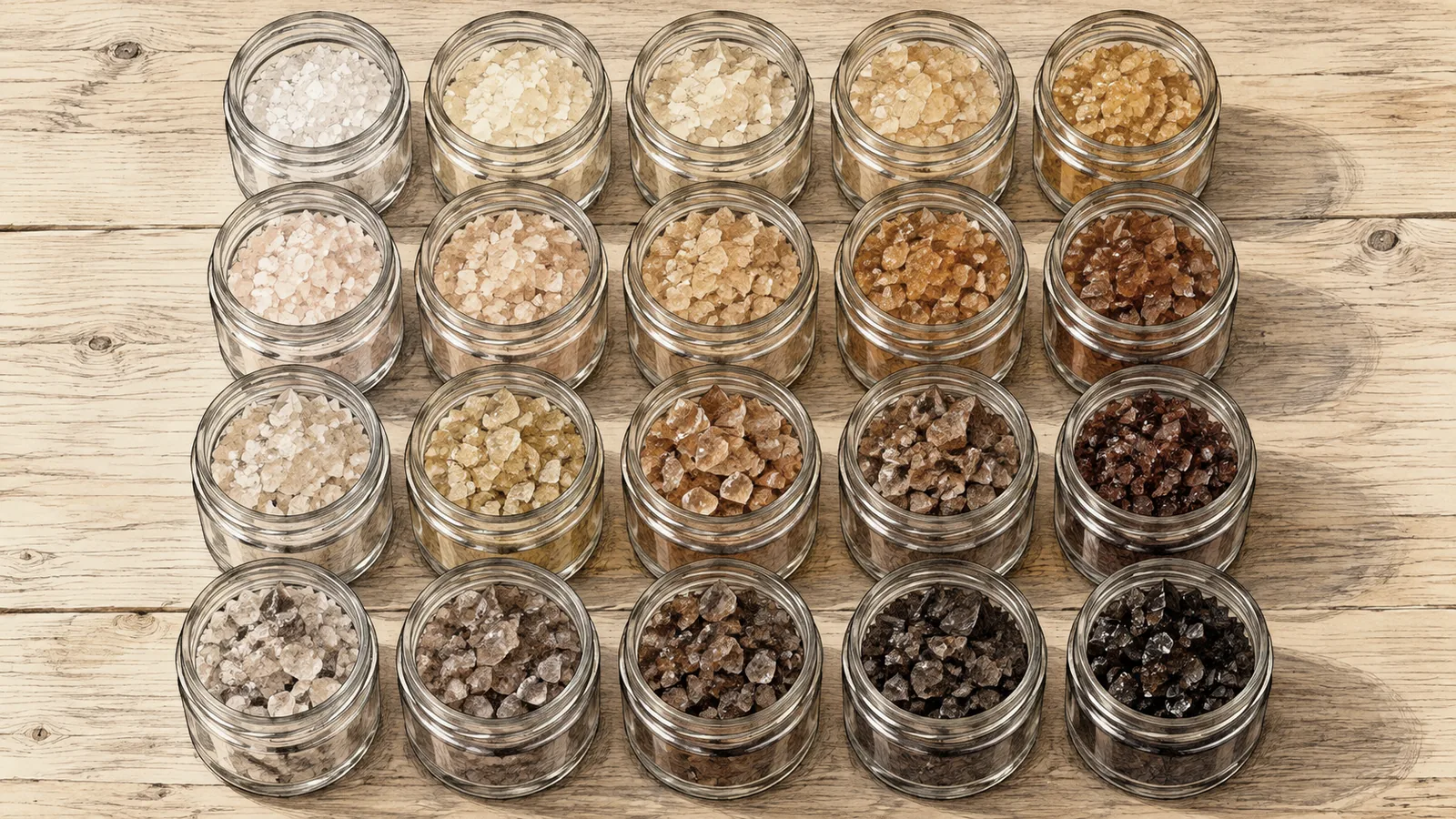
Every Smoked Salt We Could Verify, and Who Actually Smokes It
We checked 24 smoked salts against their makers' own pages. Two are gone, one of the rest is smoke-flavoured, and five do not say where their salt was made at all.
Read the article →Get the next guide
An email when we publish a new salt guide or recipe, and first word when the Patagonian salts are ready to order.
We write when there is something to say, not on a schedule.