
María Remedios del Valle: Remembering an Afro-Argentine Patriot
Argentina's independence story becomes more human when we learn the names beyond its best-known generals. María Remedios del Valle is one to remember: an Afro-Argentine woman whose military service was followed by a struggle to have that service recognised.
A life in the independence campaigns
The province of Buenos Aires' Mujeres Bonaerenses biography places her birth in Buenos Aires around 1766. It records her assistance during the British invasions and her departure with the revolutionary army in 1810, alongside her husband and two children. Her family did not survive the campaign.
Del Valle served with the Army of the North, caring for wounded soldiers and taking part in combat. The provincial account describes her capture after the defeat at Ayohuma in 1813, her help to prisoners and her eventual return to service. These were not the experiences of a spectator at the edge of a men's story.
She became known as La Capitana and Madre de la Patria, often translated as Mother of the Homeland. Those titles are an invitation to learn about the person, not a substitute for doing so. A short tribute can make a life sound inevitable; the record of seeking recognition tells a more difficult story.
Recognition was something she pursued
After the campaigns, del Valle lived in poverty in Buenos Aires. The provincial biography records her own application for compensation in 1826. Keeping that action in view matters: she was not simply waiting for someone else to decide that her life deserved attention.
A national government history describes General Juan José Viamonte's later intervention on her behalf and the pension that followed. Military service had not protected her from hardship. Read together, the accounts hold two things in view: what she had contributed, and what it took for public institutions to acknowledge it.
More than one way to serve
The government's history of women in the independence struggle describes work that extended beyond combat: nursing, provisioning, washing clothes, gathering intelligence and sustaining armies. That wider context helps explain why a history made only of commanders and battles leaves so much out.
It also gives us a better question to ask of any national story. Who performed the work that made the celebrated event possible, and whose name survived in the account? Del Valle's life is a compelling place to begin that inquiry, not the whole answer.
A name carried into the present
In 2013, Argentina established November 8 as the National Day of Afro-Argentines and Afro Culture in her honour. The commemoration connects an individual biography to a wider history; it is not a claim that one person can represent every Afro-Argentine experience.
Start with the provincial biography of María Remedios del Valle, then read the national account of women in independence. For another question about whose perspective shapes a familiar story, continue with the people behind Welsh Patagonia.
Sources & scope
Buenos Aires Province, Mujeres Bonaerenses: María Remedios del Valle, and Argentina.gob.ar, Las mujeres en la Independencia, linked above and read November 23, 2026. This is a concise introduction based on published institutional accounts, not new archival research. Approximate birth dating is retained; no imagined dialogue or undocumented likeness is presented.
More people and places
- Welsh Patagonia: The People Behind a Living Language — From the 1865 migration to classrooms in Chubut, with Indigenous perspectives kept in view.
- The Pulpería: Where Rural Argentina Came Together — Shopkeepers, travellers and neighbours behind a familiar image of the Argentine countryside.
The Salt Guide
We are recording the salts on the American shelf one jar at a time — label, panel, price paid, crystal on white. Browse the guide →
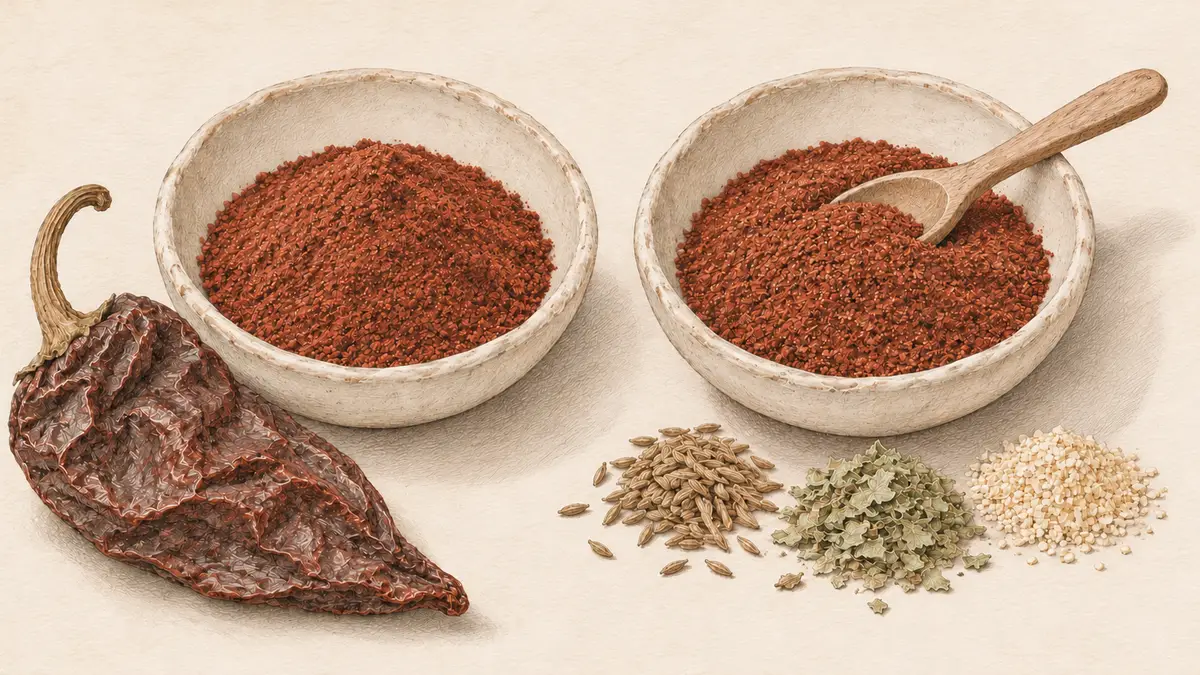
Chili Powder vs. Ground Chile: Read the Ingredient List
A seasoning blend and a named ground pepper can look alike while bringing different ingredients to dinner.
Read the article →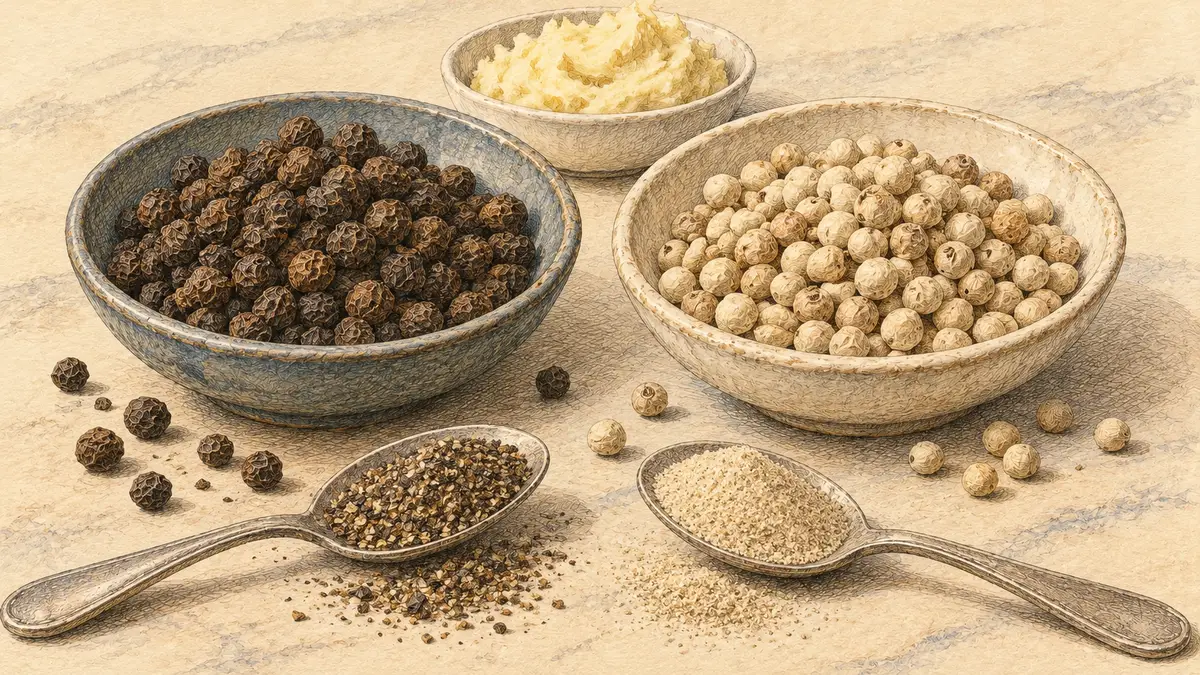
Black vs. White Pepper: More Than a Difference in Colour
The same plant, different preparation: what changes in the peppercorn, the grind and the dish.
Read the article →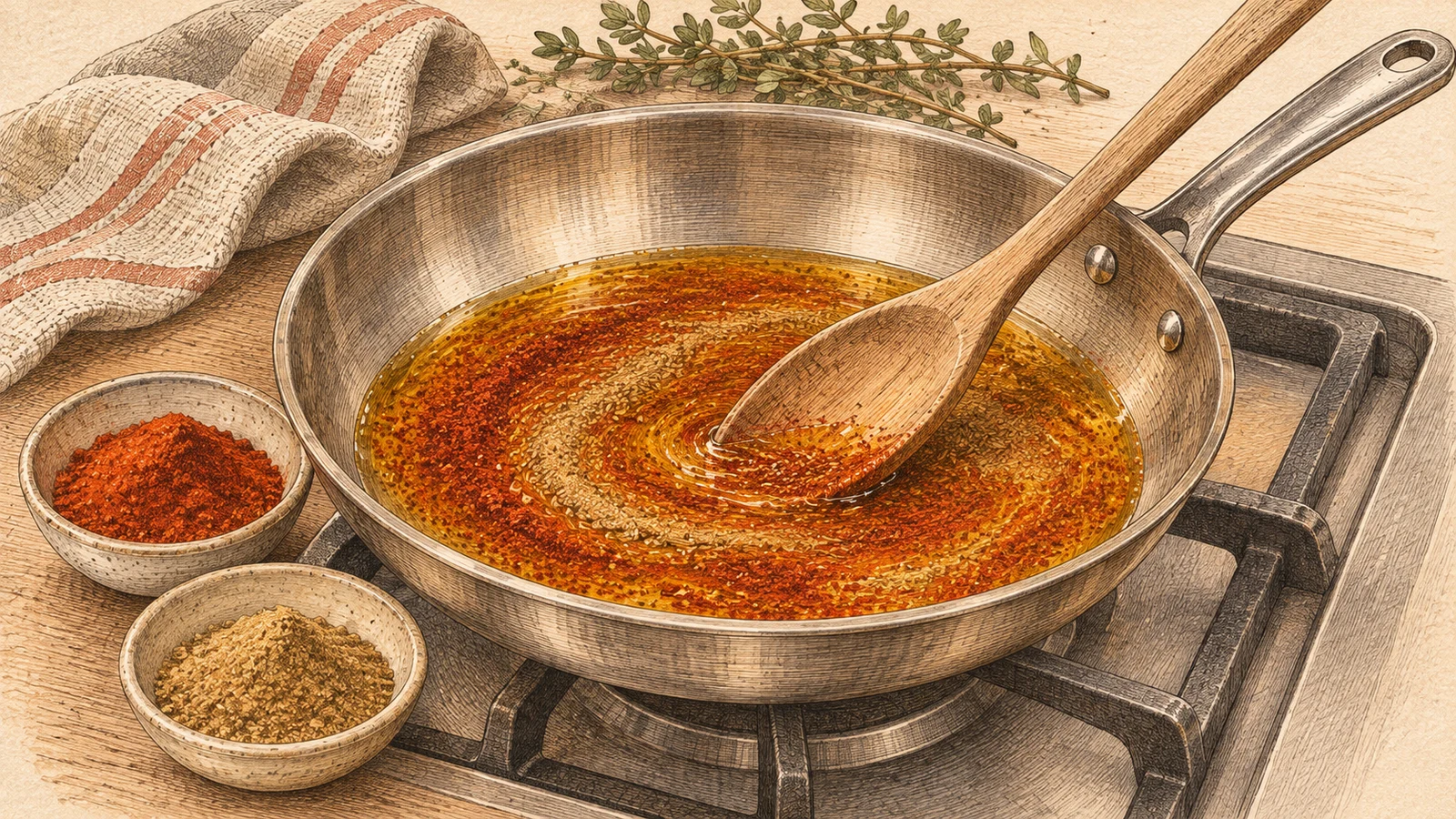
How to Bloom Spices Without Burning Them
What warming spices in oil does, how it differs from dry toasting, and why a seasoning blend needs its own instructions.
Read the article →Get the next guide
An email when we publish a new salt guide or recipe, and first word when the Patagonian salts are ready to order.
We write when there is something to say, not on a schedule.