
The Pulpería: Where Rural Argentina Came Together
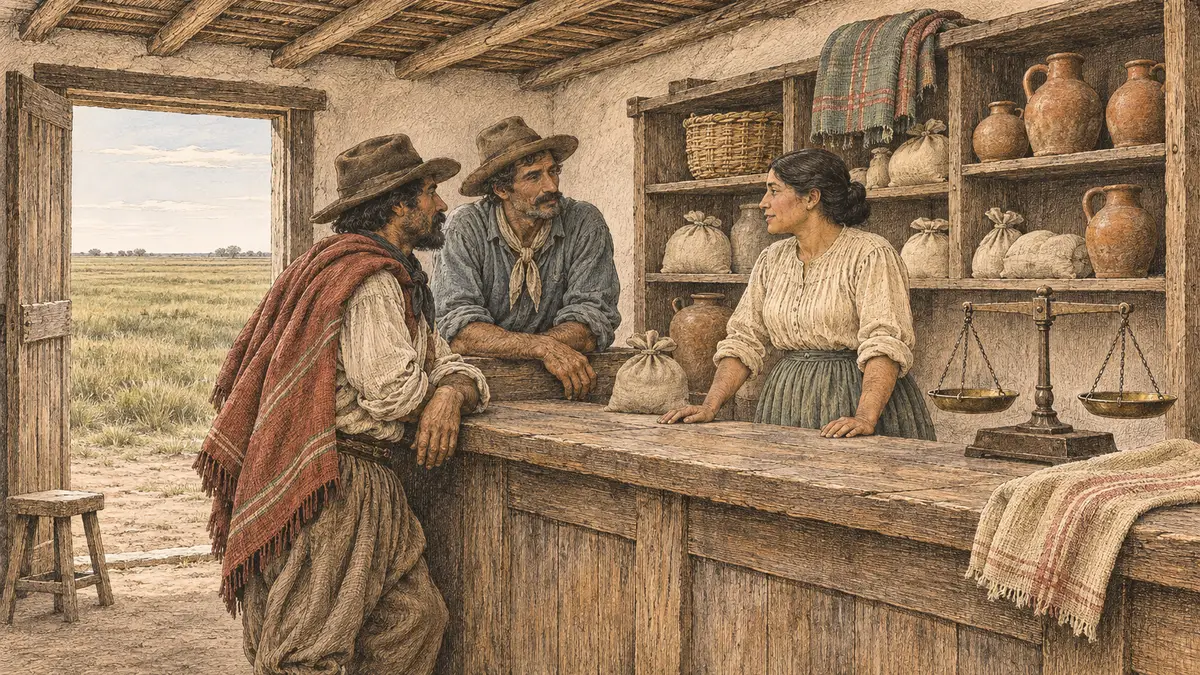
Look beyond the lone rider in the familiar picture of the Argentine countryside and you find the people he needed to meet. The pulpería was one of those meeting places: part shop, part drinking place, and a setting for news, company and everyday exchange.
More than a country bar
The cultural programme Gustar's account of pulperías describes places where travellers found provisions and rest, and where customers ate, drank, played cards and heard the news. It is a useful starting point, provided we do not reduce every rural community to the same scene.
Think of the counter before the guitar. People arrived to obtain things they needed as well as to spend time together. The commercial and social purposes were connected: a purchase could bring someone into a room where other conversations were already taking place.
Put the shopkeeper back in the picture
Historian Julián Carrera's research at the Universidad Nacional de La Plata examines rural Buenos Aires pulperos and pulperías between 1780 and 1820. His discussion challenges older portrayals that treated the countryside mainly as large estates and wandering gauchos, and the pulpería chiefly as a centre of vice.
He describes a much more varied rural economy, including small and medium producers and differences between places. The shops connected local exchange with wider commercial circuits. Their proprietors belong in the history of the countryside as economic and social participants, not just as background characters serving a famous rider.
This does not turn every pulpero into a hero or every gathering into a harmonious one. It replaces a stock scene with questions about particular people: who supplied the shop, who bought there, and what relationships made it work?
Where literature and buildings meet
San Antonio de Areco offers a concrete place to explore this history. The national heritage record brings together the Puente Viejo, Parque Criollo, Museo Gauchesco Ricardo Güiraldes and pulpería La Blanqueada. It also explains how Güiraldes's novel Don Segundo Sombra linked the bridge and pulpería in public imagination.
The distinctions in that record are worth keeping. It attributes La Blanqueada's association with the era of the 1857 bridge to oral tradition. The museum building, meanwhile, was constructed in 1938 to evoke an earlier estancia. An old-looking place can contain original fabric, reconstruction, literary associations and later acts of preservation. They are all interesting, but they are not the same evidence.
A better way to look
When reading about a pulpería, ask which place and period the account describes. When looking at a museum display, ask what is original and what has been recreated. And when a novel supplies the most memorable scene, enjoy it as literature without making it a transcript of ordinary life.
Explore the national heritage record for Areco to begin. Our Meet the Gauchos introduction opens the wider cultural story; Welsh Patagonia offers another way to think about the people behind a place.
Sources & scope
Gustar's pulpería feature; Julián Carrera's doctoral research, UNLP; and the national heritage record linked above. Read November 23, 2026. No personal visit, present-day menu or opening hours are claimed; the illustration is not a reconstruction of La Blanqueada.
More people and places
- María Remedios del Valle: Remembering an Afro-Argentine Patriot — A life of service, a struggle for recognition, and a name that opens a wider history of Argentina.
- Welsh Patagonia: The People Behind a Living Language — From the 1865 migration to classrooms in Chubut, with Indigenous perspectives kept in view.
The Salt Guide
We are recording the salts on the American shelf one jar at a time — label, panel, price paid, crystal on white. Browse the guide →
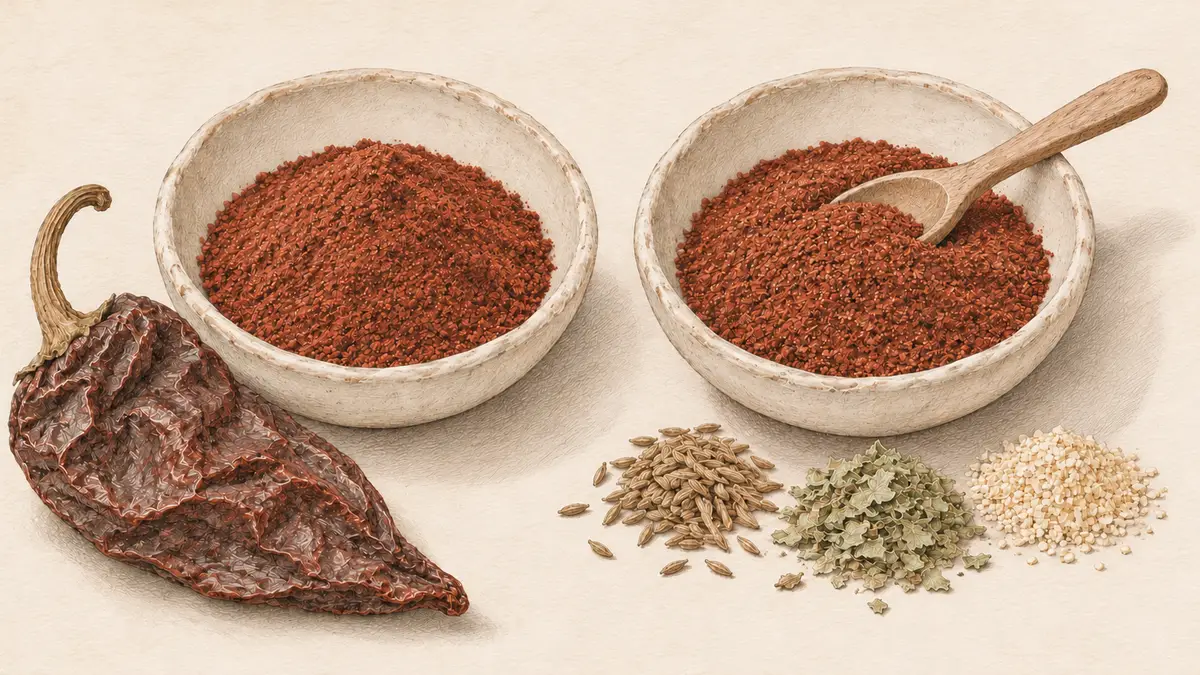
Chili Powder vs. Ground Chile: Read the Ingredient List
A seasoning blend and a named ground pepper can look alike while bringing different ingredients to dinner.
Read the article →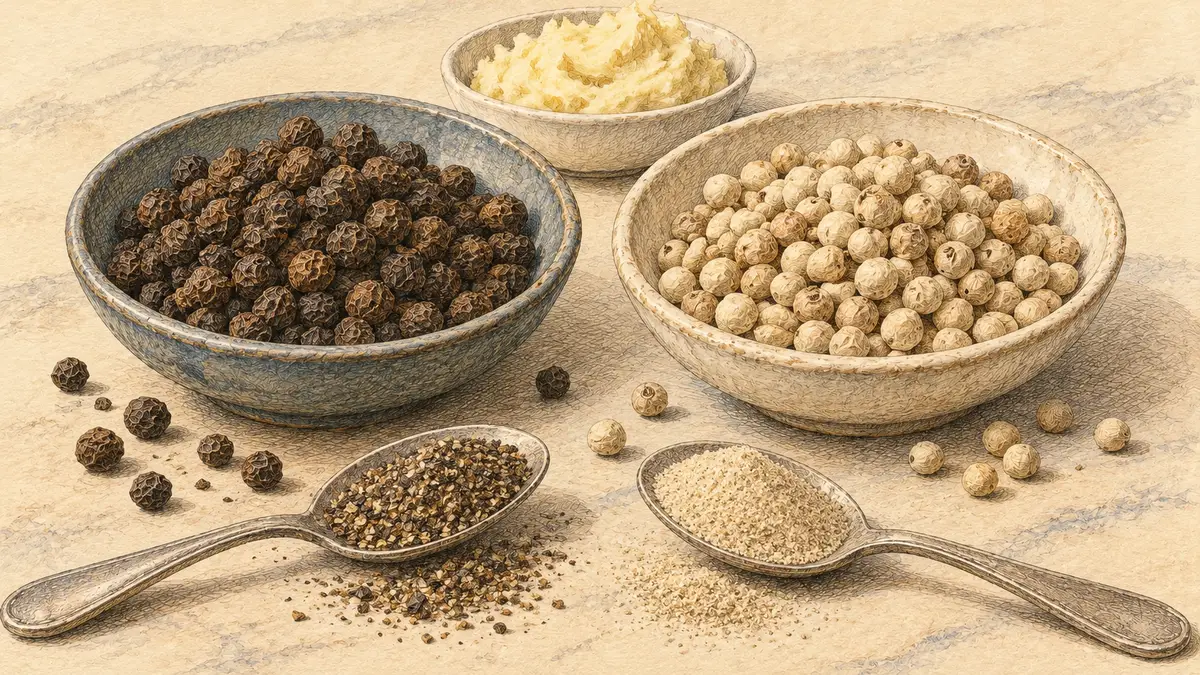
Black vs. White Pepper: More Than a Difference in Colour
The same plant, different preparation: what changes in the peppercorn, the grind and the dish.
Read the article →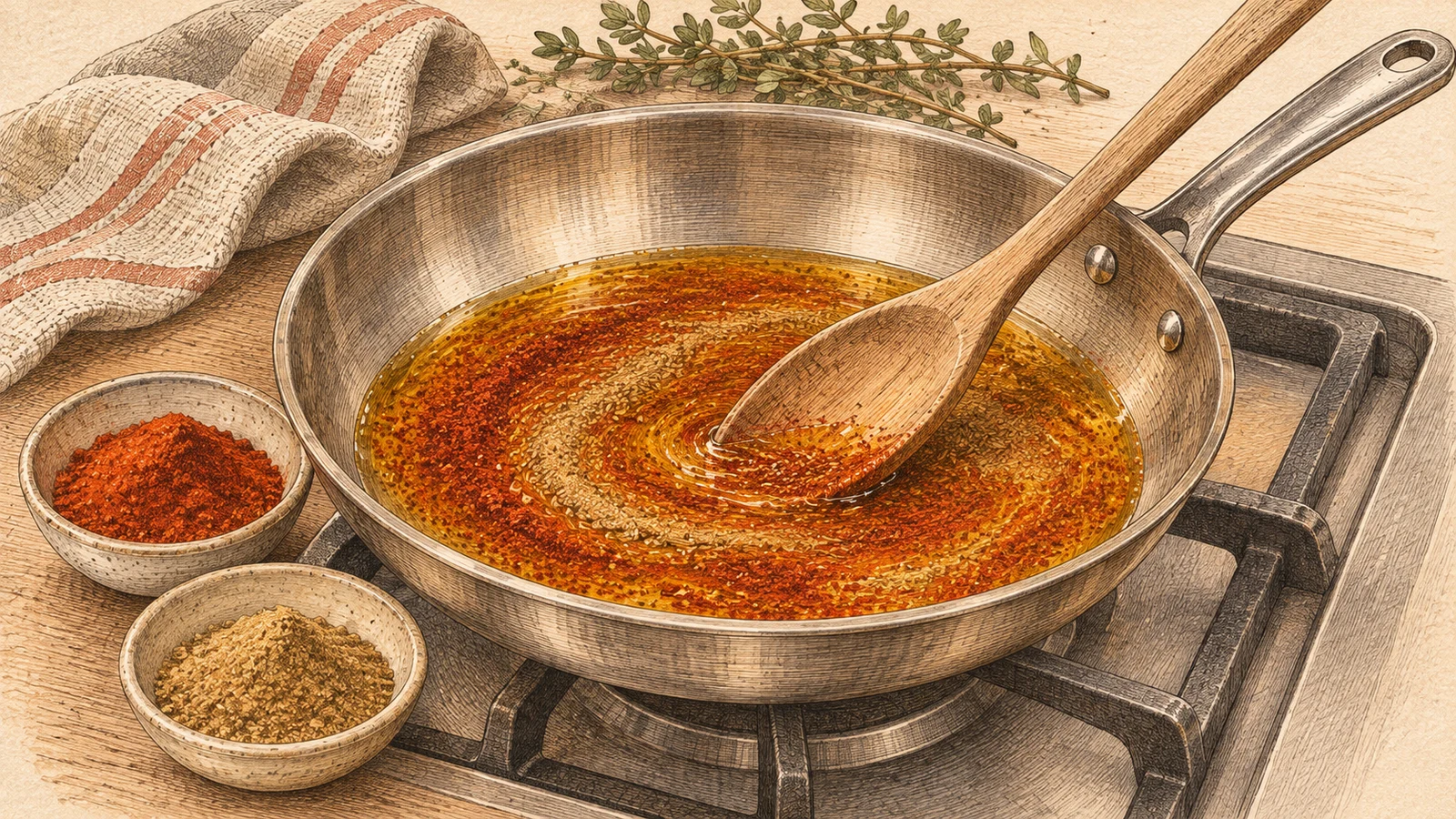
How to Bloom Spices Without Burning Them
What warming spices in oil does, how it differs from dry toasting, and why a seasoning blend needs its own instructions.
Read the article →Get the next guide
An email when we publish a new salt guide or recipe, and first word when the Patagonian salts are ready to order.
We write when there is something to say, not on a schedule.