
Why Our Smoked Salt Isn't Quebracho
We are developing a smoked salt, and quebracho is not among the woods we are considering. Quebracho is the most romantic wood in Argentina, and that is exactly the reason to be careful with it. It would look good on a label. It would also be the wrong wood: its reputation is as charcoal and as tannin, not as a smoke for salt. The woods under consideration are oak, apple and mesquite. A smoke trial on our first shipment is under way, no method is settled, and no Gaucho smoked salt is on sale.
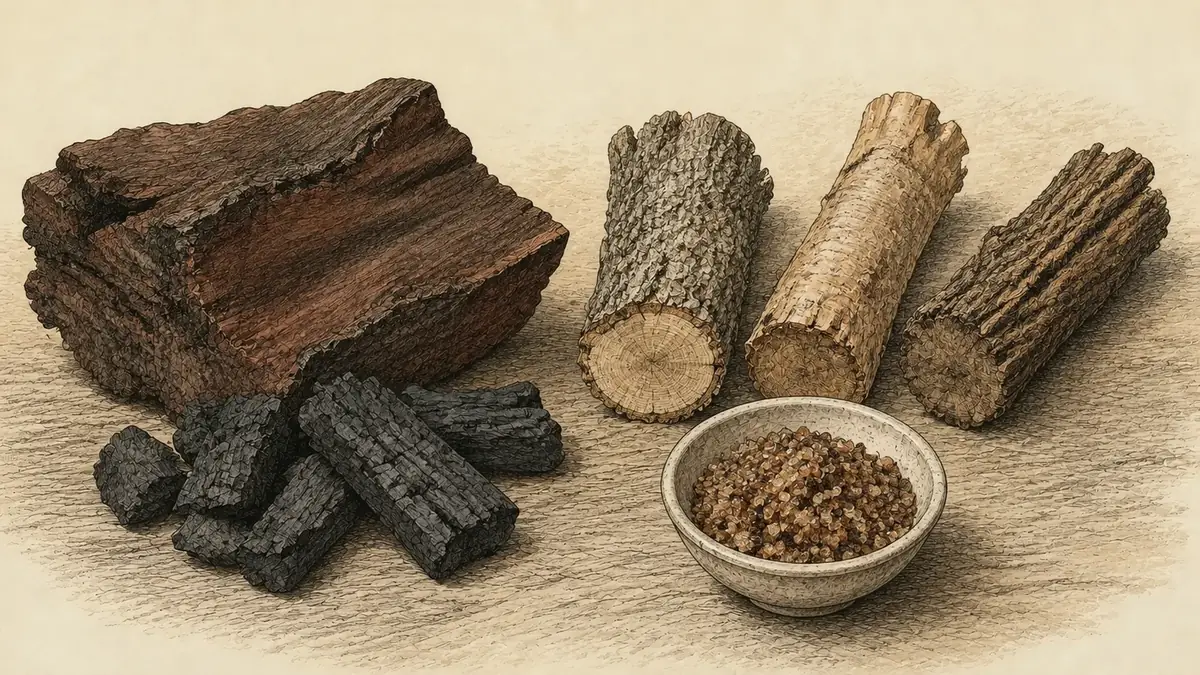
Quebracho colorado grows in the Gran Chaco, across the northern provinces of Chaco, Formosa, Santiago del Estero and Santa Fe. The name is usually read as quiebra-hacha, axe-breaker, and the wood earns it: it is one of the densest, hardest timbers in South America. For a century it was the world’s main source of tannin for tanning leather, and it still goes into fence posts, railway sleepers and, closer to our subject, charcoal. Carbón de quebracho is a prized asado fuel precisely because that density gives a long, hot, steady burn.
So the temptation is obvious. Quebracho is Argentine, iconic, and tied to fire and asado in exactly the way a smoked salt would like to borrow. Writing “smoked over quebracho” on a jar would sound authentic to anyone who knows the wood. That is the problem with it, not the appeal.
What quebracho is good at is being charcoal and being tannin. Its value in the asado world is as the fuel under the grill, not as a smoking wood laid over salt. In developing a smoked salt, we have shortlisted woods that are documented food-smoking woods with known, describable characters: oak for a balanced middle, apple for something milder and sweeter, mesquite for the most intense. We have written elsewhere about how those three actually compare, and about the difference between smoke that coats a surface and smoke that is claimed to do more than it does.
Naming the real wood costs us a more evocative word. We think that is the right trade. This is the same reason there are no mountains in our photographs and the reason we said plainly that the coast was emptied once. A brand built on Patagonian and Argentine provenance can lean on a lot of romantic images, and most of them are available whether or not they are true. Quebracho is one we are choosing not to use, because we would be using the word and not the wood.
If you want quebracho in your cooking, buy the charcoal; it deserves its reputation. We do not have a smoked salt to offer you yet. If we release one, its label will name the wood it was actually smoked over, and that wood will not be quebracho.
Sources: Maderas en Argentina — Quebracho colorado (ficha); ABC Rural — El quebracho colorado.
Get the next guide
An email when we publish a new salt guide or recipe, and first word when the Patagonian salts are ready to order.
We write when there is something to say, not on a schedule.