Plain salt in its different forms, including smoked salt without added seasonings. For salts mixed with herbs, spices, mushrooms or other flavoring ingredients, visit the Spice & Seasoning Guide. Here we record what the label says, what the panel declares, recorded prices and the available photographs. No stars, no ranking, and no tasting notes until we have a method worth publishing.
Independent sea salt comparison: plain fine and coarse salts, flakes, fleur de sel and unseasoned smoked salts documented from their packages and retail receipts. Sodium per gram is computed only when a package declares sodium and serving weight; price per ounce, pound, 100 g and kilo uses the recorded purchase or shelf price and net weight. 13 salts so far; we add them as we buy them.
Last updated October 22, 2026 · Download the data
Nothing in the guide matches that yet.
Prices come from receipts or photographed shelf tags; shelf observations are marked and are not proof of payment. Known prices are sorted cheapest per weight first; products without a confirmed price appear last. For newer profiles, nutrition details remain on the linked product page unless structured comparison inputs are available. Sodium per gram is shown only when the package declares sodium and serving weight; pure sodium chloride is 393.
| Salt | Origin | Type | Sodium / ¼ tsp | Sodium / g | Net | Price | Per oz | Per lb | Per 100 g | Per kg |
|---|---|---|---|---|---|---|---|---|---|---|
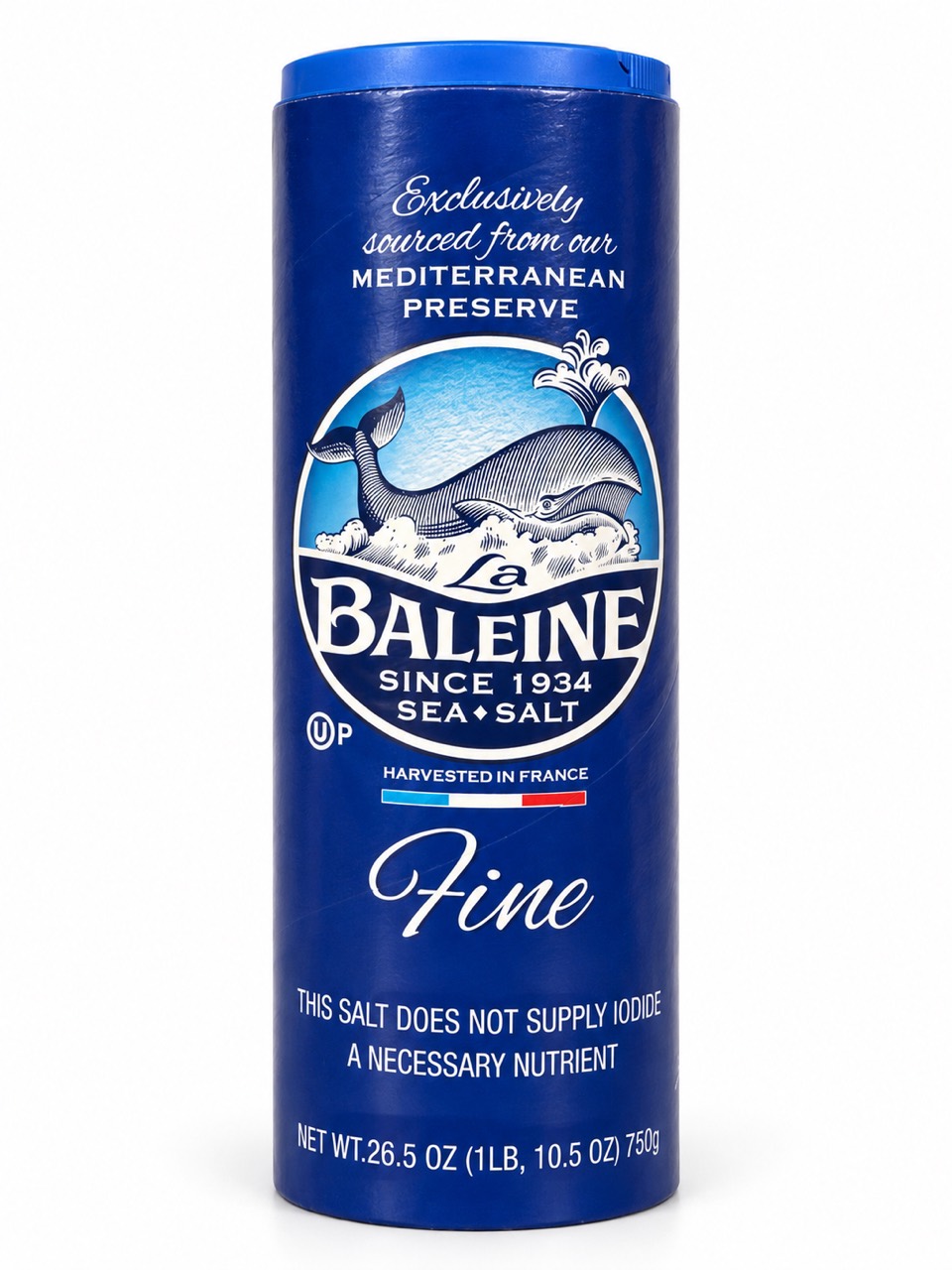
| La Baleine Fine Sea Salt | Product of France; the package identifies Camargue in southern France. | Fine sea salt with magnesium carbonate | See product label | Not computed | 750 g | $5.39 (shelf) | $0.20 | $3.26 | $0.72 | $7.19 |
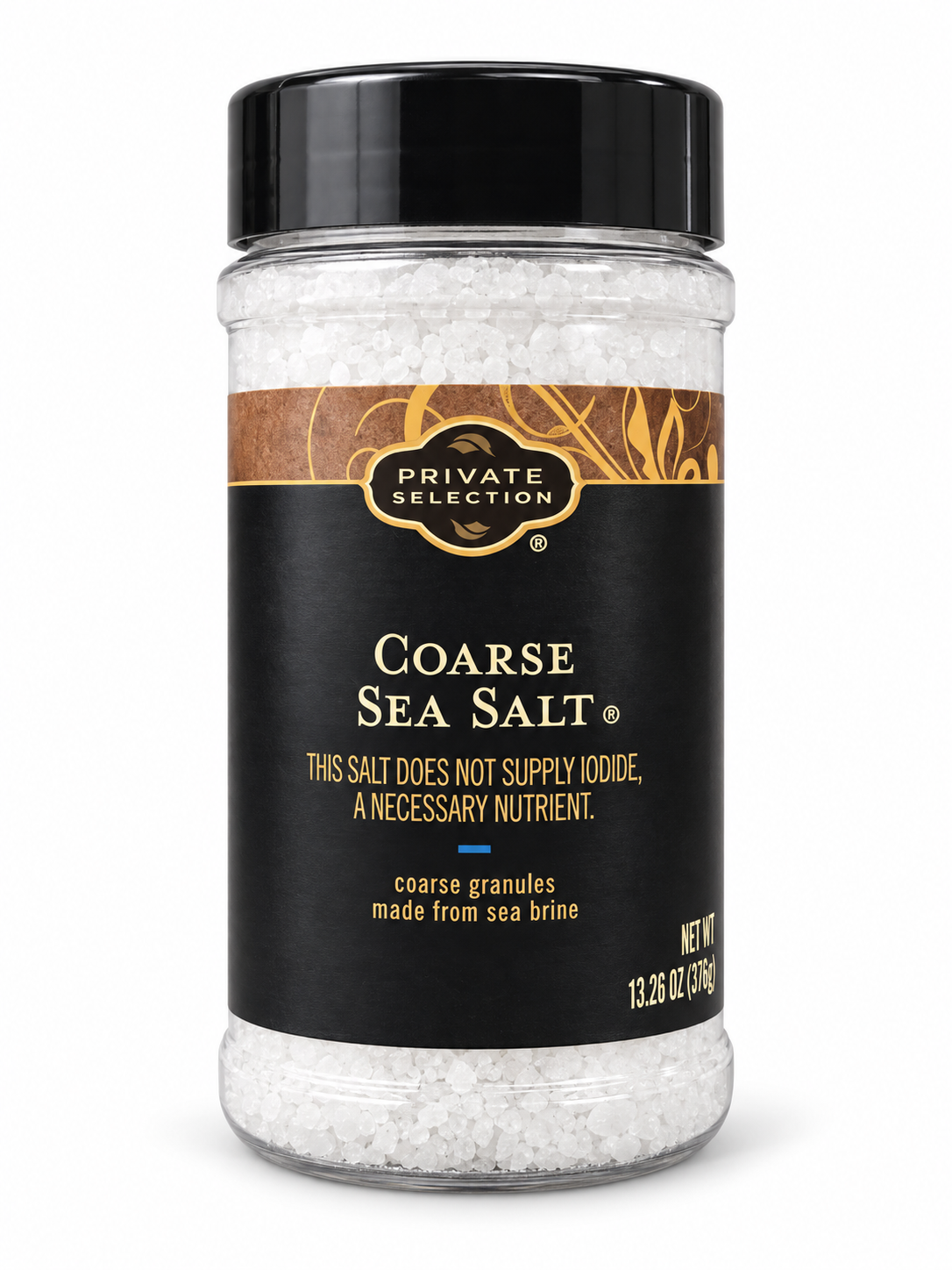
| Private Selection — Coarse Sea Salt | Source country and saltworks not established | Coarse sea salt | See product label | Not computed | 376 g | $3.99 (shelf) | $0.30 | $4.81 | $1.06 | $10.61 |
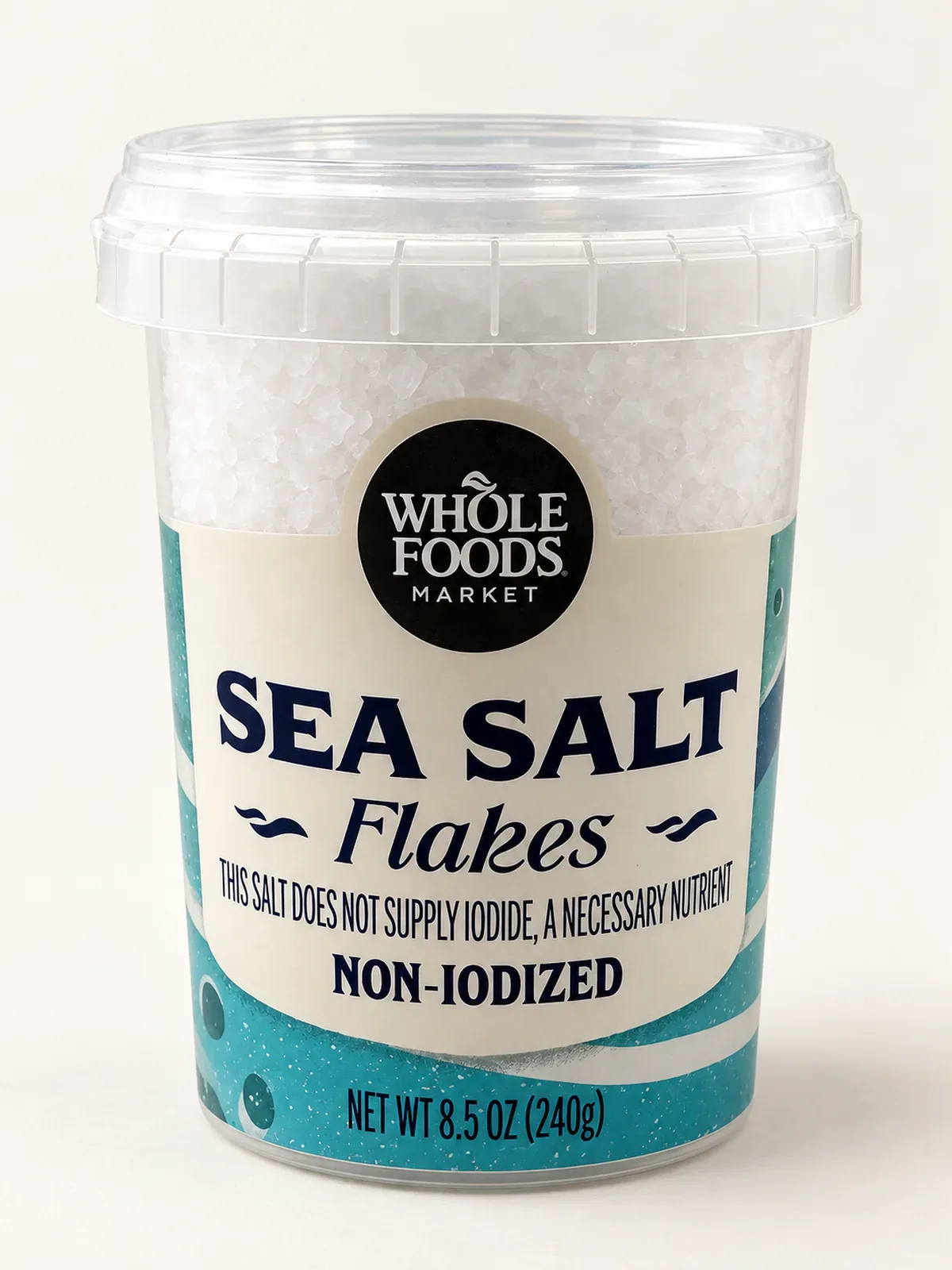
| Whole Foods Market — Sea Salt Flakes | Greece — product of Greece; saltworks and region not stated | Sea salt flakes | 410 mg (1.2 g) | 342 mg | 240 g | $5.89 | $0.70 | $11.13 | $2.45 | $24.54 |
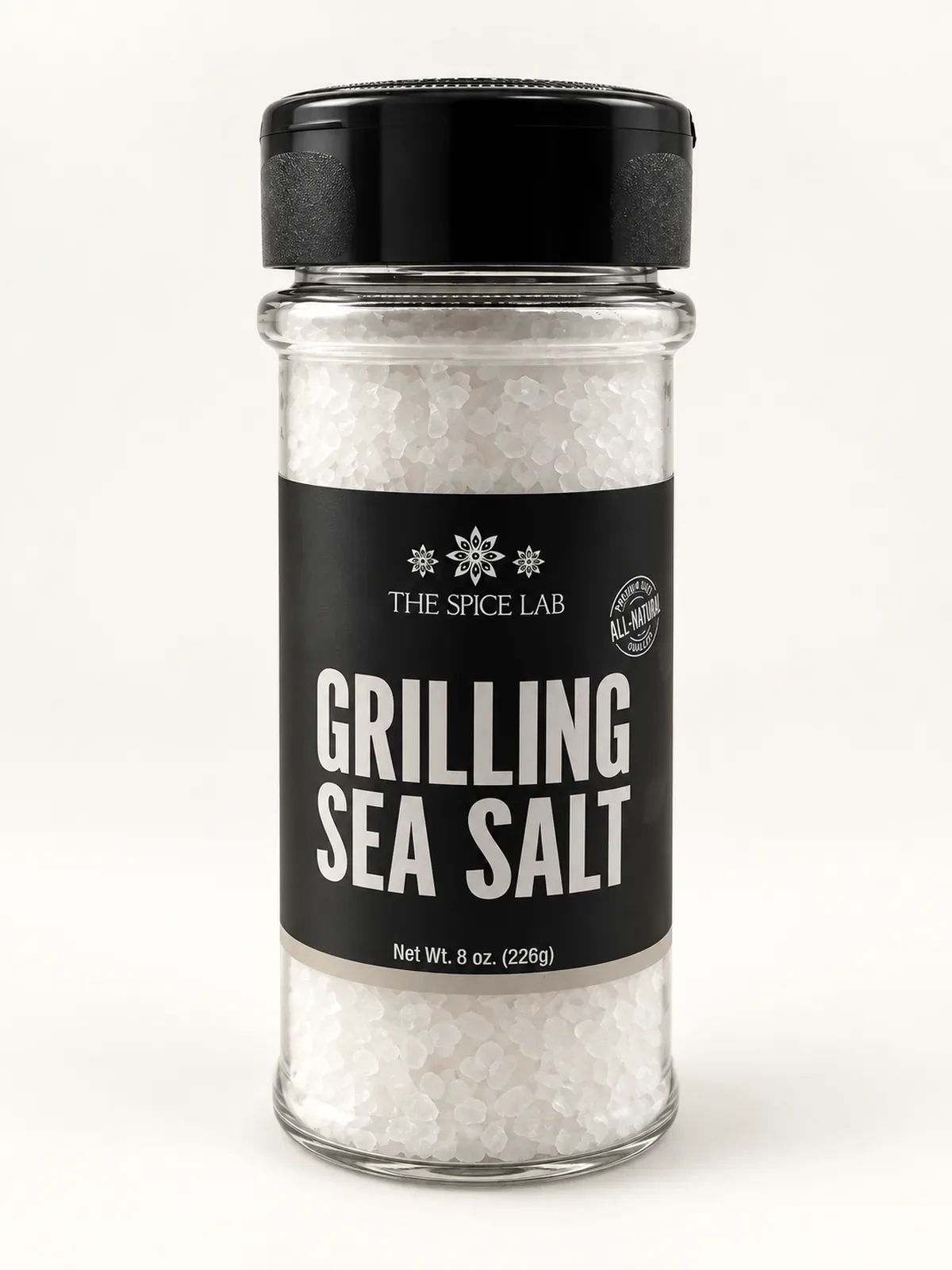
| The Spice Lab — Grilling Sea Salt | Not stated on package | Coarse sea salt | Not declared | Not computed | 226 g | $7.95 | $1.00 | $15.96 | $3.52 | $35.18 |
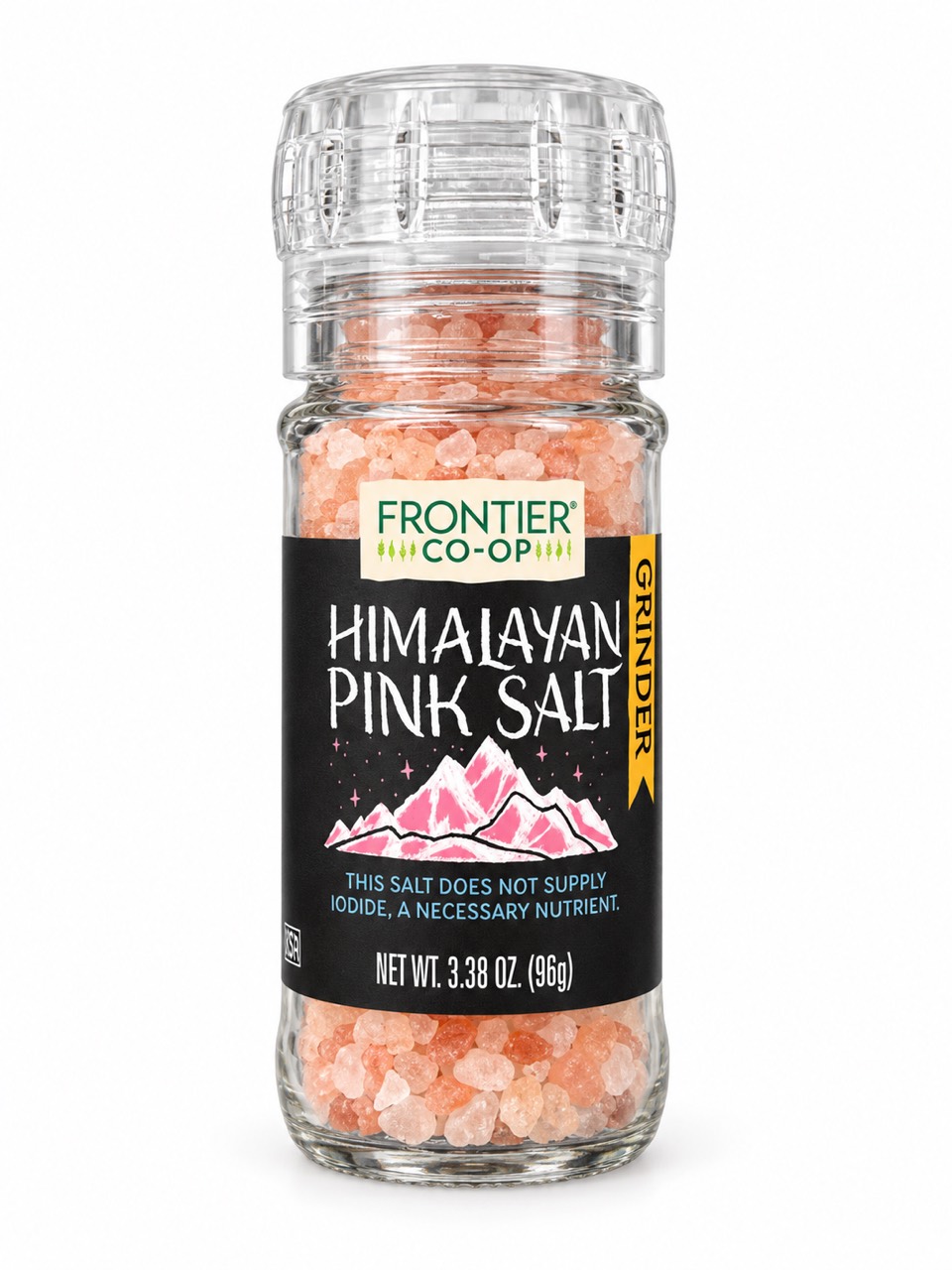
| Frontier Co-op Himalayan Pink Salt Grinder | Marketed as Himalayan pink salt; source country not established for this photographed grinder. | Unseasoned pink salt, grinder | See product label | Not computed | 96 g | $5.81 (shelf) | $1.72 | $27.45 | $6.05 | $60.52 |
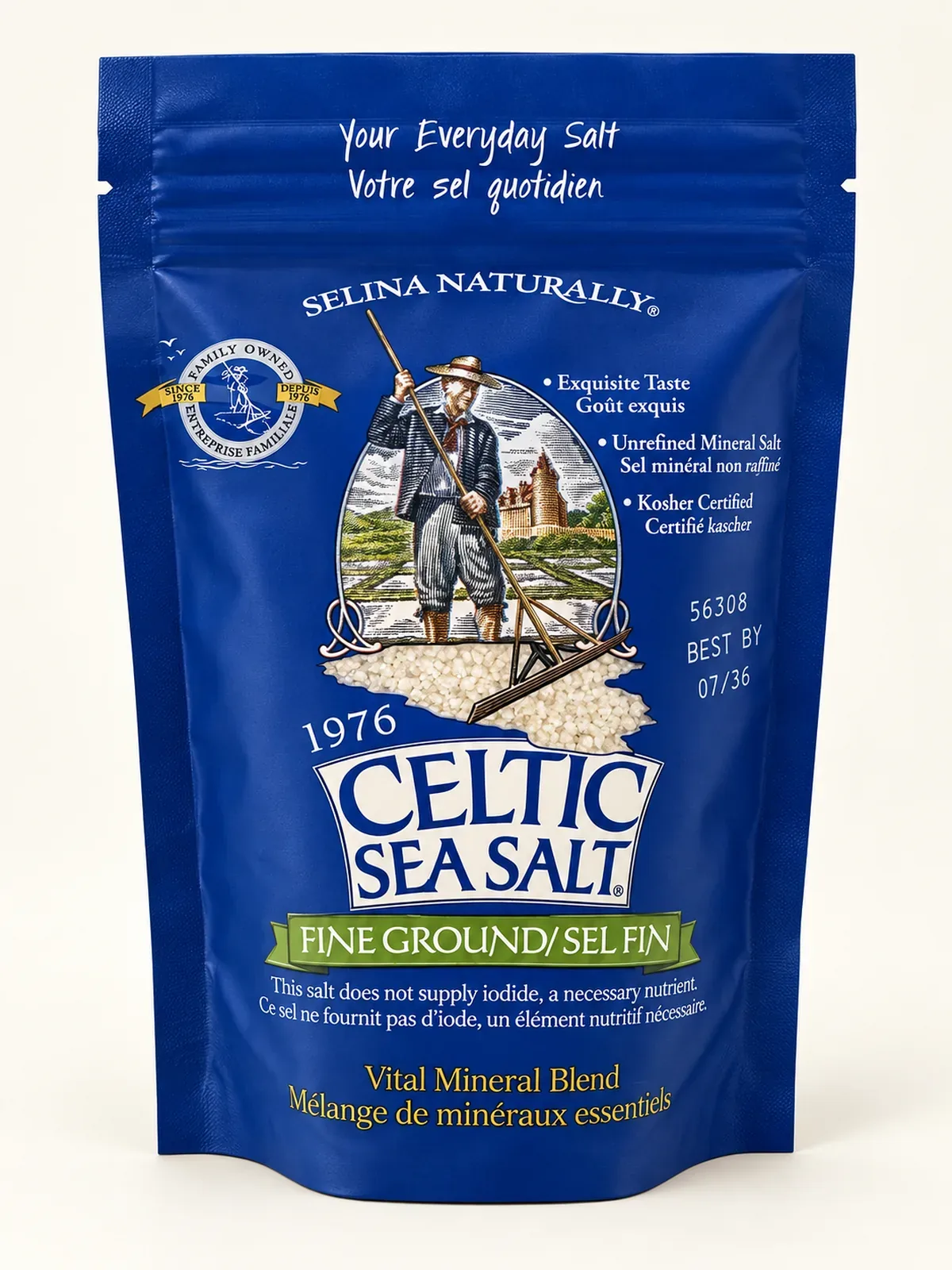
| Selina Naturally — Celtic Sea Salt Fine Ground | Not stated on package; Selina Naturally identifies France as the source of Celtic Fine Ground | Fine-ground sea salt | 458 mg (1.3 g) | 352 mg | 113 g | $6.99 | $1.75 | $28.06 | $6.19 | $61.86 |
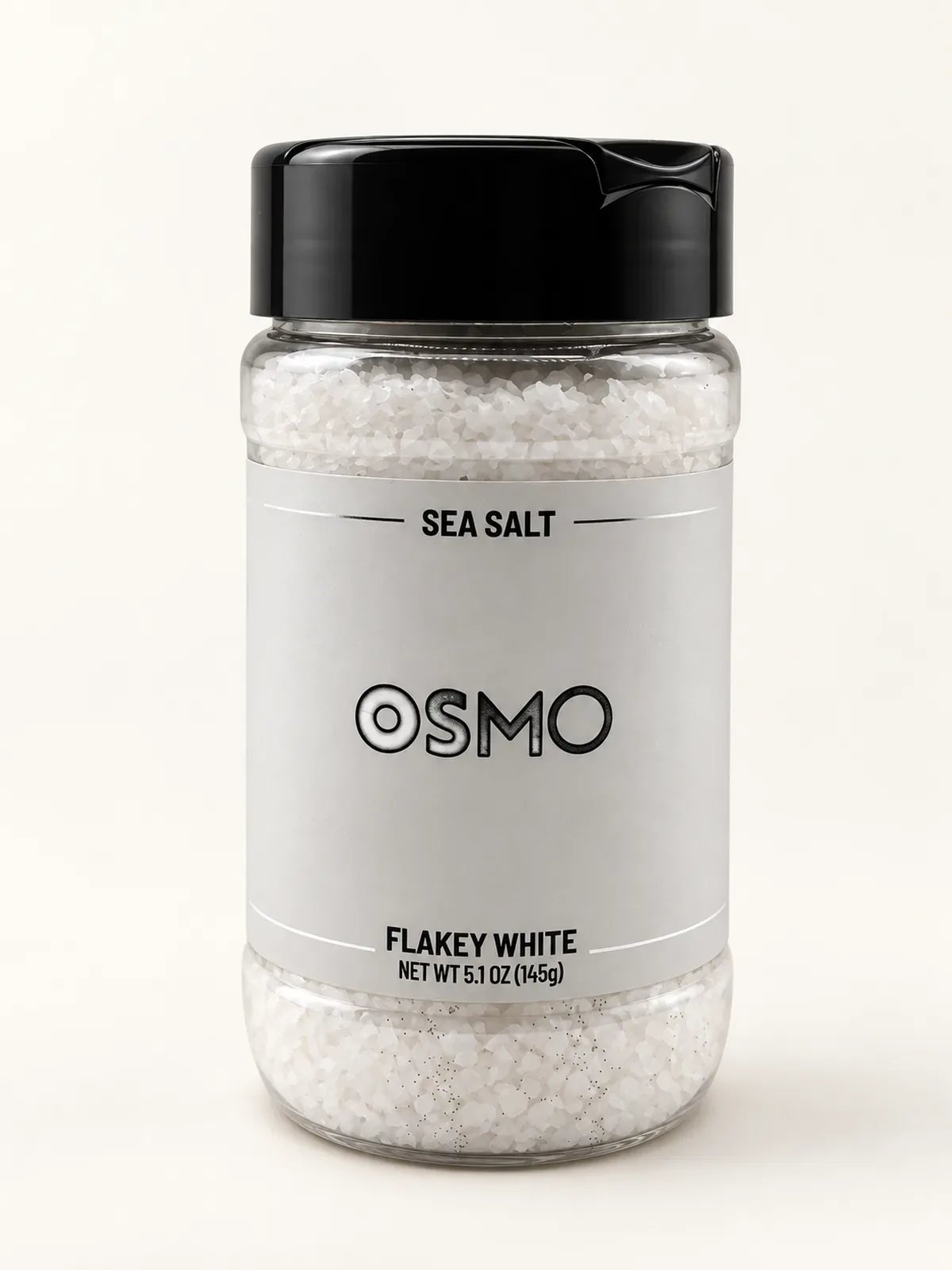
| OSMO — Flakey White Sea Salt | Not stated on package | Sea salt flakes | 590 mg (1.5 g) | 393 mg | 145 g | $9.99 | $1.95 | $31.25 | $6.89 | $68.90 |
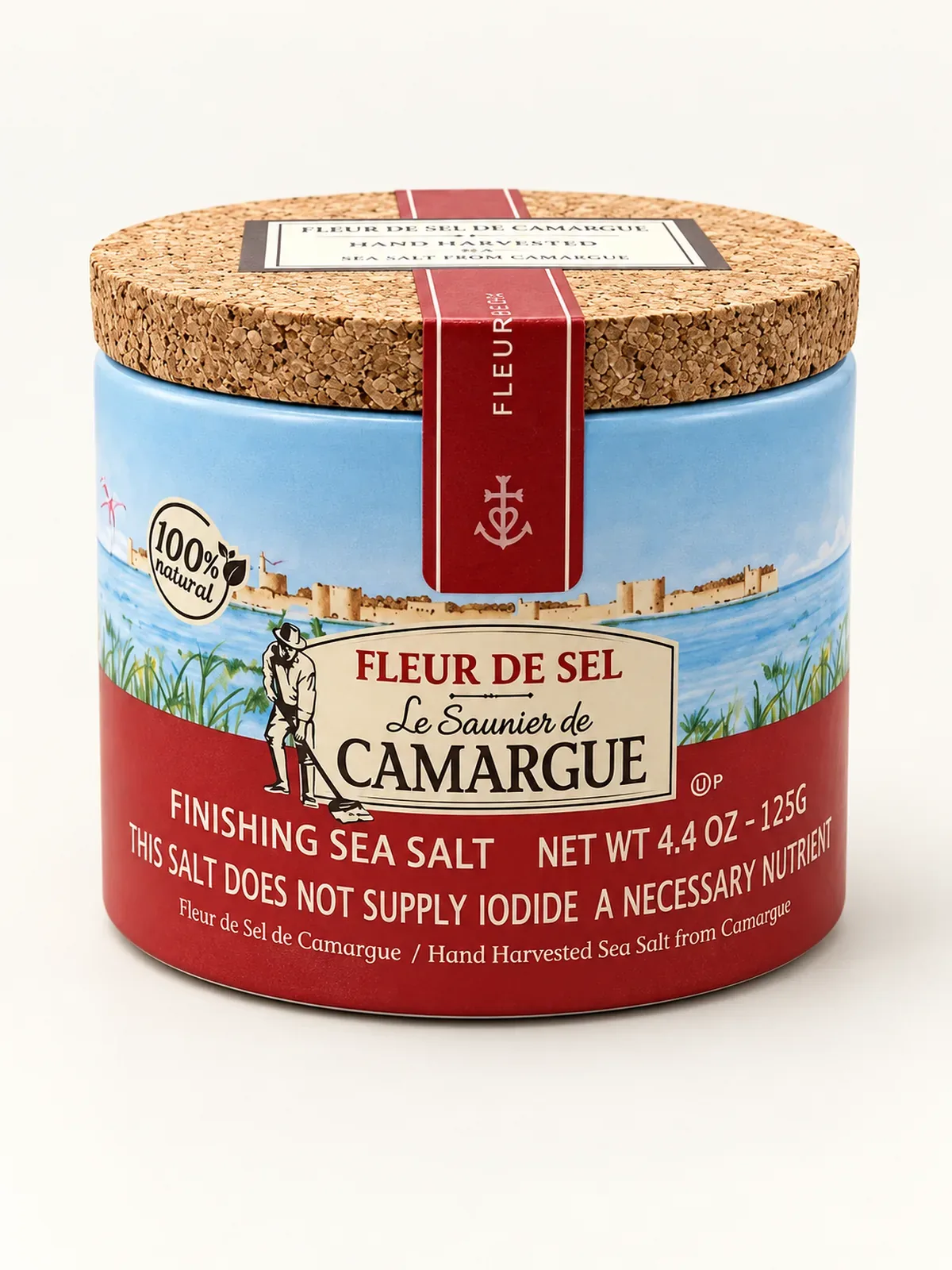
| Le Saunier de Camargue — Fleur de Sel | Camargue, harvested in Aigues-Mortes, France | Fleur de sel | 410 mg (1.1 g) | 373 mg | 125 g | $10.99 | $2.49 | $39.88 | $8.79 | $87.92 |
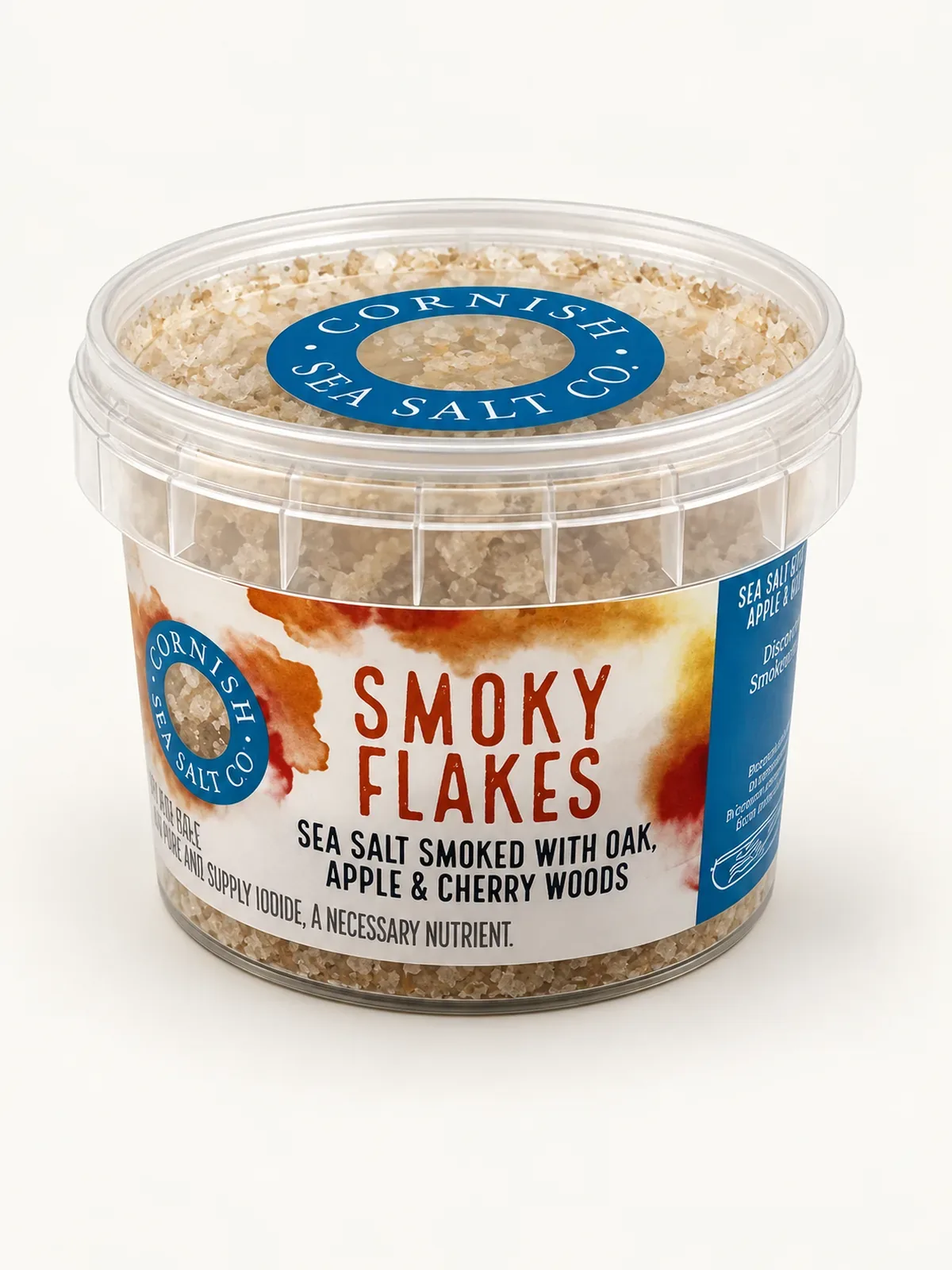
| Cornish Sea Salt Co. — Smoky Flakes | Cornwall, England, United Kingdom | Smoked sea salt flakes | 470 mg (1.4 g) | 336 mg | 50 g | $4.99 | $2.83 | $45.27 | $9.98 | $99.80 |
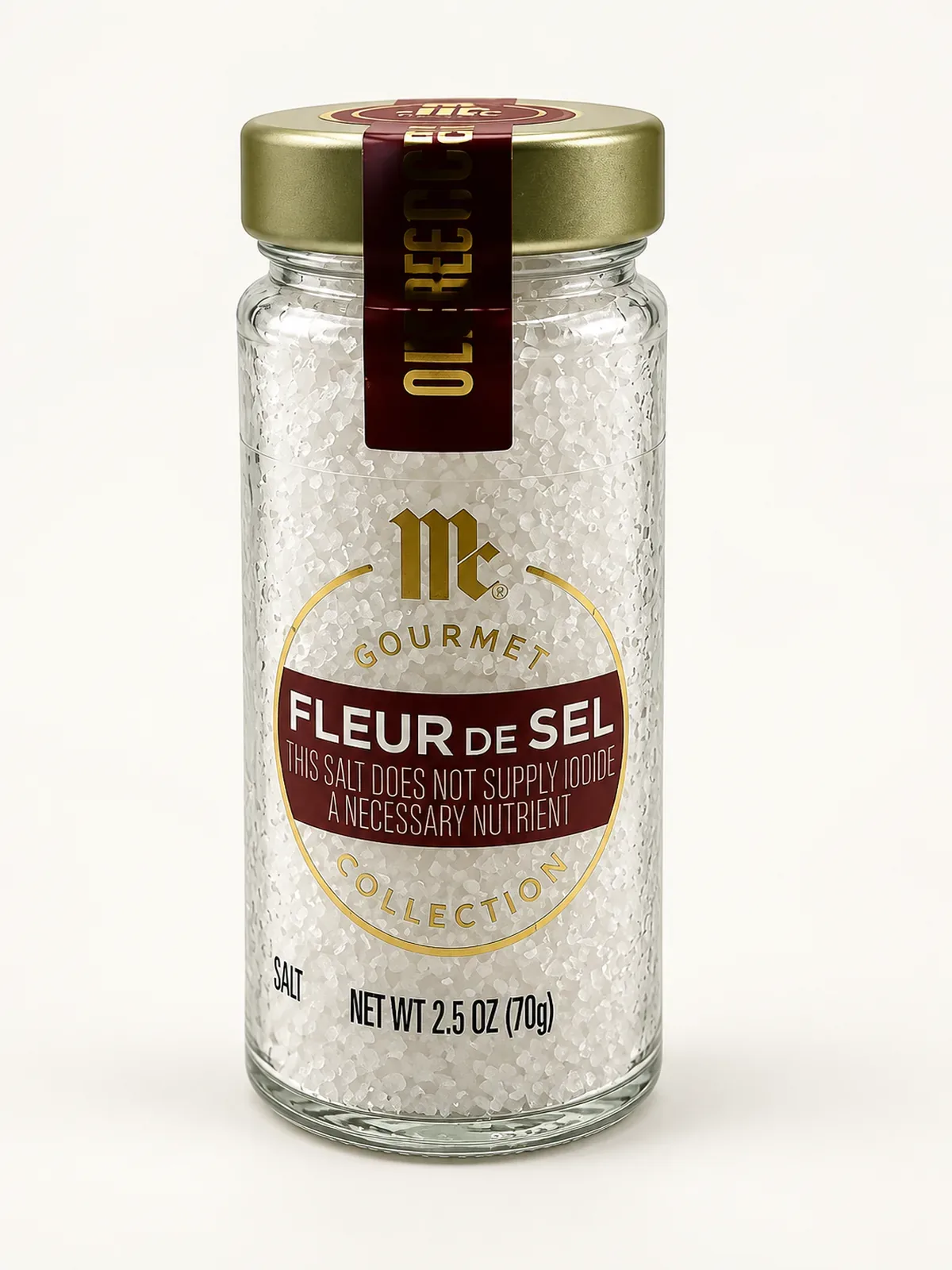
| McCormick Gourmet — Fleur de Sel | France — described on package as French Sea Salt; saltworks and region not stated | Fleur de sel | 380 mg (1 g) | 380 mg | 70 g | $6.99 | $2.83 | $45.29 | $9.99 | $99.86 |
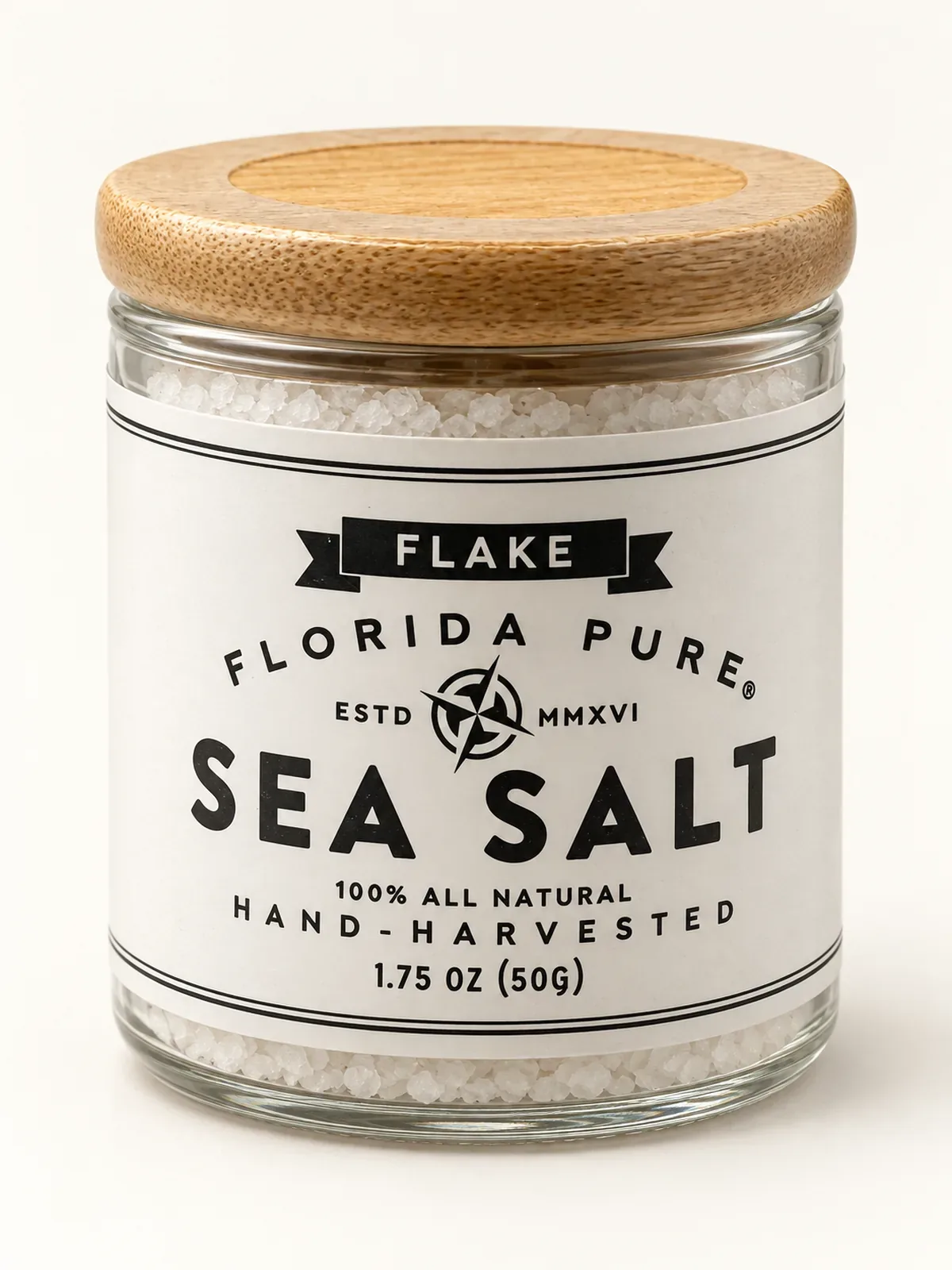
| Florida Pure — Flake Sea Salt | Not stated on package | Flake sea salt | 390 mg (1 g) | 390 mg | 50 g | $8.99 | $5.10 | $81.56 | $17.98 | $179.80 |
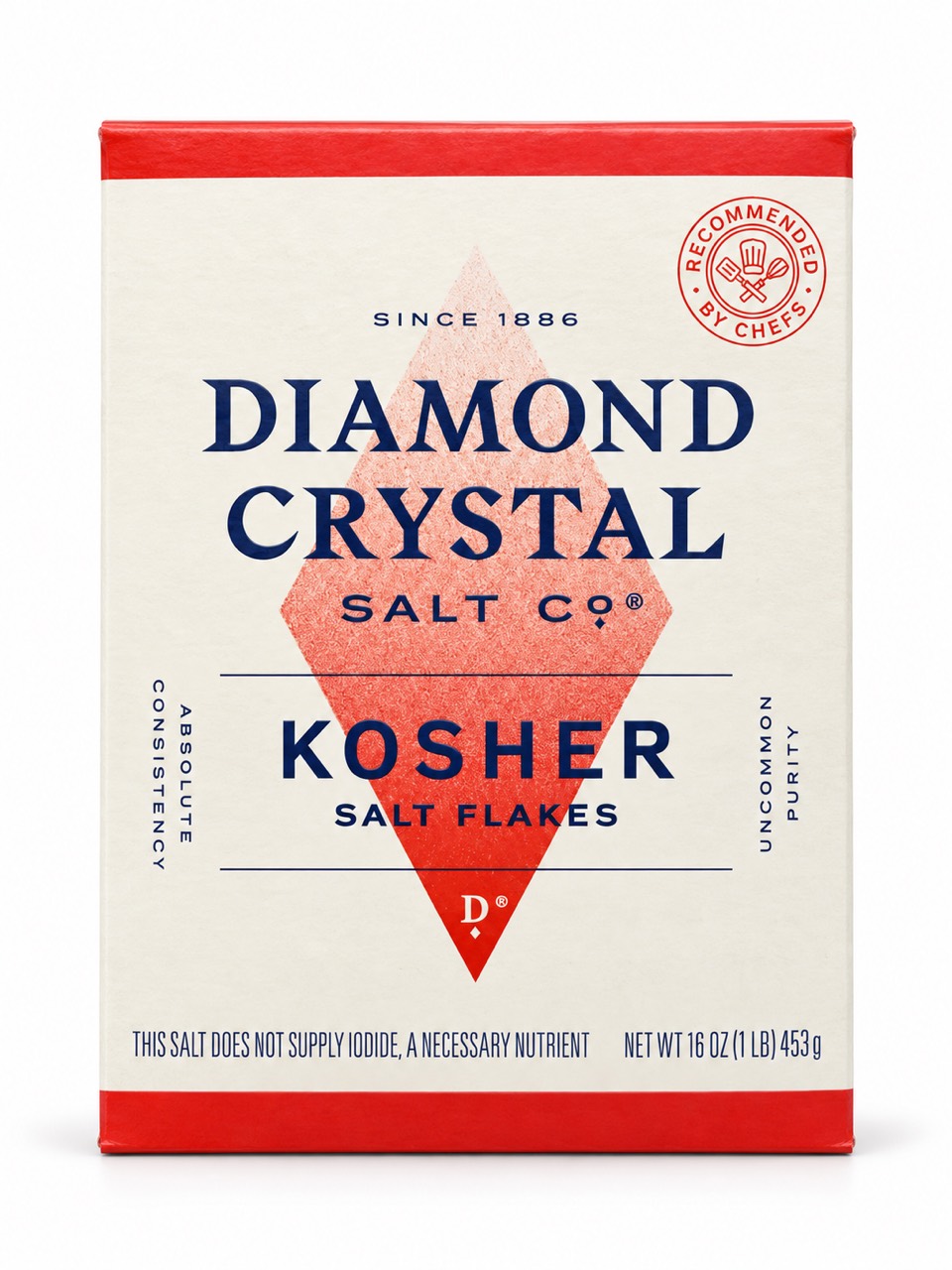
| Diamond Crystal — Kosher Salt Flakes | St. Clair, Michigan, USA — Cargill and brand statements | Plain kosher salt flakes | See product label | Not computed | 453 g | Not recorded | Not recorded | Not recorded | Not recorded | Not recorded |
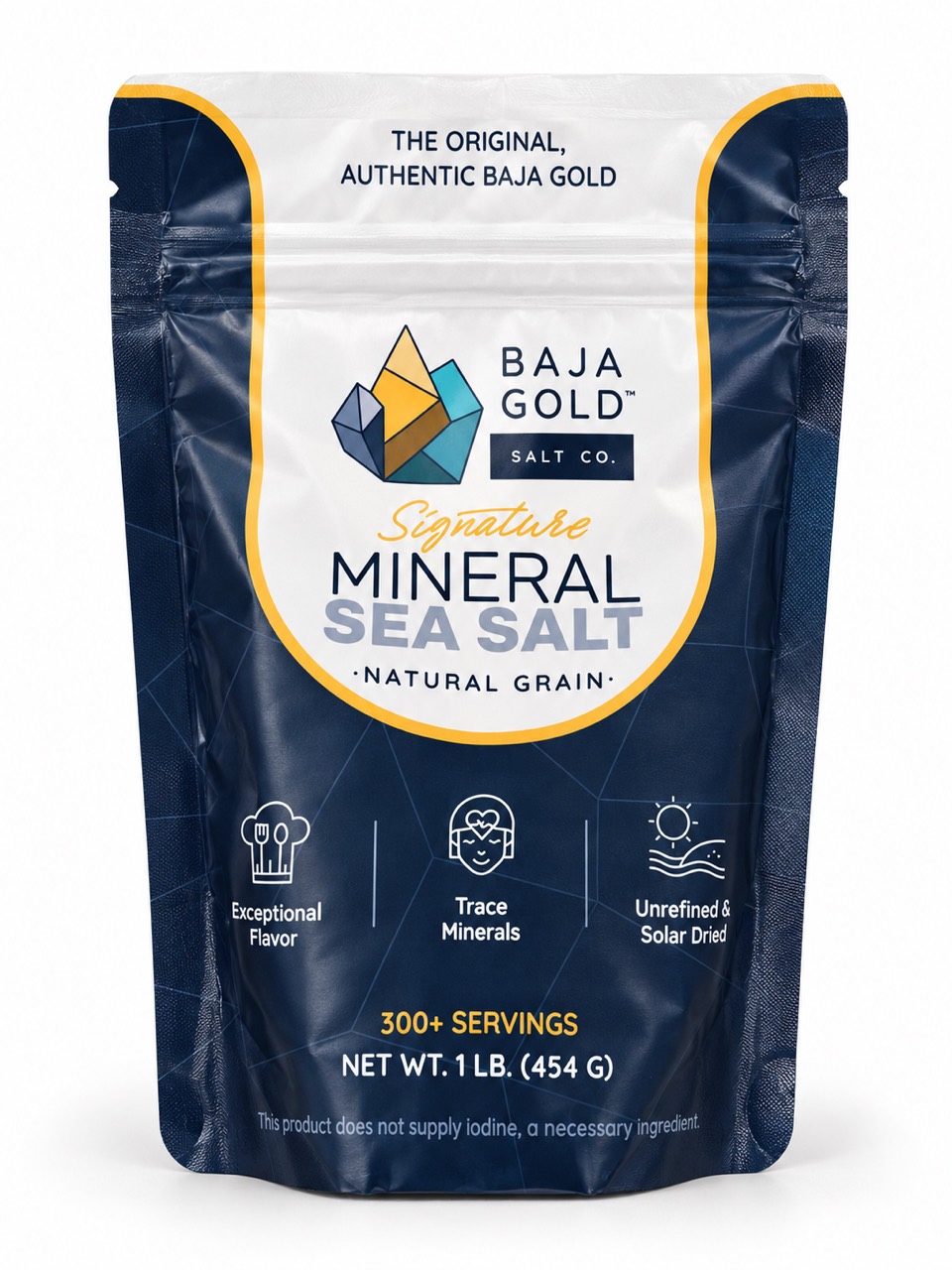
| Baja Gold Signature Mineral Sea Salt — Natural Grain | Product of Mexico; Sea of Cortez origin stated on the package. | Unseasoned sea salt, natural grain | See product label | Not computed | 454 g | Not recorded | Not recorded | Not recorded | Not recorded | Not recorded |
We buy the salt at retail — in a shop, or direct from the maker at the price anyone else would pay — and keep the receipt or the order confirmation. The jar is photographed front, back and panel; the salt is poured onto white paper and photographed from above with no styling. Name, origin, type, ingredients, net weight, serving size, sodium, importer, barcode and lot are copied from the package exactly as printed. Price, seller and date come from the receipt. We never accept a free sample, a discount, or a press jar; if we ever did, the entry would say so.
Two numbers are computed when the package supplies the inputs. Sodium per gram is the declared sodium divided by the declared serving weight, and it is only as good as the label’s rounding: sodium above 140 mg is declared to the nearest 10 mg, so we show a band as well as the figure. If a package carries no Nutrition Facts panel, sodium stays uncomputed. Price per weight is what we paid, divided by the net weight, shown per ounce, per pound, per 100 g and per kilo. Neither is a judgment about the salt.
What is deliberately missing: tasting notes. The journal’s standard is that a claim should be checkable, and a tasting is the one thing here that cannot be. When we publish them it will be with a stated method — how many tasters, in what order, on what food — and until then the field stays empty. Reader reviews come after that, once the guide is large enough to be worth reviewing against.
Gaucho Provisions sells Patagonian sea salt. This guide records package labels, available photographs and researched company information. Prices are documented from receipts or shelf tags when available; missing prices remain unconfirmed. Source notes distinguish label facts, company statements and owner reports. Nothing is scored. Our own salts will be entered with the same fields and no more.
