
Fine vs. Coarse vs. Flaky Salt: Which Grain Size to Use
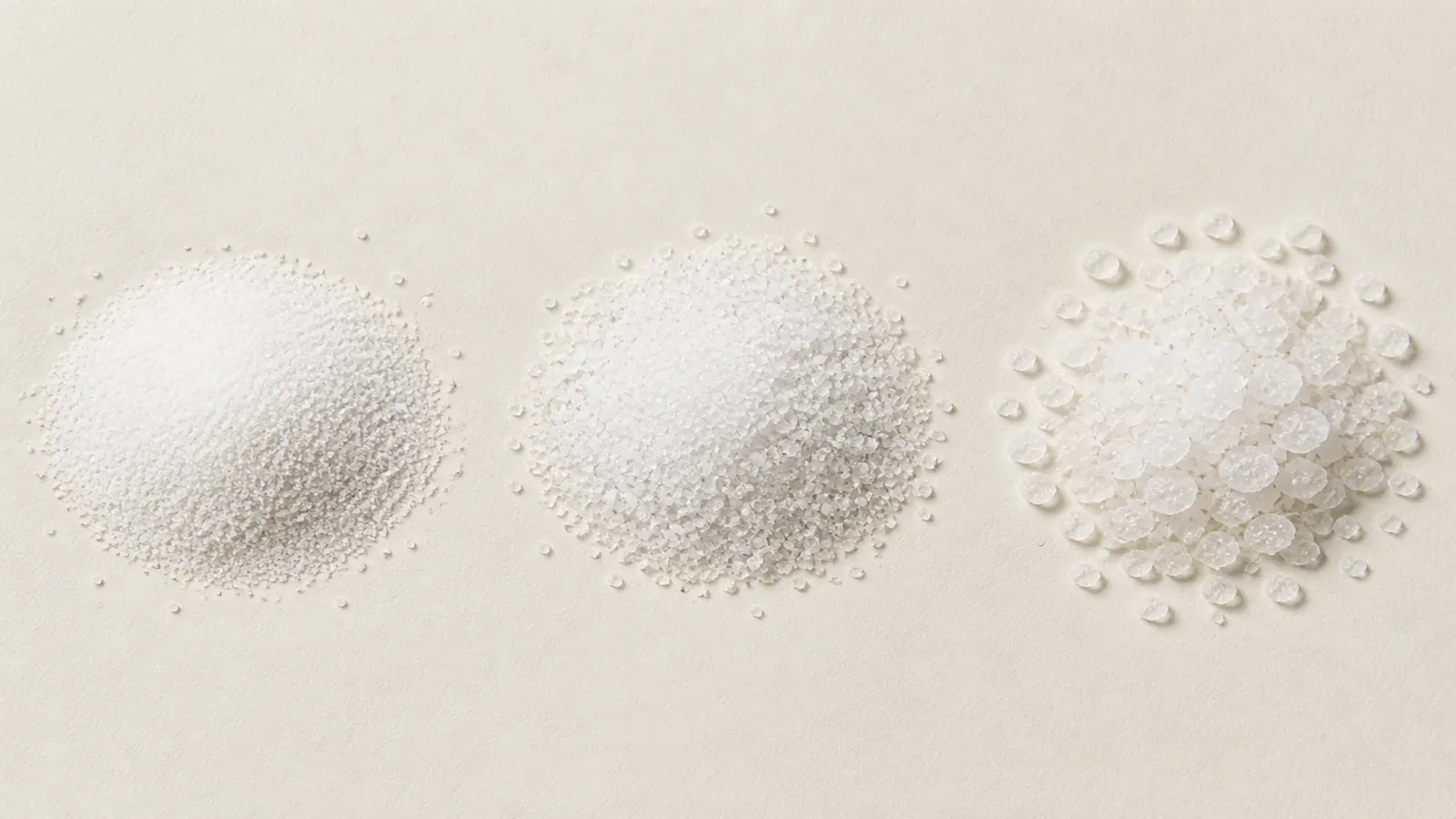
Use fine salt when you want it to dissolve and spread evenly, and flaky salt when you want a finishing crunch. Coarse salt has larger grains that take longer to dissolve. Shape matters too: a delicate flake behaves differently from a solid crystal of the same size.
Choose the grain for the dish
| Grain | Where to start | Watch for |
|---|---|---|
| Fine / sal fina | Doughs, sauces and everyday seasoning | Dense spoonfuls; do not copy a flaky-salt measure blindly |
| Coarse / sal gruesa | Recipes calling for coarse grains, or liquids where it can dissolve fully | Hard grains may remain crunchy if added just before eating |
| Flakes / sal en escamas | A finishing pinch on eggs, tomatoes, vegetables or rested steak | Crush lightly between your fingers; spoon weights vary with packing |
Explore Fine Sea Salt and Sea Salt Flakes. Our coarse salt is currently unavailable.
Updated 26 September 2026. We removed an earlier unverified composition claim about our salt. Choose a grain for its cooking behavior; we are not publishing a sodium comparison for our salt without verified results.
The rest of this guide explains why grain and crystal shape matter, and how to compare spoon measures.
Grain size is an ingredient
We are used to thinking of salt as a single item that varies only in quality. It is more useful to think of it the way you think of pepper: the same material, and the grind is a decision.
A fine grain has enormous surface area for its mass. It dissolves almost on contact, disperses evenly, and disappears. That is what you want in a dough, a brine, a sauce, or anywhere the salt’s job is to be present but invisible.
A medium grain — Argentines call this entrefina, or parrillera when it is sold for the grill — clings to a wet surface and dissolves over minutes rather than seconds. On a steak over coals, that timing roughly matches the cook.
A large crystal dissolves slowly enough that some of it is still intact when it reaches your mouth. That is not a failure. It is the entire point of a finishing salt: a bright, concentrated hit and a physical crunch against soft food.
The measurement problem
Here is the thing almost nobody tells you, and it will improve your cooking more than any sourcing story.
A teaspoon of salt is not a fixed amount of salt.
| Salt | Grams per tsp | Grams per Tbsp |
|---|---|---|
| Table salt (fine) | 6.0 | 18–19 |
| Fine sea salt | ~5.4 | ~16 |
| Coarse sea salt (cubic) | ~5.6 | ~17 |
| Morton kosher | 4.8 | 14.4 |
| Diamond Crystal kosher | 2.8 | 8.4 |
| Maldon flake | ~2.5 | ~7.4 |
Figures from manufacturers’ declared Nutrition Facts serving weights, cross-checked against USDA data for table salt. Flake salts vary by roughly ±25% depending on how you fill the spoon.
A teaspoon of table salt contains more than twice the salt of a teaspoon of Diamond Crystal. If a recipe says “1 tsp salt” and does not say which, it is not a precise instruction.
Weigh your salt if you can. A cheap scale solves this permanently.
Three things this table disproves
“Morton kosher is twice as dense as Diamond Crystal, so use half.” No. The label figures give a ratio of 1.71×; weighed scooping gives about 1.37×; ATK’s practical conversion implies 1.33×. Nothing supports 2×. Halving the quantity under-seasons by about 15–33% across those ratios.
“Coarse salt is much less dense than fine salt.” Also no — and this one is genuinely counterintuitive. La Baleine’s coarse sea salt and fine sea salt weighed 66.8 g and 64.8 g per quarter cup in the cited kitchen measurements. Grain size barely moves density.
What does move density is crystal shape. Diamond Crystal (45.2 g/¼ cup) and Maldon (33.2 g/¼ cup) are dramatically lighter than either — because they are not solid crystals at all. They are hollow. Which brings us to the most interesting thing about salt.
Hopper crystals: the reason flake salt exists
Left alone, salt crystallises as a solid cube. But under the right conditions — evaporation at the surface of a still brine — crystals grow faster at their edges than in the middle of their faces, producing a hollow inverted pyramid. Mineralogists call these hopper crystals.
That geometry is the whole trick of flake salt:
- It is mostly air, which is why a tablespoon of Maldon holds so much less salt than one of table salt.
- It is fragile, so it shatters between the teeth instead of grinding — the “crunch.”
- It has enormous surface area, so it dissolves fast for its apparent size.
- It sticks to things. Flakes coat food more efficiently than cubes.
Maldon makes hopper crystals by open-pan evaporation. Diamond Crystal makes them with the patented Alberger process, which is why Diamond Crystal behaves so unlike Morton kosher — Morton is made by pressing granules through high-pressure rollers into dense flattened flakes, a completely different object.
Smaller crystals actually taste saltier
This is not folklore. It is measured.
A 2013 study in the Journal of Texture Studies applied three salt size fractions to fried potato crisps at identical sodium loading, then had trained panellists eat them under a controlled chewing protocol while saliva was sampled every five seconds. The smallest fraction produced the fastest time-to-peak, the highest maximum saltiness intensity, and the greatest total saltiness — at the same amount of sodium.
A 2021 paper in Food Chemistry worked out the design rules. Dissolution speed in the first 20 seconds correlates with perceived saltiness at r = 0.85. Transfer efficiency — how well salt sticks to food — correlates negatively with particle size at r = −0.85. And low-density, high-porosity crystals dissolve measurably faster.
Related work found that crystals with “a reduction in size, hollow structure, or structures that can divide during dissolution” increase the surface area meeting saliva, and so increase dissolution speed. That is a precise description of a hopper crystal.
The crucial limit: all of this applies to salt sitting on the surface of food. Once salt is dissolved into a dish, geometry is irrelevant — it is the same sodium and chloride ions either way. Flake salt does not make soup taste saltier. It makes the outside of things taste saltier.
There is also a counter-case worth knowing. ATK found Himalayan pink salt’s dense, large crystals “failed to dissolve properly, resulting in ’bland’ spots and ’salty gravel’ texture,” while Maldon and Celtic salt performed well. The variable is not size. It is whether the crystal is friable enough to break down. A large hollow crystal finishes beautifully; a large dense one is gravel.
Why some salts are damp
| Salt | Moisture |
|---|---|
| Table salt | ~0.5% |
| Maldon | 2.0% |
| Fleur de sel | up to 10% |
| Sel gris | ~13% |
Unrefined salts are not washed after harvest, so they keep a film of mother liquor — the concentrated brine they crystallised from. That liquor is rich in magnesium and calcium chlorides, which are strongly hygroscopic and hold onto water.
The practical consequences: damp salt clumps, does not flow through a shaker, and weighs more per unit of actual sodium. You will sometimes read that moist salt “doesn’t draw moisture out of food” when used as a finisher. That is a claim we could not find tested — treat it as plausible reasoning rather than fact.
The EU protected-origin specification for Fleur de Sel de Guérande confirms the status — unrefined, unwashed, no additives, moisture “relativement élevé” — but sets no numeric limits.
Does expensive salt actually taste different?
The honest answer is more interesting than either the marketing version or the debunking version.
At equal sodium, in food, no. Drake and Drake compared 45 salts from around the world in 2011 and found no difference in salty taste at equivalent sodium levels. Sea salts did show measurable “mineral and metallic” notes and stronger umami and astringent mouthfeel — but the researchers’ own conclusion was that the effect of trace minerals on flavour “appeared to be minimal.”
Do the arithmetic. Maldon’s technical spec lists 97% sodium chloride, with calcium at 85 mg/100 g and magnesium at 19 mg/100 g. Finish a steak with two grams of it and you have added 0.4 mg of magnesium. Detection thresholds for magnesium salts sit in the millimolar range in pure water. It is not close.
ATK’s cooking tests land in the same place: mixed into food, sea salt does not taste different from table salt. In chicken soup a few tasters noticed faint mineral notes; in mashed potatoes and cookies, nobody noticed anything. Their conclusion — “save the exotic salts for sprinkling on food just before serving” — is correct.
And one myth we should retire while we are here. It is very widely claimed that iodine and anti-caking agents in table salt are detectable in cooking. ATK’s blind test of 2% solutions in water and in chicken stock found most tasters could not tell the difference, and in stock nobody could. A blinded crossover trial published in the Eastern Mediterranean Health Journal found iodised salt had no effect on any sensory characteristic of pickled vegetables. We looked for evidence that anti-caking agents are detectable at use levels and found none.
So what is the case for a good salt? It is texture, dissolution rate, moisture, crystal architecture, and where and how it was made. Those are real and they change how food eats. “Eighty-four trace minerals” is not the argument, and brands that lead with it are telling you they do not have a better one.
Choosing, in practice
Fine — doughs, brines, sauces, pasta water, anything where salt should vanish. Also the right grain if you are seasoning by volume and want predictability.
Medium / coarse — the grill. It clings to a wet surface, dissolves over minutes not seconds, and gives you room for error. This is the sal parrillera grade Argentines reach for, and it is the most under-owned salt in an American kitchen.
Large crystal or flake — the last thing before eating. On rested steak, roasted vegetables, tomatoes, eggs, dark chocolate, good butter on bread. Applied at the table, where the crunch survives.
The same seawater can produce all three. That is worth saying plainly: fine, coarse and crystal are not three qualities of salt. They are one salt, finished three ways, for three different jobs.
Common questions
Not inherently. The name is short for koshering salt — the coarse grain used to draw blood from meat in kashrut. Most brands are certified kosher, but the name describes the job, not the status.
Not by volume — you would under-season by more than half. By weight, yes. And you would be wasting it; the texture that makes flake salt worth buying is destroyed by dissolving it.
Functionally, yes. You lose the hopper structure of a flake salt entirely, so grinding good finishing salt is a waste of money.
Residual moisture and magnesium chloride, both of which are hygroscopic. It is a sign of minimal processing, not a defect. Store it sealed and break it up with your fingers.
We do not recommend a salt on health or mineral-superiority grounds. Choose it for texture and cooking use. Our salt’s composition has not been verified for a published comparison.
Sea salt is evaporated from seawater. Rock salt is mined from underground deposits — ancient seas that dried up and were buried, sometimes hundreds of millions of years ago. Himalayan pink salt is rock salt, not sea salt.
Sources
- Rama, R. et al. (2013), “Impact of Salt Crystal Size on in-Mouth Delivery of Sodium and Saltiness Perception from Snack Foods,” Journal of Texture Studies 44(5):338–345 — doi:10.1111/jtxs.12017
- Hurst, K.E. et al. (2021), “Physicochemical design rules for the formulation of novel salt particles with optimised saltiness,” Food Chemistry — PMC8223491
- Quilaqueo, M., Duizer, L. & Aguilera, J.M. (2015), “The morphology of salt crystals affects the perception of saltiness,” Food Research International — doi:10.1016/j.foodres.2015.07.004
- Drake, S.L. & Drake, M.A. (2011), “Comparison of Salty Taste and Time Intensity of Sea and Land Salts from Around the World,” Journal of Sensory Studies 26(1) — Wiley
- Badran, Qaraqash & Gamah (1996), “Possible effects of iodized salt on the taste, colour and consistency of traditional pickles,” Eastern Mediterranean Health Journal 2(2) — WHO EMRO
- Maldon Sea Salt — technical specification (PDF)
- Cook’s Illustrated — Salt Types and Measurements
- America’s Test Kitchen — Substituting Gourmet Salt
- America’s Test Kitchen — Iodized vs. Noniodized Salt on Food Flavor
- INAO — Document Unique, IGP Sel de Guérande / Fleur de Sel de Guérande (PDF)
- DadCooksDinner — Salt by Weight
- Cargill — Himalayan Salt vs Table Salt vs Sea Salt
In the Salt Guide
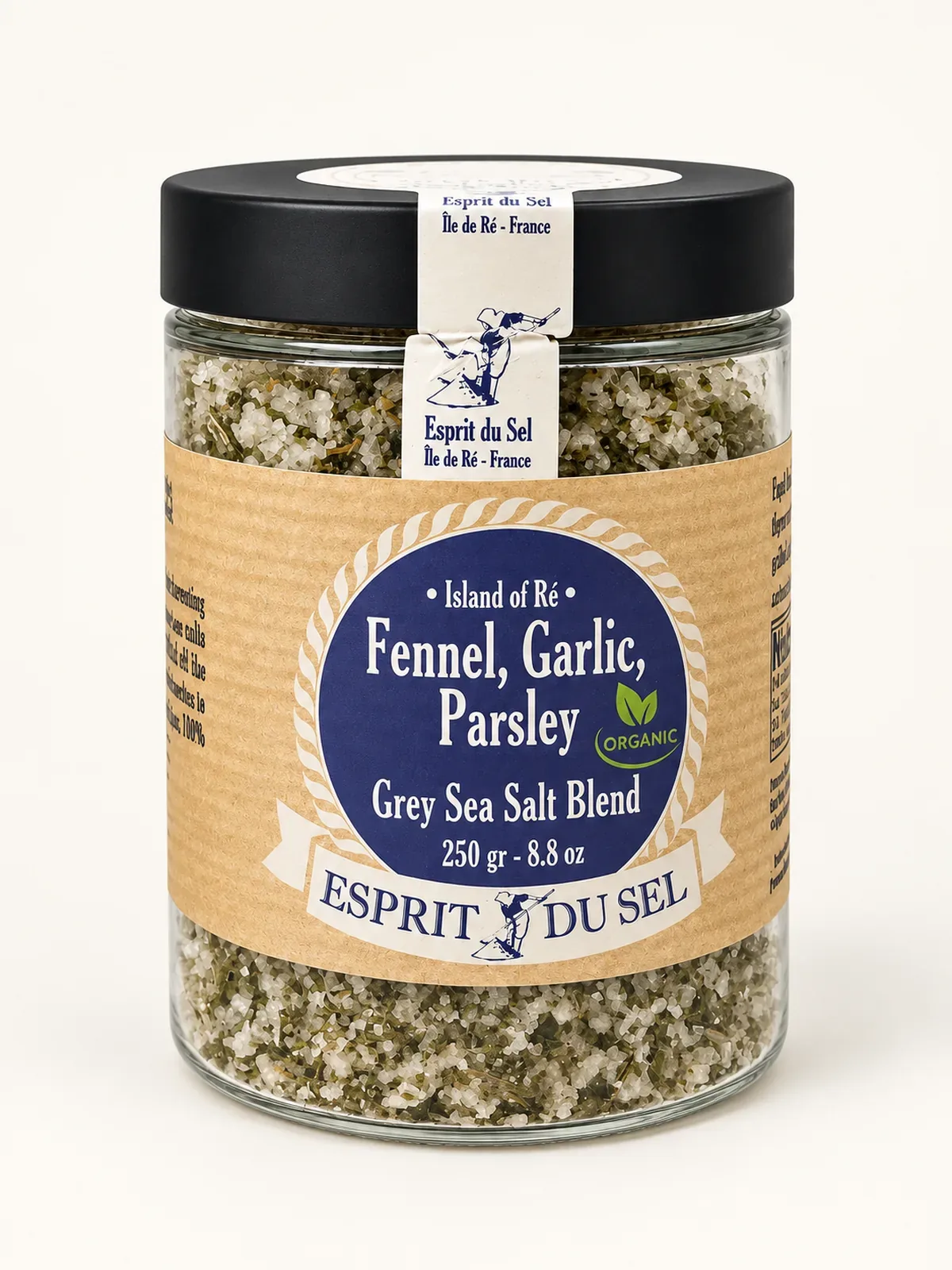
Esprit du Sel — Island of Ré Fennel, Garlic, Parsley
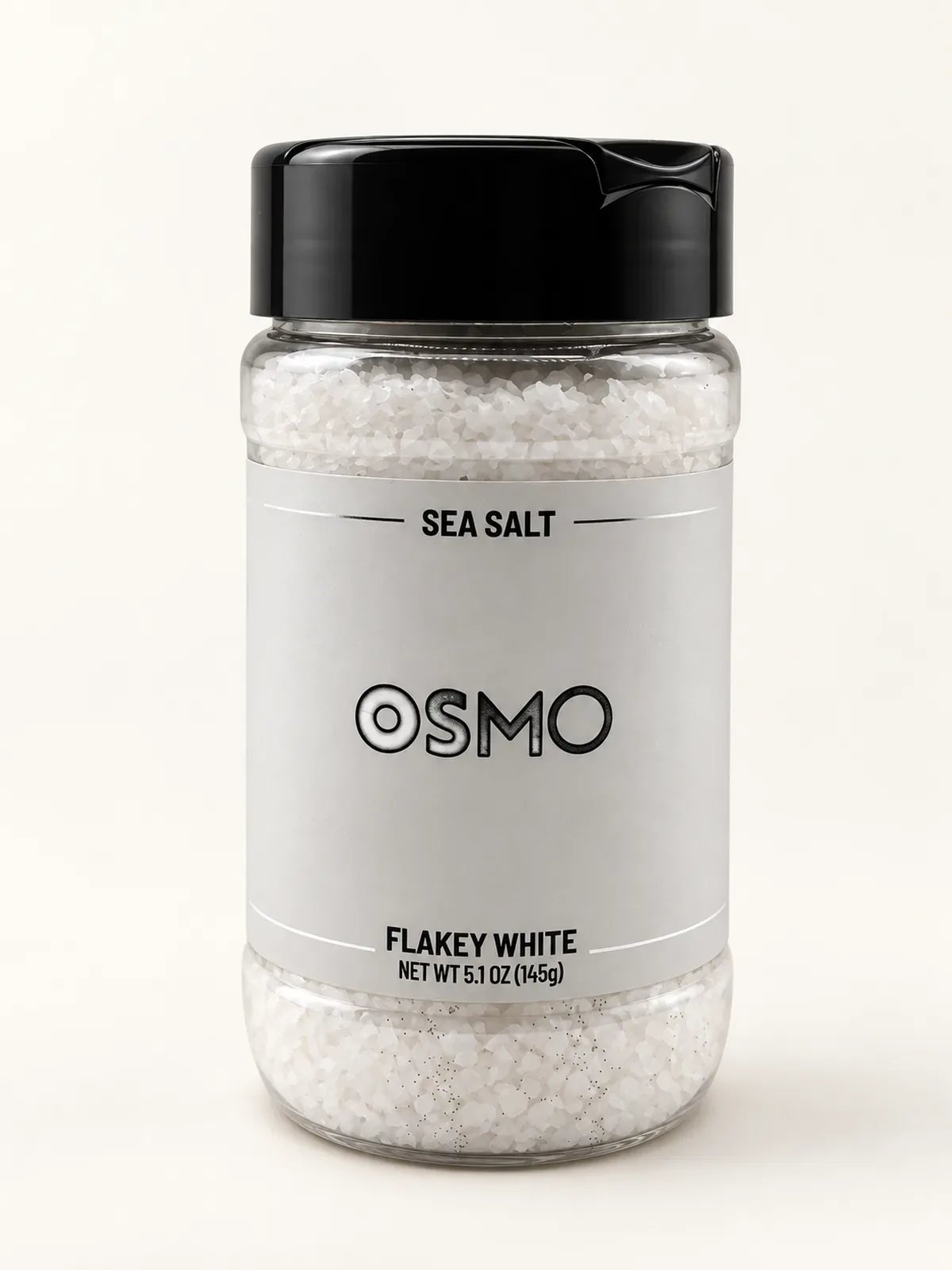
OSMO — Flakey White Sea Salt
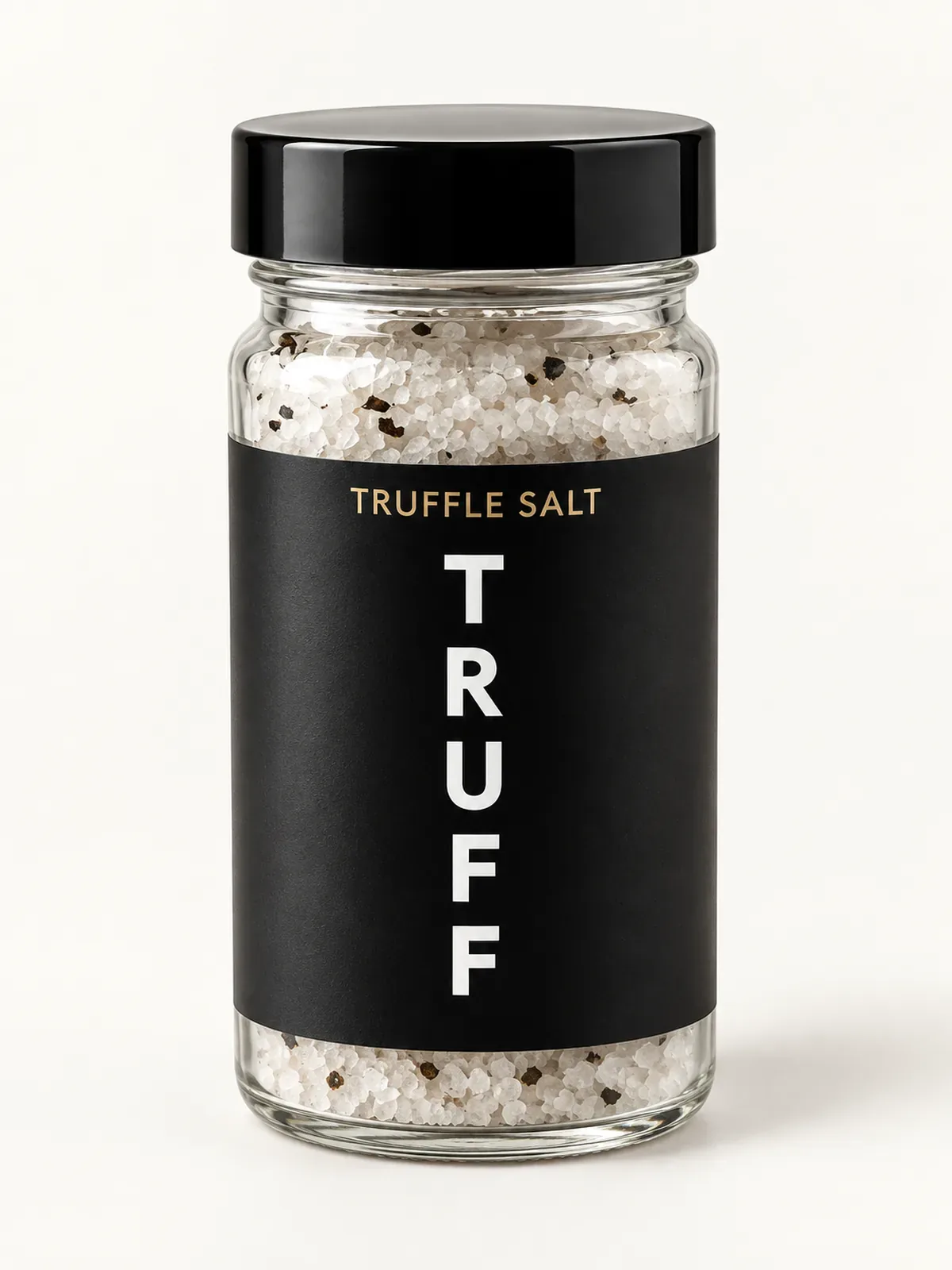
TRUFF — Black Truffle Salt
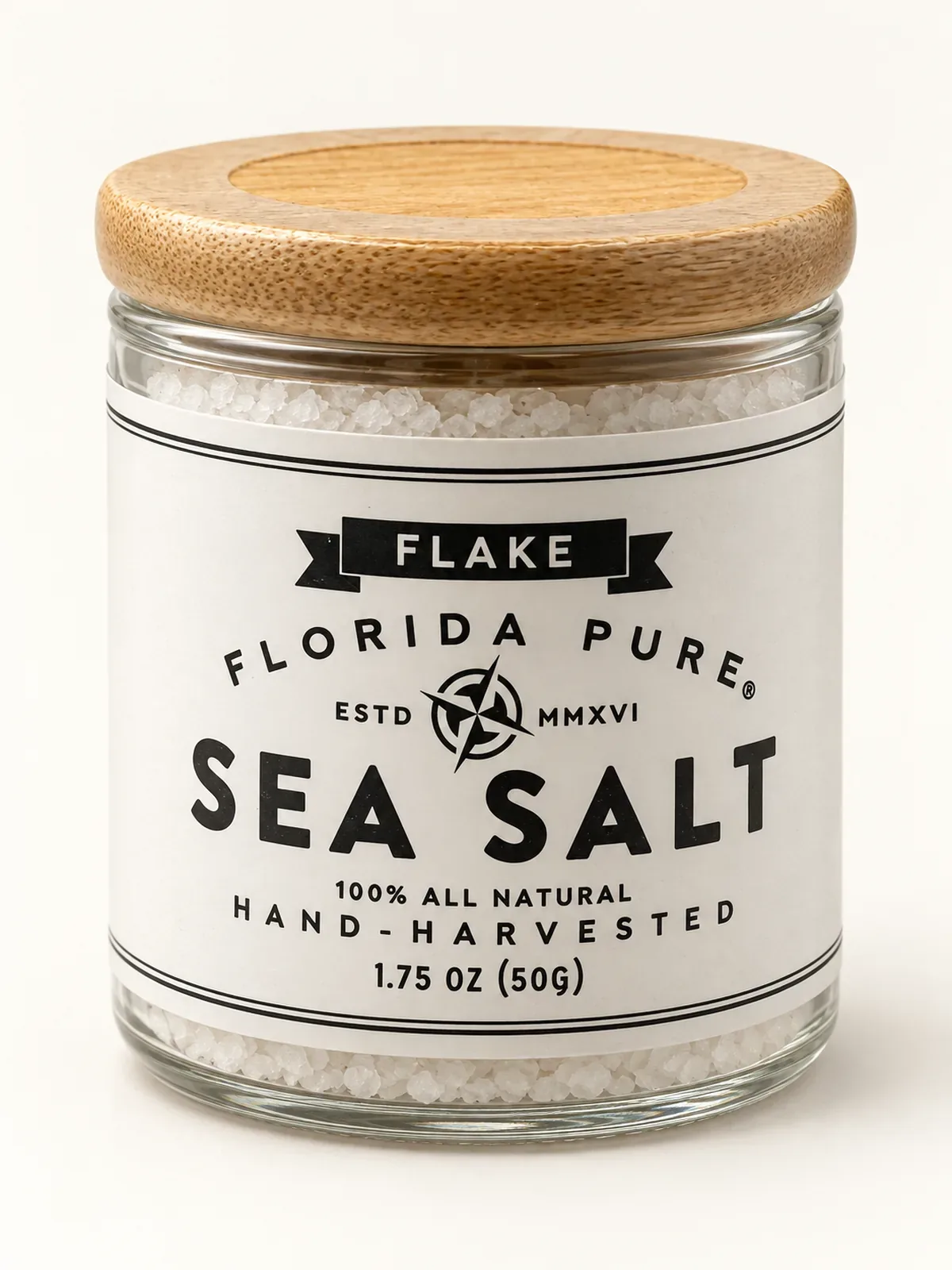
Florida Pure — Flake Sea Salt
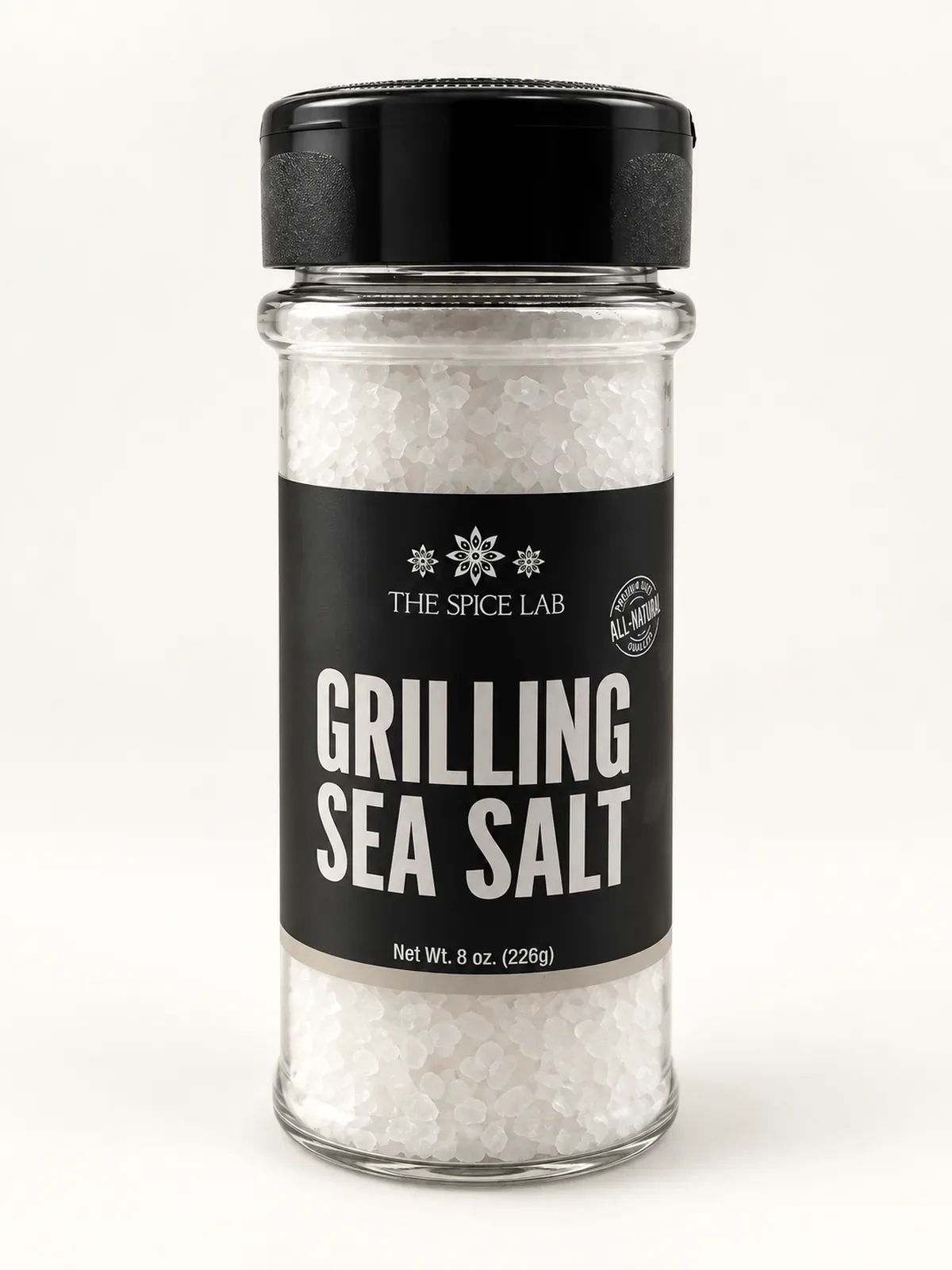
The Spice Lab — Grilling Sea Salt
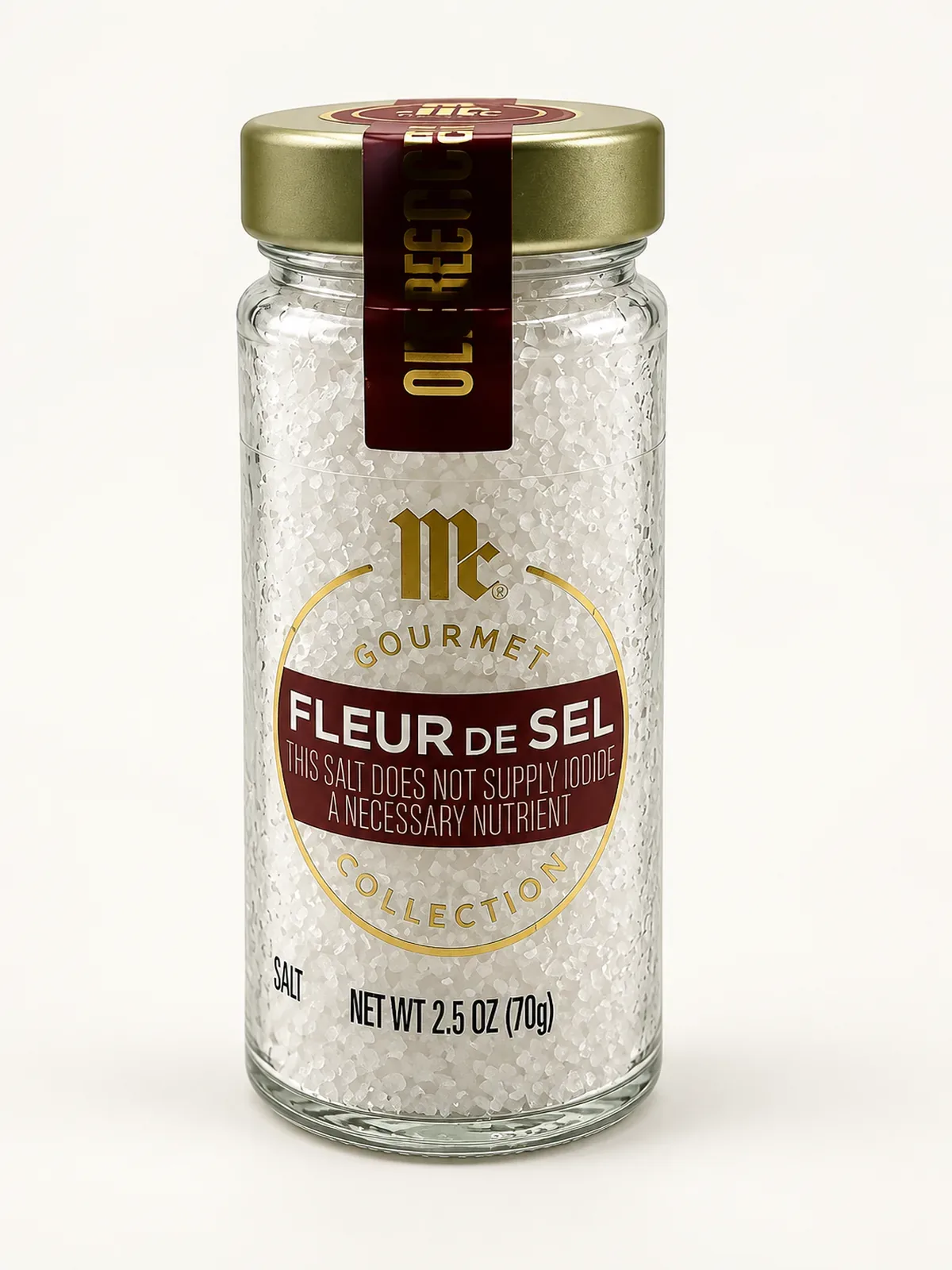
McCormick Gourmet — Fleur de Sel
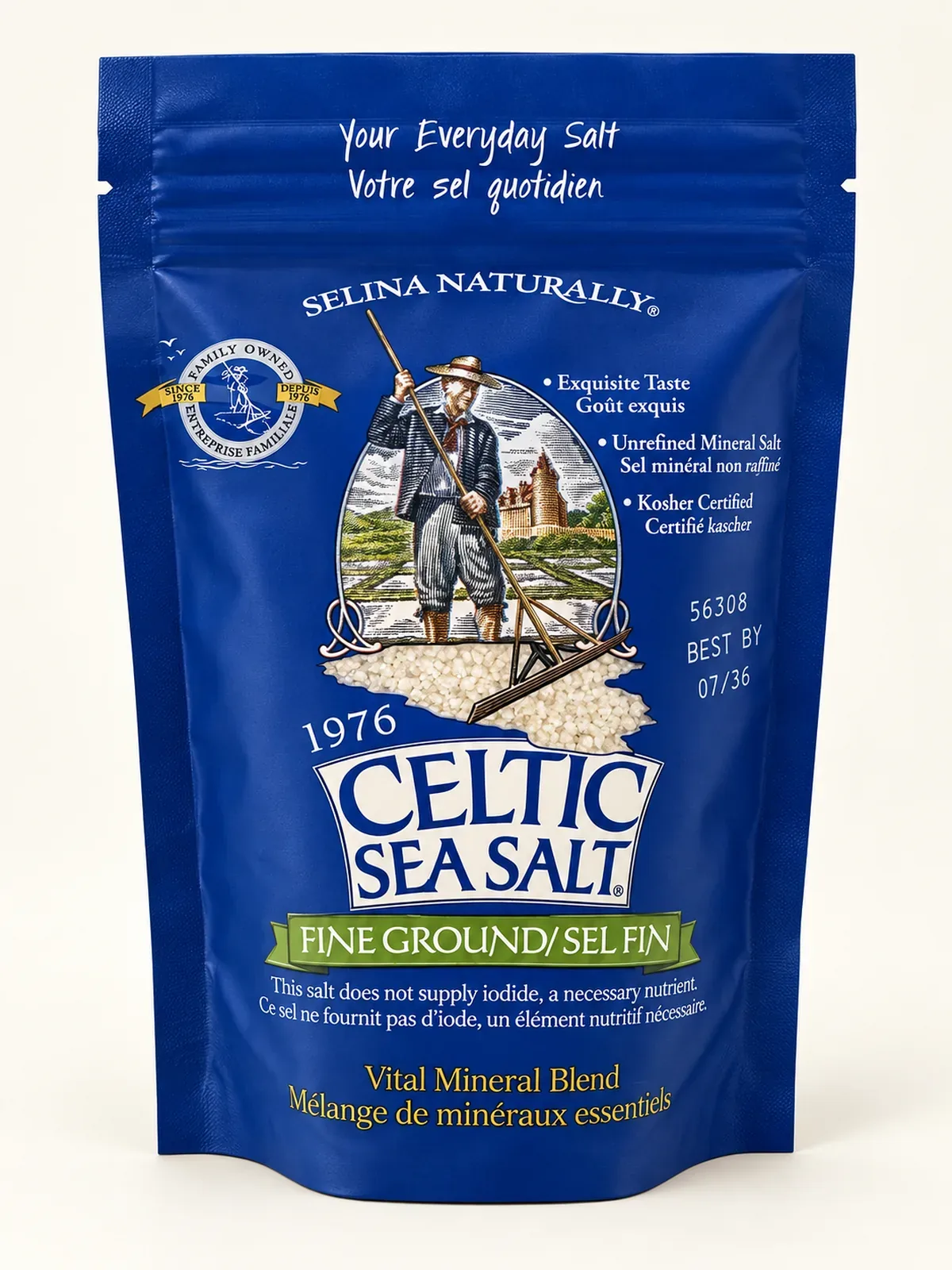
Selina Naturally — Celtic Sea Salt Fine Ground
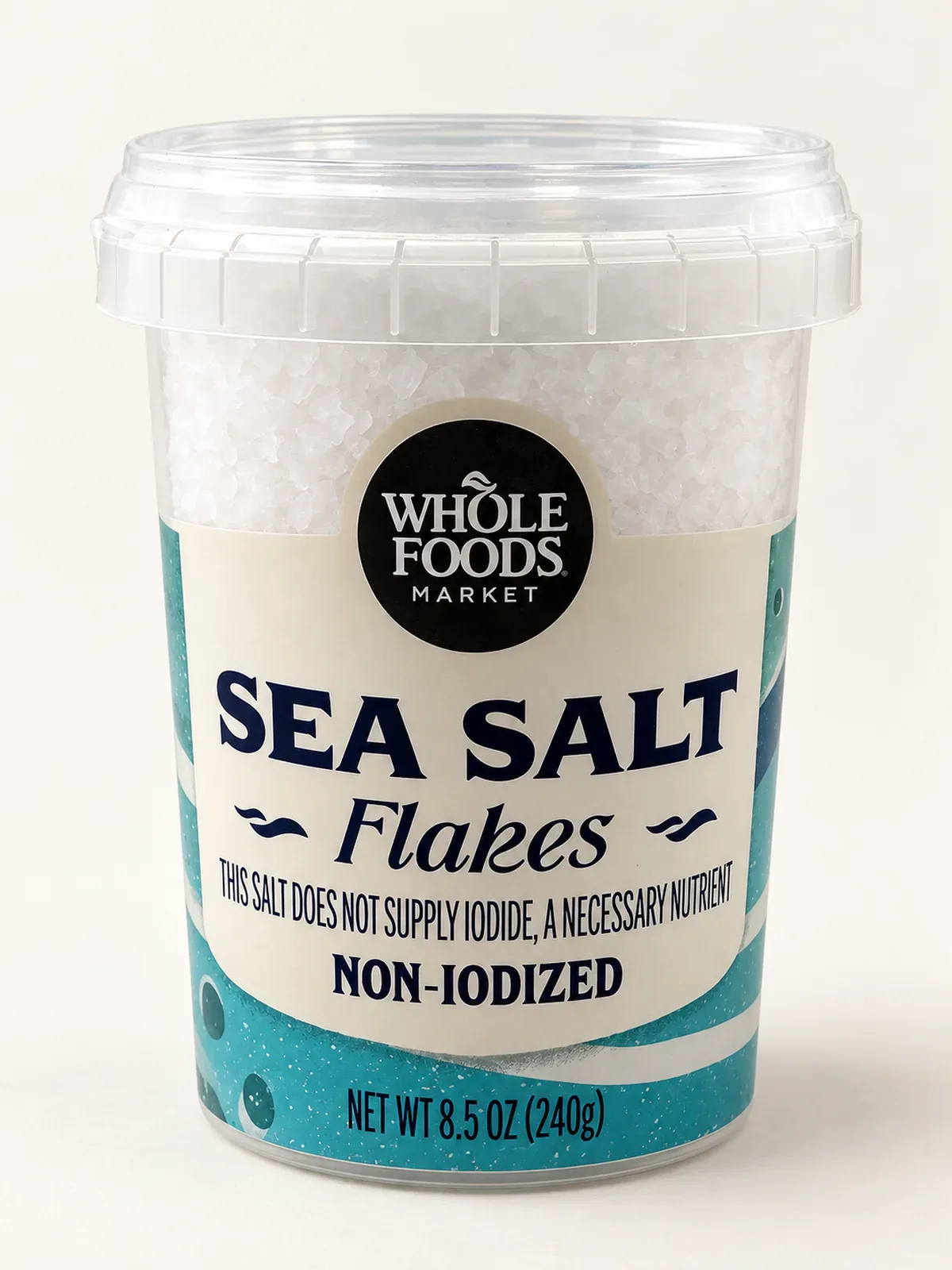
Whole Foods Market — Sea Salt Flakes
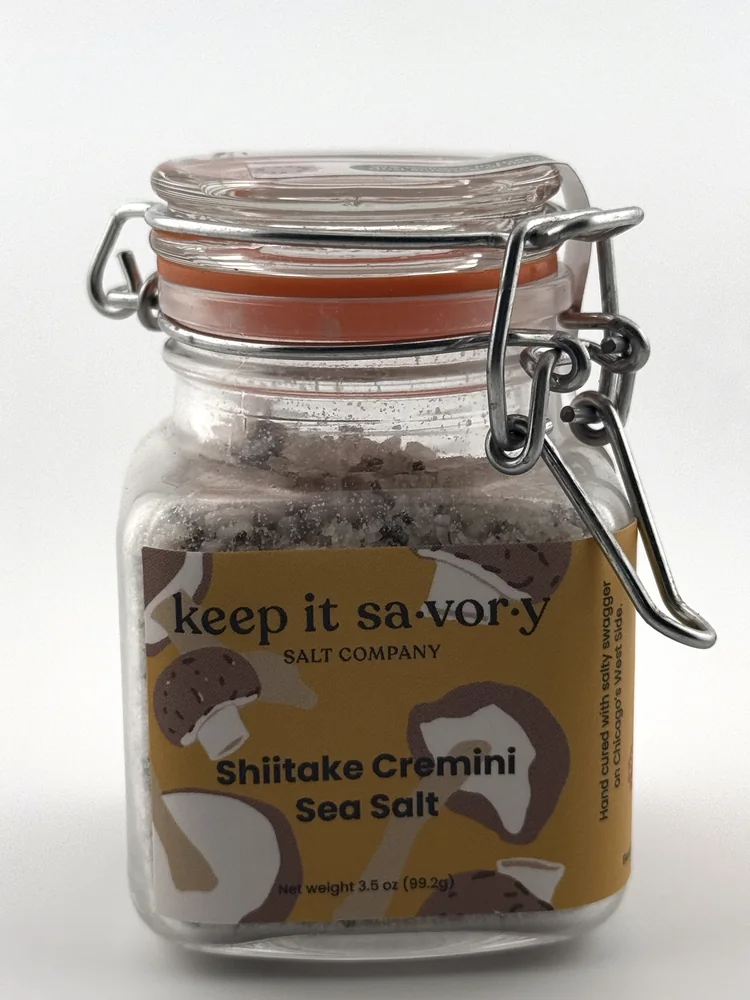
Keep It Savory — Shiitake Cremini Sea Salt
Retail salts, one entry each: label, panel, price paid, and the crystal on white. Browse the guide →
Get the next guide
An email when we publish a new salt guide or recipe, and first word when the Patagonian salts are ready to order.
We write when there is something to say, not on a schedule.