
Does the Type of Salt Change How Much Sodium You Eat?
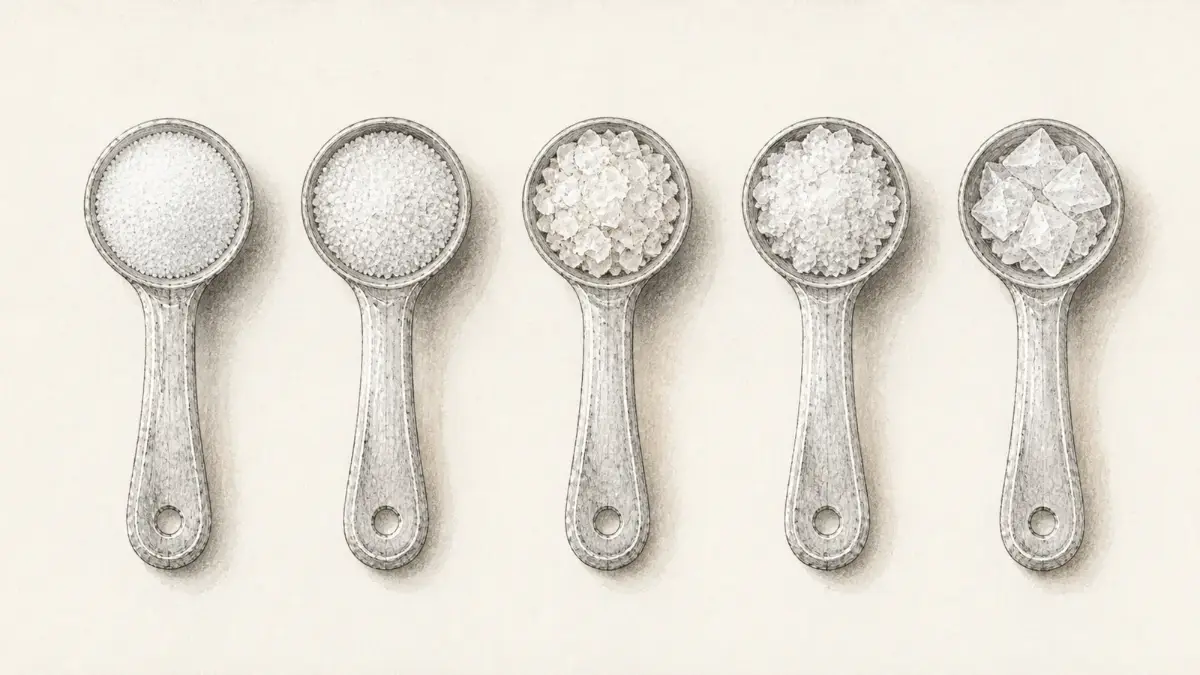
“Sea salt has less sodium” is one of the most durable claims in food, and it is nearly always answered wrongly in both directions. Here is what the labels actually say.
The short answer
Measured by weight, almost all salt is the same: about 393 mg of sodium per gram. Measured by the spoonful, the differences are large and real — up to 53% — and they come from crystal size, not from where the salt was made.
Why 393?
Because sodium is 39.34% of sodium chloride by mass. That is fixed chemistry. Any salt that is essentially pure sodium chloride will deliver 393 mg of sodium per gram, whether it was scraped off a marsh in Brittany or mined in Pakistan.
The manufacturers' own Nutrition Facts panels confirm it almost exactly:
| Salt | Serving | Sodium | mg Na per gram |
|---|---|---|---|
| Table salt, iodized | 1.5 g | 590 mg | 393 |
| Fine sea salt | 1.4 g | 550 mg | 393 |
| Coarse kosher | 1.2 g | 480 mg | 400 |
| Kosher, hollow pyramid | 0.7 g | 280 mg | 400 |
| Fleur de sel | 1.0 g | 400 mg | 400 |
The 400s are label rounding — sodium above 140 mg is rounded to the nearest 10 mg by regulation. Fine sea salt and table salt land on the same figure to three significant digits.
So where does the difference come from?
From the fact that American nutrition labels measure salt by volume. The reference amount for salt is a quarter teaspoon — a space, not a weight — and the manufacturer fills in what their own salt weighs in that space.
Crystal shape decides that. Hollow pyramids trap air. Dense pressed flakes do not. Fine grains pack tightest of all.
| Salt | Grams per teaspoon | Sodium per teaspoon | Versus table salt |
|---|---|---|---|
| Table salt | 6.0 g | 2,360 mg | — |
| Fine sea salt | 5.6 g | 2,200 mg | −7% |
| Coarse kosher | 4.8 g | 1,890 mg | −20% |
| Fleur de sel | 4.0 g | 1,570 mg | −33% |
| Kosher, hollow pyramid | 2.8 g | 1,100 mg | −53% |
A teaspoon of the lightest kosher salt carries less than half the sodium of a teaspoon of table salt. That is a genuine, measurable difference in what lands on your food — and it is not a sea salt. Meanwhile fine sea salt, the product the claim is usually made about, differs from table salt by seven per cent. Effectively nothing.
The variable is crystal size. The word “sea” is doing no work at all.
Is there any salt genuinely lower per gram?
A few, at the margins, and it is a moisture and mineral effect rather than a health feature.
A UK laboratory survey of gourmet salts found most categories statistically indistinguishable from pure sodium chloride — two results even came out above 100%, which tells you about the method's error bars. The one clear exception was fleur de sel at 91.48% sodium chloride, around 360 mg sodium per gram, consistent with the water and magnesium it retains.
Unwashed sea salts that keep a large mineral fraction can sit lower still. That is a real difference, and it deserves two immediate qualifications. It is small. And it is not a reason to buy salt.
What the law allows anyone to claim
Very little, and the thresholds are worth knowing because they are the fence around every sodium claim you will read:
| Claim | Requirement |
|---|---|
| Sodium free / salt free | Under 5 mg per serving |
| Very low sodium | 35 mg or less |
| Low sodium | 140 mg or less |
| Reduced sodium / less sodium | At least 25% less than the reference food |
| Light in sodium | At least 50% less |
Salt's reference amount is a quarter teaspoon, well under the size cut-off that triggers a second per-50-gram test — which is why no salt product can carry a “low sodium” claim, regardless of crystal size.
And “reduced sodium” needs a quarter less. A salt at 360 mg per gram against table salt's 393 is about 8% lower. A salt at 320 would be 18% lower. Neither reaches the threshold. If you see the phrase on a salt package, something is wrong with it.
What this means in a kitchen
Two things, and neither is about health.
Weigh your salt, or name your brand. A recipe calling for a teaspoon of salt can mean 1,100 mg of sodium or 2,360 depending on which box is open. That is not a rounding error, it is the difference between seasoned and oversalted.
Coarse salt is easier to control. Larger crystals mean more forgiving pinches. That is the real argument for cooking with flake or kosher salt, and it has nothing to do with minerals or origin.
If you are reducing sodium, the lever is not which salt. Roughly ninety per cent of American sodium intake arrives in packaged and restaurant food, not from the cellar on the table.
Common questions
By weight, no — measured sea salt and table salt both come in at 393 mg of sodium per gram. By the teaspoon a coarse or flake salt can deliver meaningfully less, because the crystals pack air. That is a shape effect, and fine sea salt does not have it.
No. Laboratory analysis puts it around 97% sodium chloride, within measurement error of ordinary salt. The trace minerals are present at levels far too low to matter.
That works, and it works better than switching types. Palates adjust over a few weeks.
Because you measured by volume and the crystals changed size. Switching from a hollow-pyramid kosher salt to table salt without adjusting roughly doubles the sodium in the dish.
Sources
- 21 CFR 101.61 — nutrient content claims for sodium
- 21 CFR 101.12 — reference amounts customarily consumed
- 21 CFR 101.9 — nutrition labeling, sodium rounding rules
- Morton Salt — Iodized Table Salt nutritional facts
- Action on Salt — Gourmet Salt Survey, 2011
- American Heart Association — salty sodium myths
- Mayo Clinic — sea salt versus table salt
In the Salt Guide
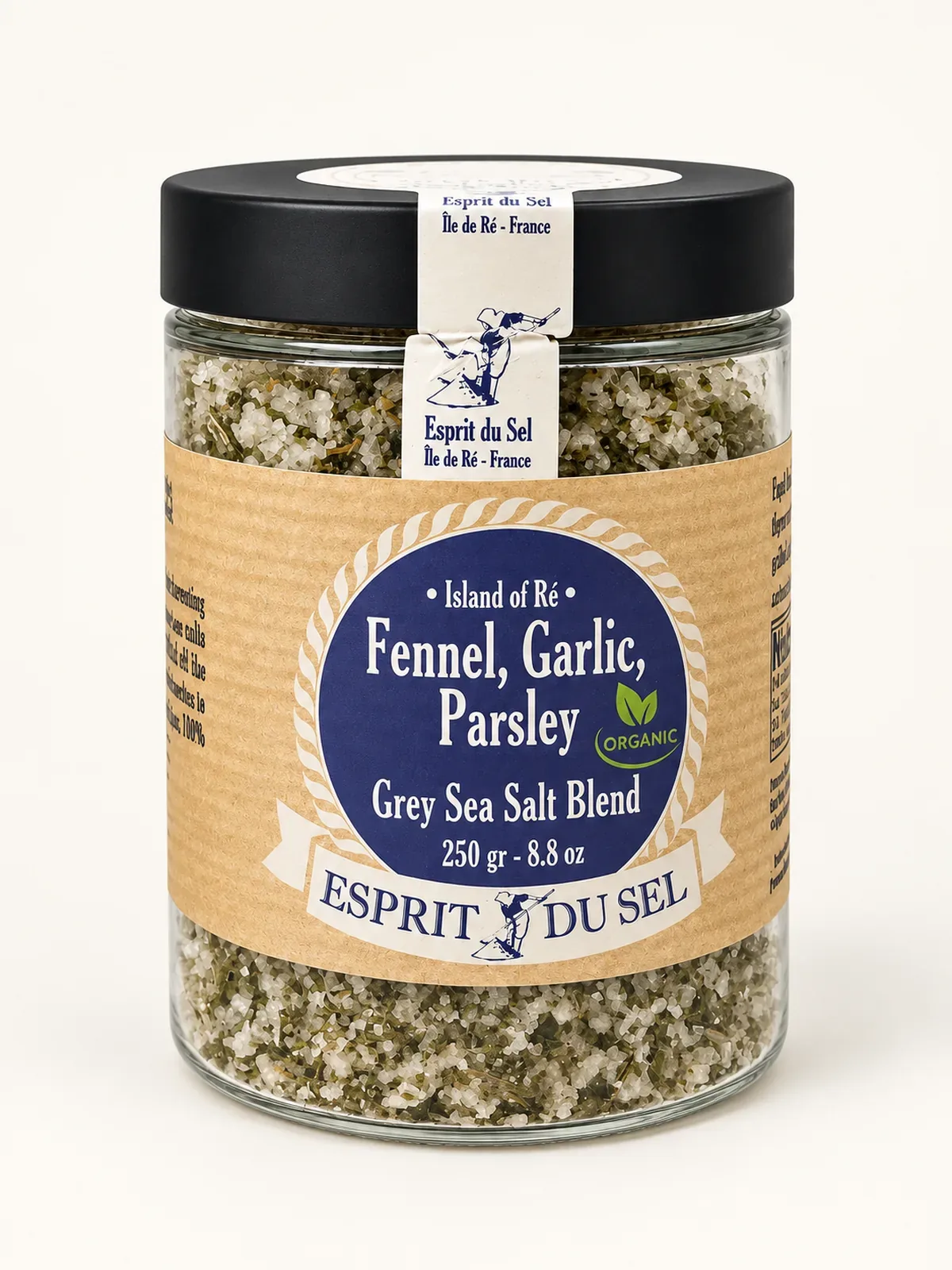
Esprit du Sel — Island of Ré Fennel, Garlic, Parsley
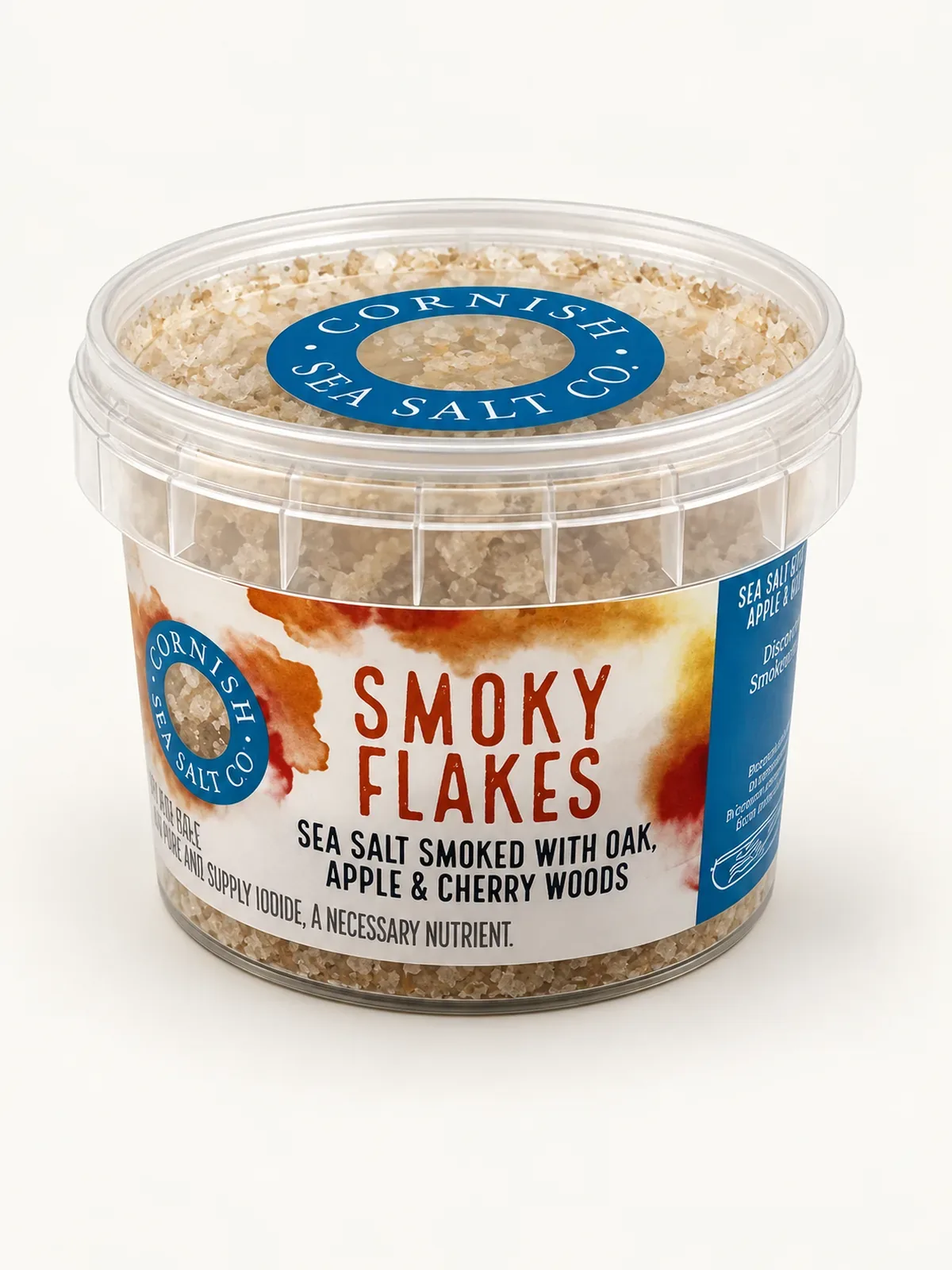
Cornish Sea Salt Co. — Smoky Flakes
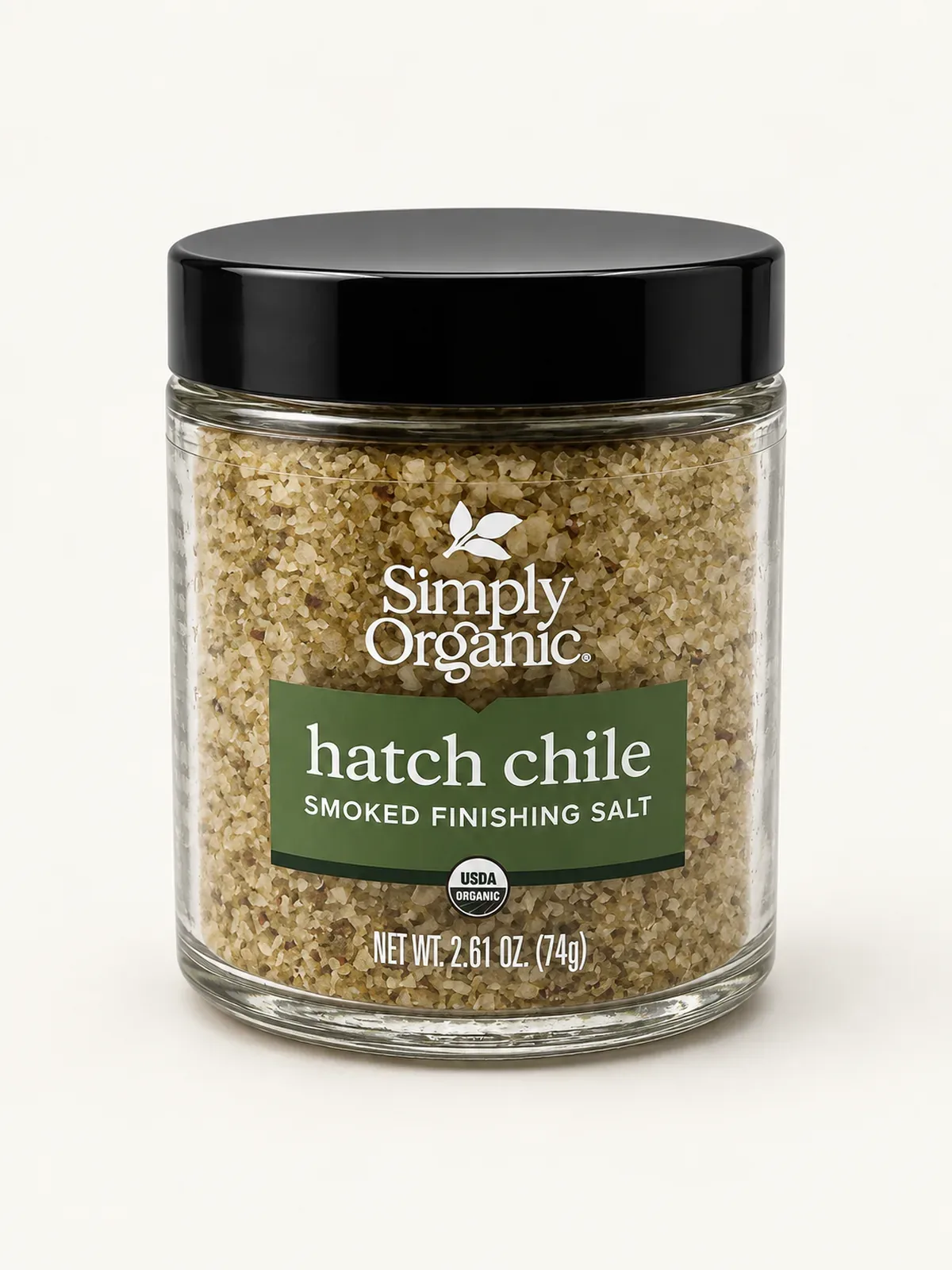
Simply Organic — Hatch Chile Smoked Finishing Salt
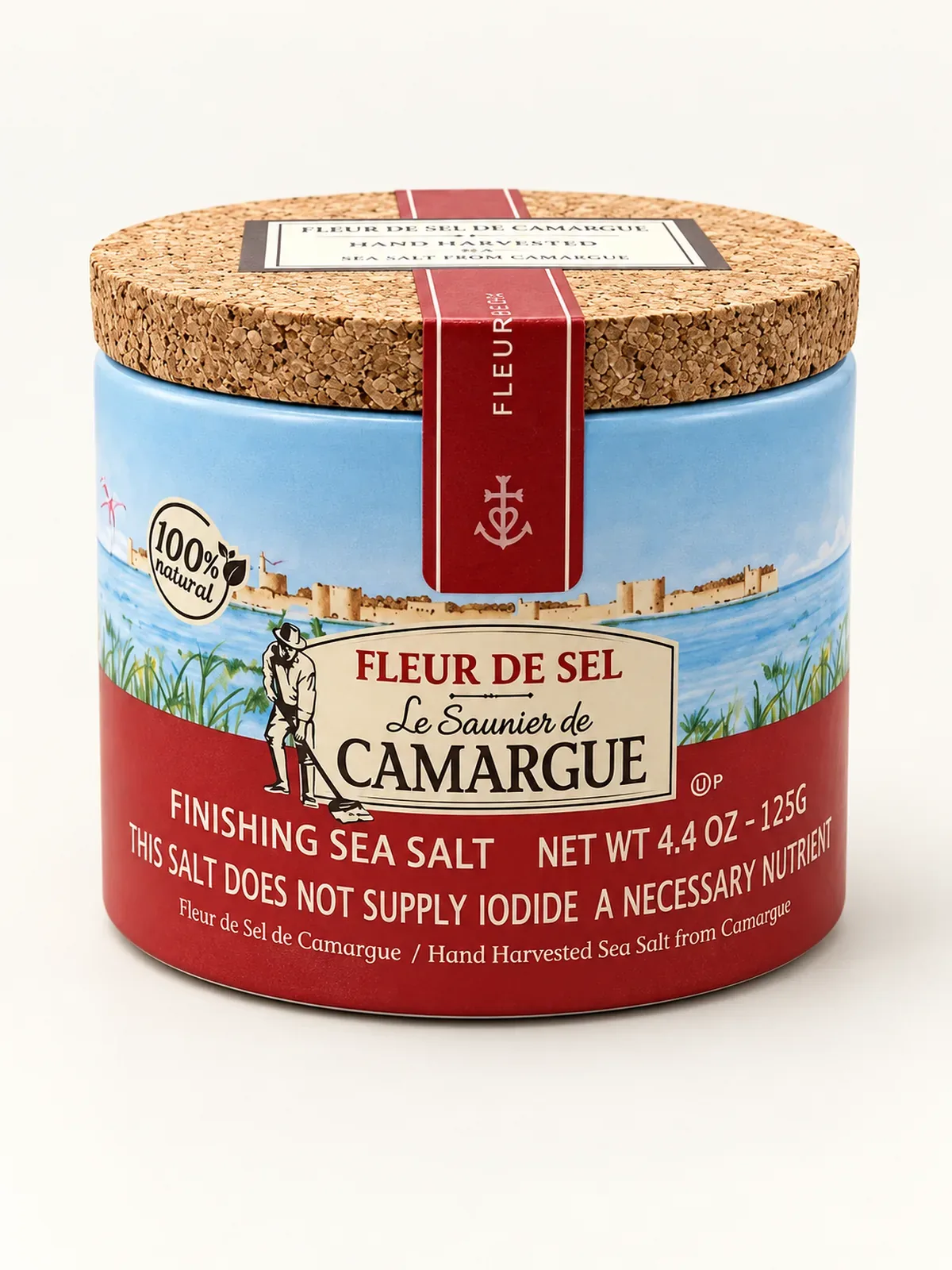
Le Saunier de Camargue — Fleur de Sel
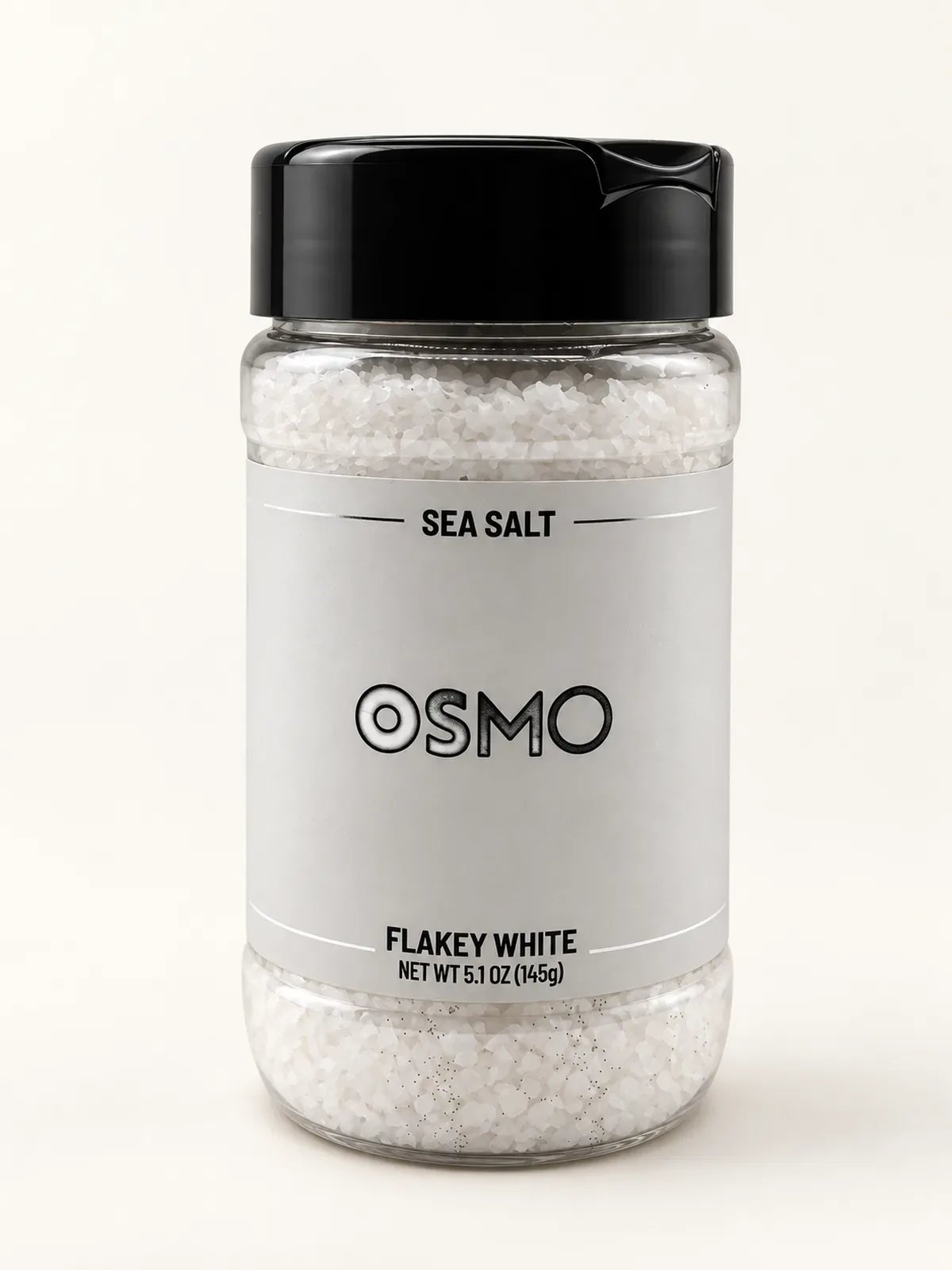
OSMO — Flakey White Sea Salt
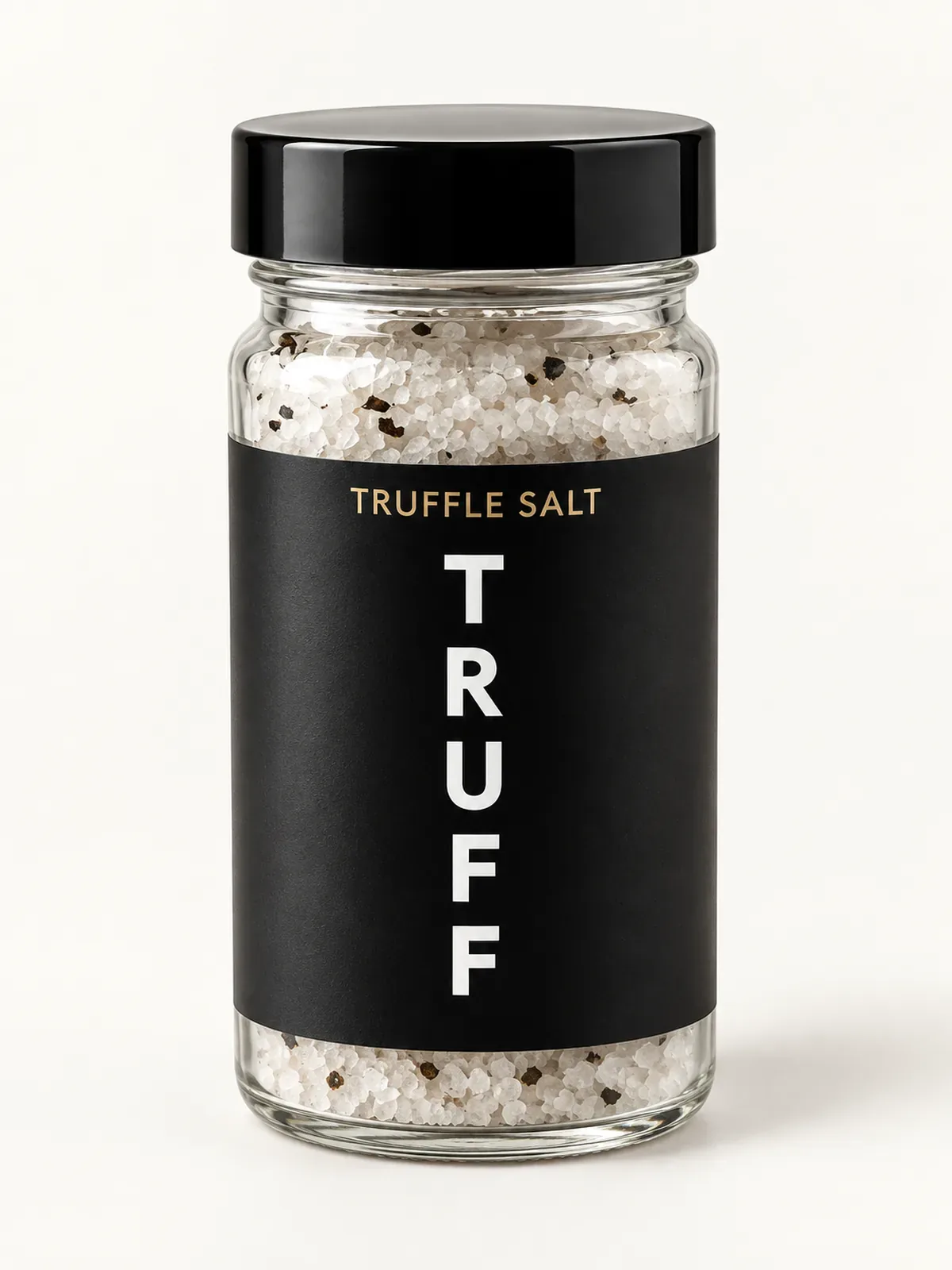
TRUFF — Black Truffle Salt
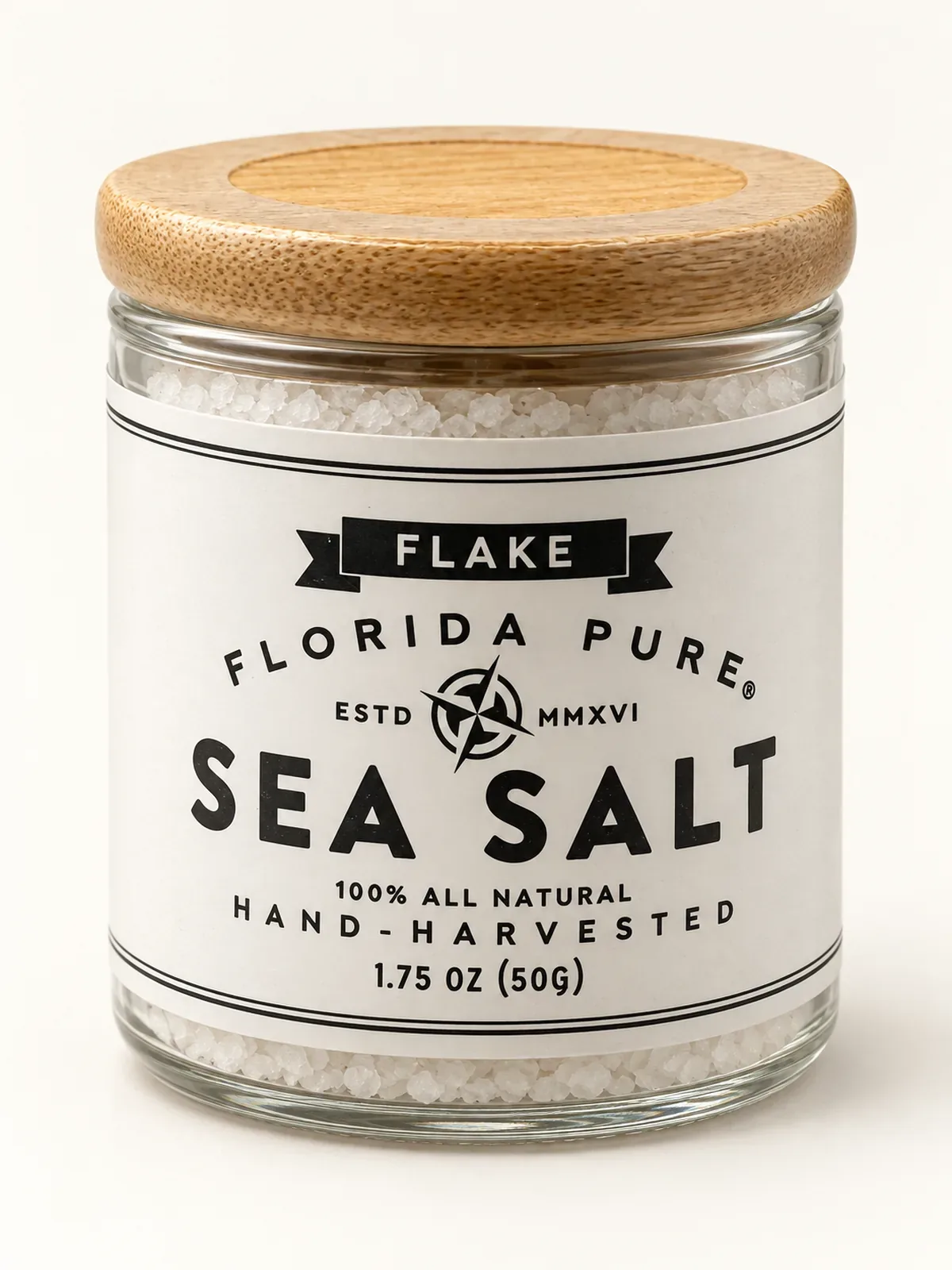
Florida Pure — Flake Sea Salt
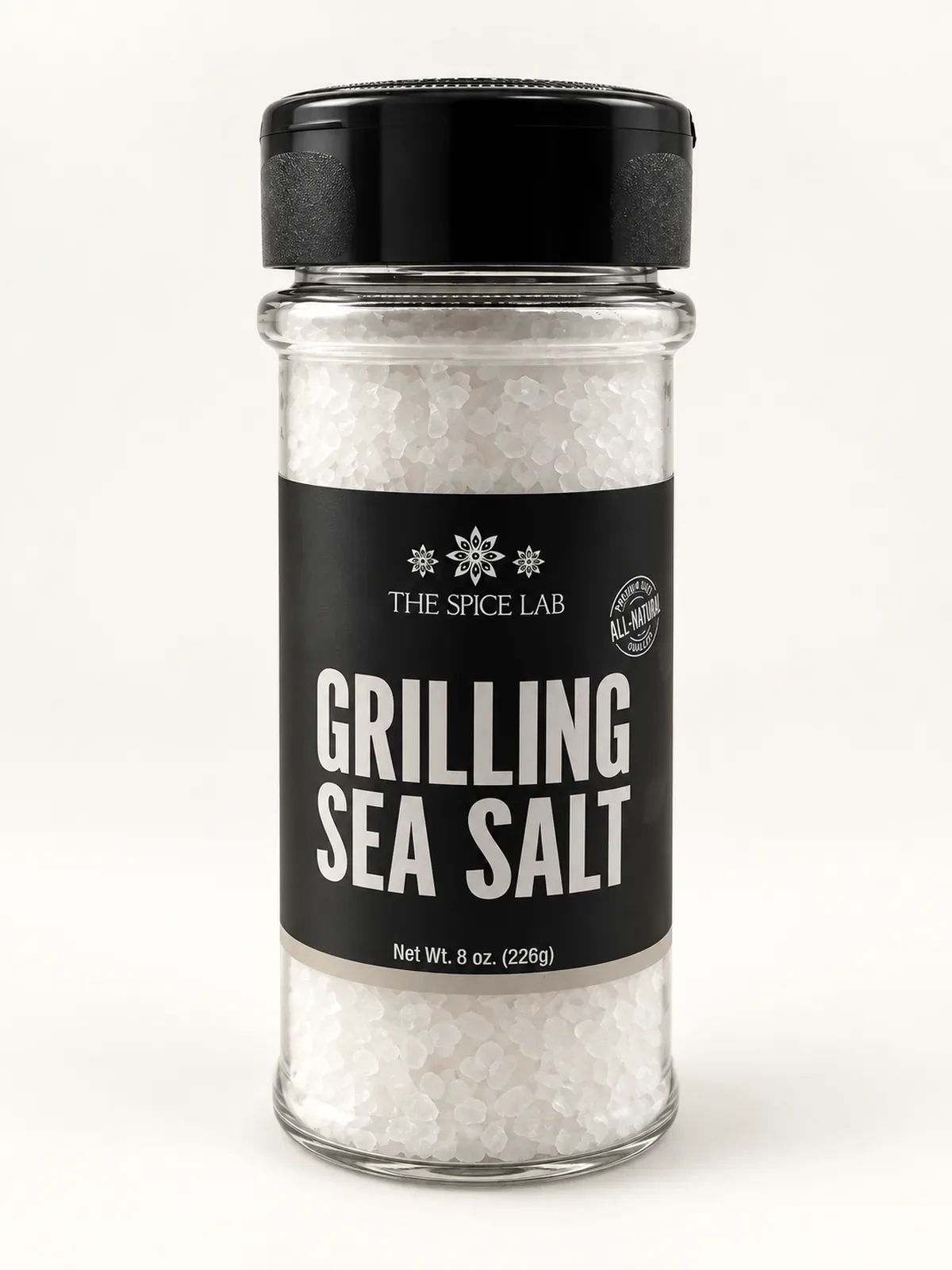
The Spice Lab — Grilling Sea Salt
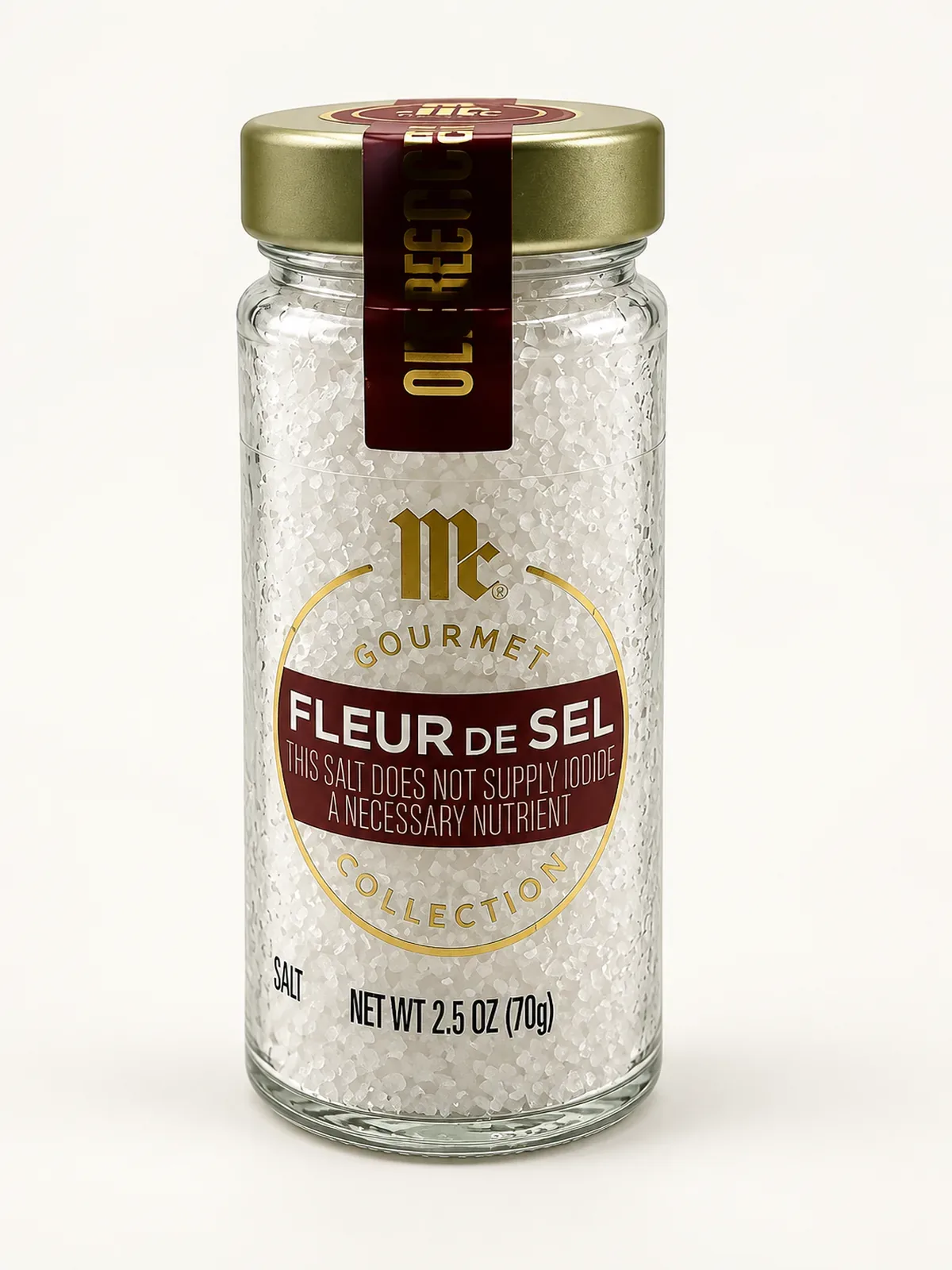
McCormick Gourmet — Fleur de Sel
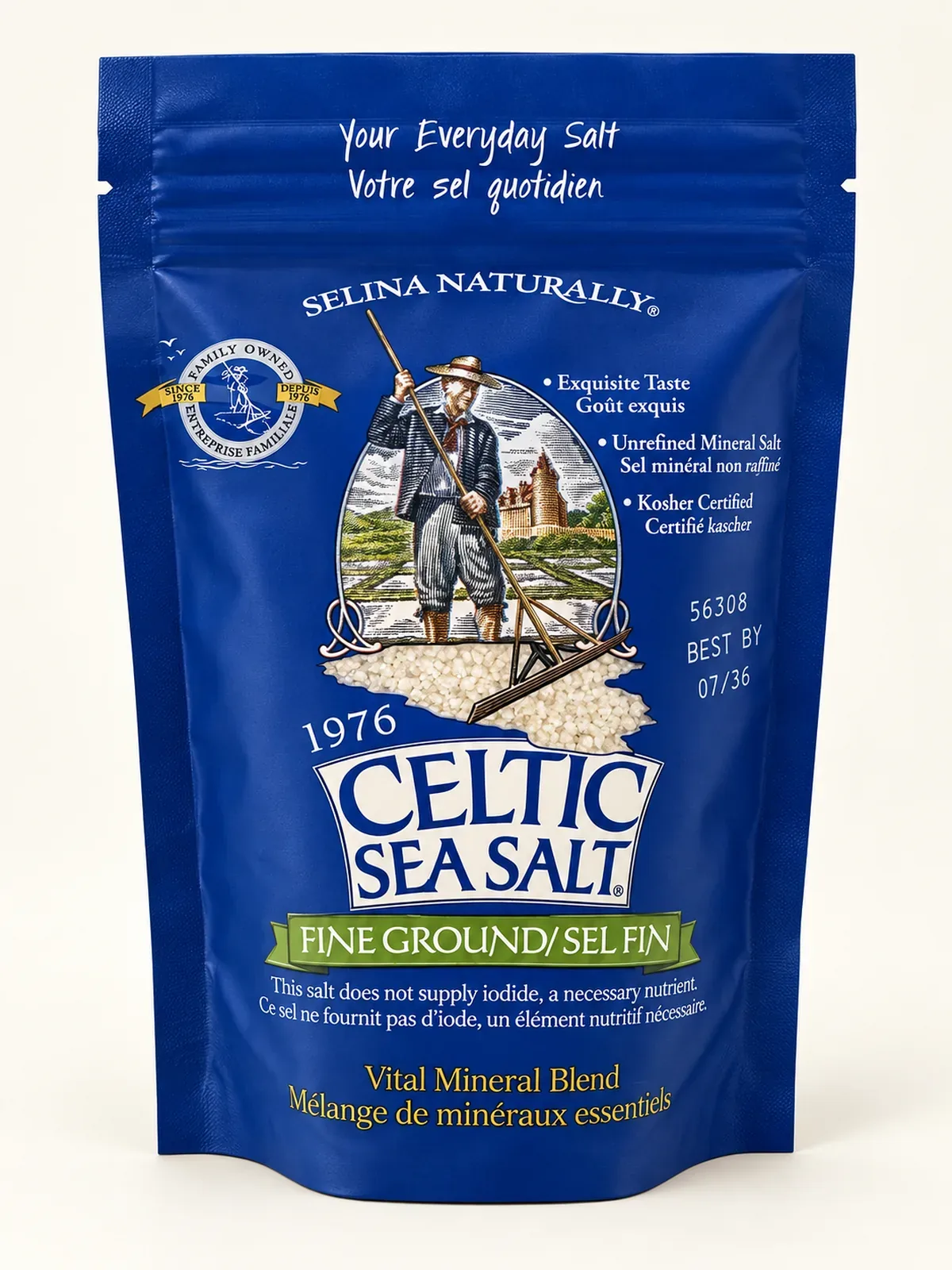
Selina Naturally — Celtic Sea Salt Fine Ground
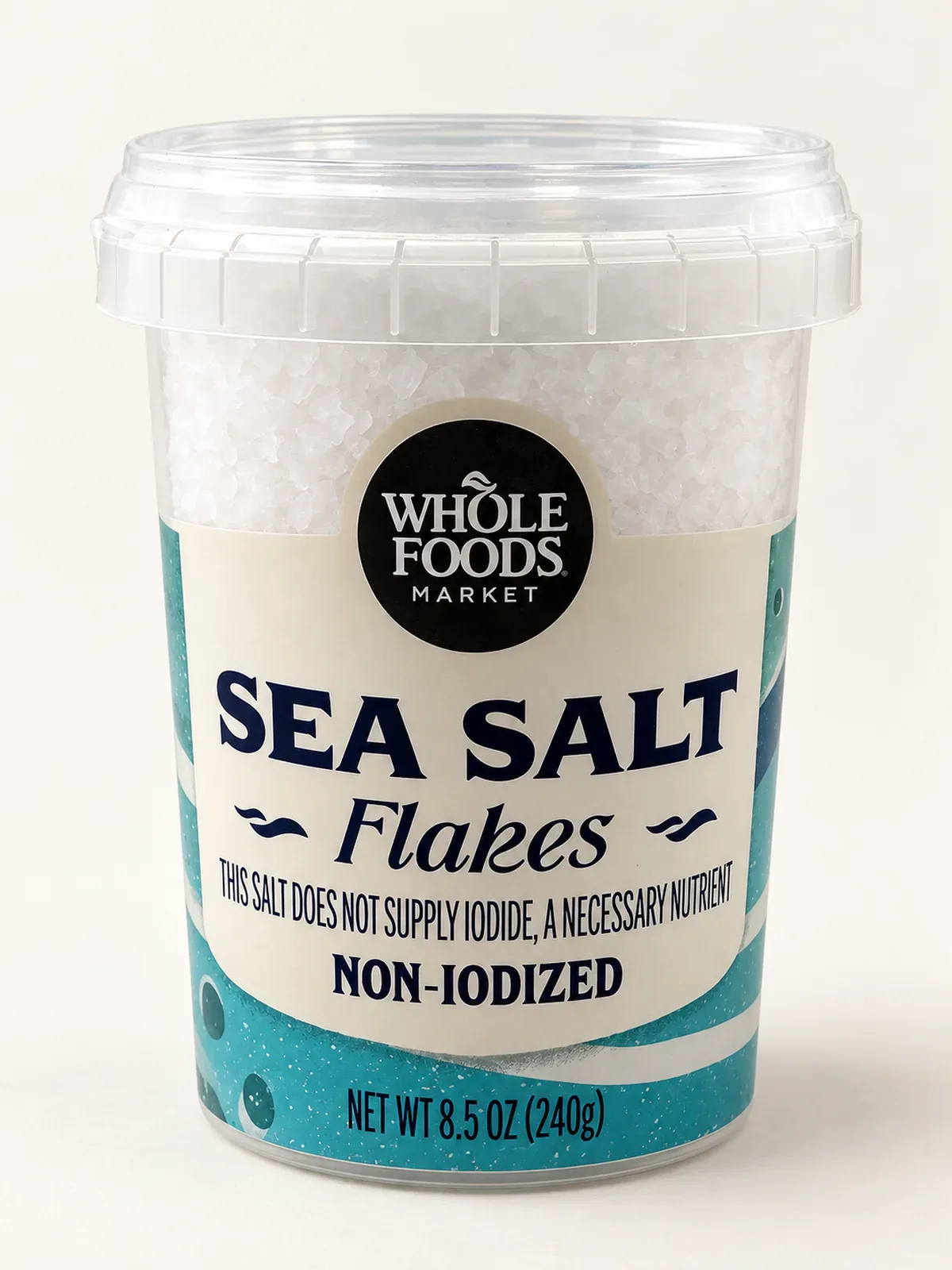
Whole Foods Market — Sea Salt Flakes
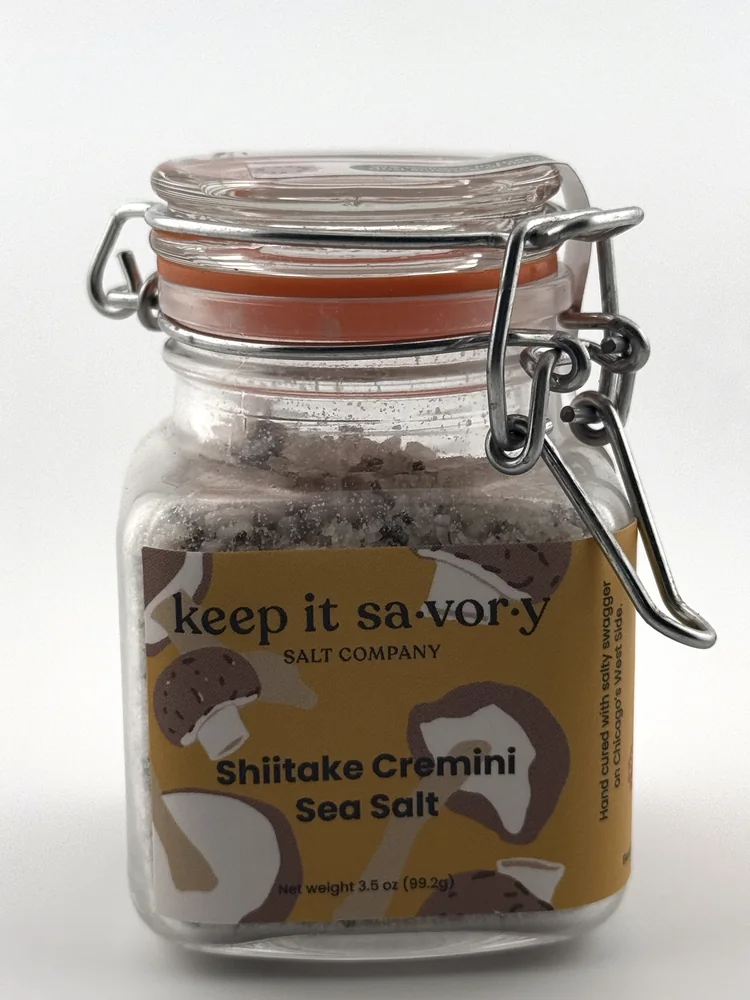
Keep It Savory — Shiitake Cremini Sea Salt
Retail salts, one entry each: label, panel, price paid, and the crystal on white. Browse the guide →
Get the next guide
An email when we publish a new salt guide or recipe, and first word when the Patagonian salts are ready to order.
We write when there is something to say, not on a schedule.